
Vandaag of morgen in huis

Kwaliteit gegarandeerd

Welkomstaanbiedingen ontgrendelen: GRATIS bezorging | Tot 80% korting | Gratis 30 dagen JoyPlus-proefperiode
Download de app
A food processor can save considerable space and time. With one appliance, you can knead, mix, chop, slice, grate and sometimes even blend or mince meat. However, not every model is suited to the same kitchen. A food processor is primarily designed for slicing and chopping, while a multifunctional kitchen machine often includes a mixing bowl, dough hook and additional drive attachments.
Looking only at wattage or the number of accessories can quickly lead to the wrong choice. Below, you’ll discover which features really matter and which models suit different usage scenarios.
A specification such as 1000-watt food processor may sound straightforward, but wattage does not tell the whole story about performance. Manufacturers may list maximum power, rated power or a temporary peak output. The transmission, type of dough hook and stability of the housing also affect how the appliance performs.
A 1000-watt motor is practical for regular kneading and chopping, but also check the permitted dough quantity and recommended operating time. Heavy-duty tasks may require breaks to prevent overheating.
An appliance with numerous attachments is not automatically more versatile in everyday use. Check whether the set genuinely includes what you need:
Also consider storage. Loose accessories take up space, and some components are compatible only with a specific model.
A 5.5-litre bowl may appear spacious, but it cannot always be filled to the brim. With dough, the maximum quantity is often lower than with liquid ingredients. A generous mixing bowl is useful for households with several people, but anyone who mainly prepares small portions may be better served by a more compact food processor.
In addition to the stated capacity, check the maximum quantity of flour, dough or ingredients. If this information is not clearly provided, it is wiser to compare models conservatively rather than assume the full bowl capacity is usable.
For everyday chopping, mixing and grating, a moderately powerful motor is often sufficient. For heavy bread dough, nuts or meat, a stable machine with multiple speed settings is more practical. Six to eight speeds provide greater control than just one or two settings. A pulse function is useful when you want to chop briefly or avoid processing ingredients too finely.
The Bosch MUM5XW40, for example, lists 1000 watts, seven speeds, a pulse function and planetary mixing action. According to the product description, the package includes an integrated scale, timer, 1.25-litre blender jug and various accessories. The timer is described as a clock only and does not switch the appliance off automatically.
A stainless-steel bowl is suitable for frequent mixing and is generally less prone to discolouration than certain plastics. A glass blender jug can be useful for warm preparations, but always check the instructions for the permitted temperature range.
Pay attention to:
A large machine also requires sufficient worktop space. Measure the area beneath your kitchen cabinets and check that the mixing arm or lid can still open fully.
A food processor is efficient for slicing, grating and chopping. A stand mixer is generally the more logical choice for kneading and whisking. A combination appliance can handle both tasks, but changing attachments takes time.
For smaller preparations, a 4-in-1 hand blender may be all you need. The set often includes a blending foot, whisk, measuring beaker and chopper. Check the maximum operating time: some compact models, for example, recommend one minute of use followed by a cooling break.

Why This Fits Their Persona: A compact model for smaller kitchens and everyday portions. The 1.3-litre bowl is suitable for vegetables, sauces and straightforward preparations.
The product information lists the bowl capacity, power and included accessories separately. This makes it easier to verify capacity and functions than with a vague all-in-one claim.
900 watts, seven power levels, a blending function and a 600 ml personal blender, according to the product description.
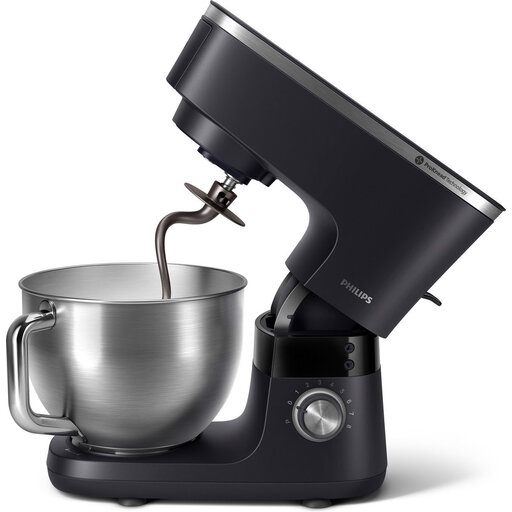
Why This Fits Their Persona: Designed for home bakers and families who want to combine a generous mixing bowl with blender and meat-grinder accessories.
The accessories are clearly specified: a 1.5-litre glass blender, meat grinder, dough hook and splash guard. However, check in advance whether you actually need every component.
1000 watts, a 5.5-litre stainless-steel bowl and eight speeds, according to the product specifications.
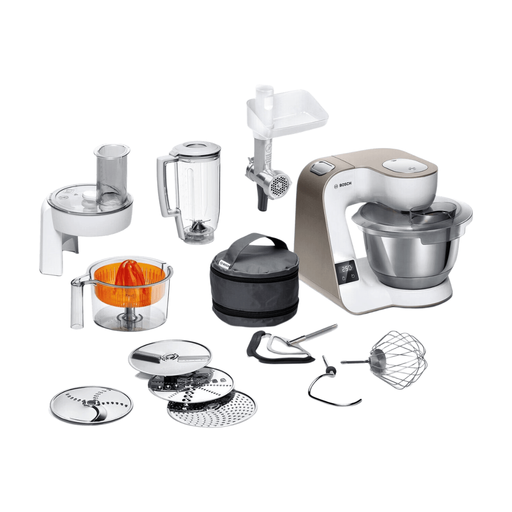
Why This Fits Their Persona: A practical option for anyone who regularly combines baking, grinding, blending, grating and weighing.
The product listing specifies the functions individually, including a mixing bowl capacity of up to 2.7 kg, a 1.25-litre blender jug and an integrated scale.
1000 watts, seven speeds, planetary mixing action, plus pulse and turbo functions, according to the product information.

Why This Fits Their Persona: Ideal for soups, sauces, smoothies, whipped cream and small chopping tasks without placing a large appliance on the worktop.
The set lists the individual components and capacities: a 500 ml chopper bowl and an 800 ml beaker. This prevents you from expecting a large mixing bowl from a hand blender.
600 watts, two speeds, whisk, chopper and removable components, according to the product description.
Place the appliance on a flat, dry surface and only attach accessories when the plug is disconnected from the mains. Keep hands, clothing and spatulas away from moving parts. Blades and grating discs are sharp; hold them by the plastic centre section.
Do not use boiling liquids in a blender unless the manual specifically permits it. Also stay within the maximum operating time. Compact blenders and hand blenders may require a short usage cycle followed by a cooling break. Clean components immediately after processing raw meat, and never immerse the motor base in water.
It can be sufficient for household use, but wattage alone does not indicate how much dough an appliance can handle. Check the maximum dough quantity, recommended operating time and whether a dough hook is included.
A food processor is generally focused on chopping, slicing, grating and sometimes blending. A kitchen machine with a mixing bowl and dough hook is more geared towards mixing, whisking and kneading. Combination models add extra accessories, but they often require more storage space.
Energy consumption depends on the power rating and operating time. In theory, a 1000-watt appliance uses 1 kWh when running continuously for one hour. In the kitchen, a machine is usually used for much shorter periods. The purchase price, maintenance costs and replaceability of accessories are therefore at least as important.
Browse a current selection of blenders, mixers and food processors with different power ratings, capacities and accessories. Compare the product specifications and choose a model that suits your recipes and kitchen space.
