
Vandaag of morgen in huis

Kwaliteit gegarandeerd

Welkomstaanbiedingen ontgrendelen: GRATIS bezorging | Tot 80% korting | Gratis 30 dagen JoyPlus-proefperiode
Download de app
A food processor and blender in one sounds practical: fewer appliances on the worktop and more options for everyday meals. However, multifunctional models vary considerably in motor power, capacity, accessories and ease of use. An appliance that is ideal for smoothies may not be suitable for dough or grating large quantities of vegetables.
The key question is therefore not how many functions are listed on the box, but which tasks you actually carry out. This helps you avoid paying for accessories that end up unused in a kitchen cupboard.
A higher wattage does not automatically mean that every ingredient will be processed faster or better. The shape of the blades, the bowl, the speed control and the recommended operating time also matter. A electric food processor with a powerful motor can still be inconvenient if the feed tube is small or the accessories are difficult to change.
So always check:
Some compact blenders, for example, specify a rest period between intensive preparations. This is important if you want to make several batches one after another.
A 600 ml jug may be suitable for one smoothie, but less practical for a family. Conversely, a large bowl takes up more space, and a small preparation may not be processed as evenly in it.
Pay attention to the difference between:
For families, a food processor with blender and a jug of around 1.5 to 2 litres is often more convenient. For one person or a small kitchen, a hand blender with accessories including a chopping bowl and mixing cup may be more practical.
A blender with a food processor function may include various discs, blades, a chopper or dough hook. Check that the accessories are actually included and what tasks they support. “Slicing”, for example, may only refer to one thickness, while grating requires a separate disc.
Also consider storage. A multifunctional food processor with lots of loose parts requires more cupboard space and cleaning time. Parts described as dishwasher-safe in the product information can make everyday use easier. The motor base should always be cleaned according to the instructions and must not be immersed in water.
For smoothies, sauces and baby food, even blending is important. For chopping, slicing and grating, the right blades and discs are the key factors. If you are looking for a blender for smoothies and crushing ice, it is worth checking whether ice is specifically mentioned in the product specifications.
A pulse function is useful for short processing tasks, such as chopping ingredients coarsely or preventing them from becoming too fine. Multiple speeds give you more control when working with soft ingredients, whipped cream and light mixtures. For a food processor for dough, a dough hook, a stable base and a suitable bowl are at least as important as the wattage.
Glass is heavy, but feels stable and generally absorbs fewer odours than some plastics. Plastic is often lighter and easier to handle. Always check the exact material, maximum temperature and whether any parts are BPA-free.
A 1.75-litre glass blender jug, such as the one supplied with the Xiaomi Blender, provides space for several portions. The specifications also list a 600 W motor, five speeds, a pulse function and six stainless-steel blades. This makes the model particularly interesting for blending and everyday preparations; for chopping or kneading, check which accessories are actually included in the box.
An easy-to-use appliance has a lid lock, a stable non-slip base and parts that can be removed safely. Blades and grating discs are sharp: always unplug the appliance before changing or cleaning accessories.
Also check:
The statutory guarantee in the EU is separate from any additional commercial warranty terms offered by a manufacturer or seller. Keep your proof of purchase and check the terms and conditions before buying.
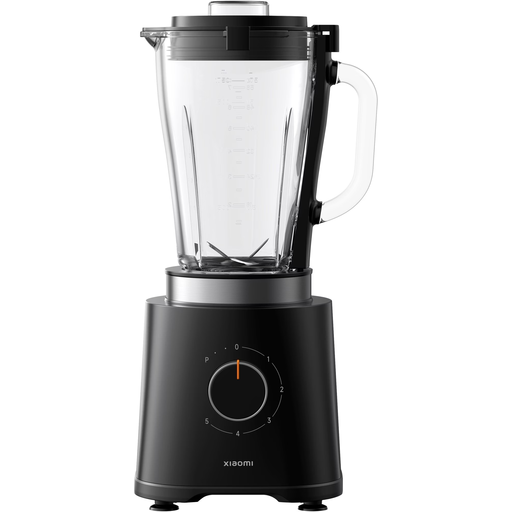
Why it suits this profile: The 1.75-litre glass jug is suitable for several portions of smoothies, sauces or milkshakes. Five speeds and a pulse function provide control without the need for a large kitchen appliance.
The product information states the jug capacity, power, six stainless-steel blades and pulse function. This means the key technical features can be checked in advance.
600 W motor, 1.75-litre glass jug, five speeds plus pulse function and removable blades according to the product listing.
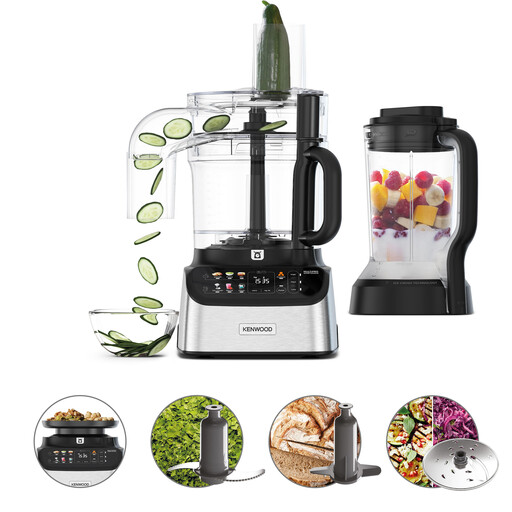
Why it suits this profile: This model combines chopping, grating, slicing, puréeing, blending and kneading. The integrated scales and automatic programmes are useful for anyone who often prepares a variety of recipes.
The product information specifies a 1000 W motor, 3-litre bowl, 1.5-litre blender and separate slicing, grating and dough attachments.
1000 W, integrated digital scales, six automatic programmes according to the product description, plus functions for dough, grating and crushing ice.
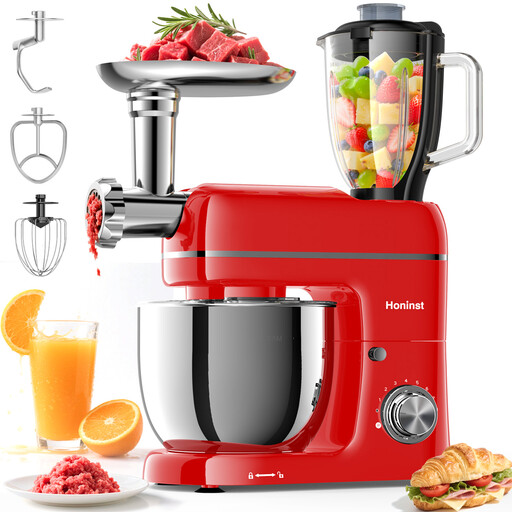
Why it suits this profile: The large 6 QT stainless-steel bowl and included dough hook are suited to larger preparations, firm dough and multiple portions.
The listing mentions specific features such as 1300 W maximum power, eight speeds, a pulse setting, tilting head and safety lock. Do check the exact accessories included before buying.
6 QT stainless-steel bowl, dough hook, whisk and blender attachment according to the product description; suitable for mixing, kneading and whisking.
We have put together a complete, up-to-date list of products that fully meet these strict selection criteria and the applicable European safety regulations.
Yes, provided the appliance has a suitable blender jug, appropriate blades and enough room for liquid. Also check whether the product information mentions processing frozen ingredients or ice. A food processor for chopping, slicing and grating does not always have a jug suitable for smooth smoothies.
Its lifespan depends on how it is used, maintained and whether the maximum operating time is observed. Overloading the appliance, running it for too long continuously or fitting accessories incorrectly can accelerate wear. Allow the motor to cool down when instructed to do so, and regularly check the blades, lids and locks for damage.
Energy consumption depends on the power rating and operating time. A 600 W appliance theoretically uses 0.6 kWh during one hour of continuous use, but in practice a blender usually runs for short periods. The purchase price, available accessories and cleaning time are therefore at least as important when comparing models.
