
Vandaag of morgen in huis

Kwaliteit gegarandeerd

Welkomstaanbiedingen ontgrendelen: GRATIS bezorging | Tot 80% korting | Gratis 30 dagen JoyPlus-proefperiode
Download de app
A food mixer can take much of the effort out of making bread dough, cake batter, whipped cream and everyday meal prep. However, it is not wise to base your choice solely on wattage or the number of accessories included. A high motor rating, for example, does not automatically indicate how much dough the appliance can handle. A large bowl can also be inconvenient if you usually make small portions.
This buying guide helps home bakers, keen cooks and families choose a suitable kitchen mixer, stand mixer or multifunctional food processor.
A power rating of 1,000 watts sounds appealing, but actual performance also depends on the gearing, motor control and maximum dough capacity. For heavy bread dough, these details are more important than simply choosing the highest wattage on the box.
Pay attention to:
A 5-litre food mixer or 5.5-litre model provides room for family-sized portions, but the bowl cannot always be filled to the brim. Check whether the manufacturer states a separate limit for flour, batter or dough. Dough also expands during kneading and needs room to move properly.
A food mixer with accessories may include a blender, food processor, meat grinder or citrus juicer. This is useful if you use these functions regularly. If you mainly bake bread, you may get more value from a sturdy mixing bowl and a good dough hook than from several separate slicing discs.
Also check whether the parts are dishwasher-safe and whether replacement accessories are available. This helps prevent a multifunctional food processor from becoming something that mainly takes up space after a few months.
For light tasks such as whipping cream and making cake batter, a more compact mixer with bowl is often sufficient. For bread dough and pizza dough, stability, torque and a suitable dough hook are important. As well as the power rating, look at the maximum dough quantity. A model may have a 5-litre bowl but a lower limit for heavy dough.
Multiple speed settings are useful when you want to mix gently and then whisk at a higher speed. A pulse setting is particularly handy for chopping or short processing tasks, if the model has this function.
A stainless-steel bowl is durable, easy to clean and suitable for both cold and lukewarm ingredients. A bowl of around 5 to 5.5 litres is well suited to families and home bakers who make larger quantities. For one or two people, a smaller model may be easier to store.
Measure the available space beforehand. Pay attention to:
A blender or food processor attachment makes a food mixer more versatile, but every additional part requires storage and maintenance. Blades and slicing discs are sharp and must be fitted according to the instructions.
Choose an appliance with clear locking mechanisms for the bowl and accessories. Use the machine on a flat, dry surface and unplug it before changing parts or cleaning. Check that the product has a CE marking and read the safety instructions for household use.
The choices below are based on the stated product specifications, capacity, functions and accessories. Always check the current product page, included parts and usage limits before buying.
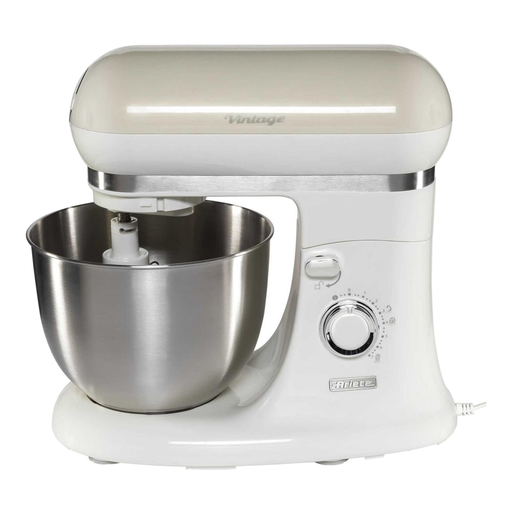
Why it suits this profile: The stated product specifications include a 5.5-litre stainless-steel bowl, a metal housing, a non-slip base and accessories for whisking, mixing and kneading.
The choice is not based on power alone: the bowl, non-slip base and included mixing tools are listed separately. Do check the model details, however, as the product title and specifications do not list exactly the same model number.
5.5-litre stainless-steel bowl; dough hook, beater and whisk; two-year manufacturer’s warranty according to the product information.
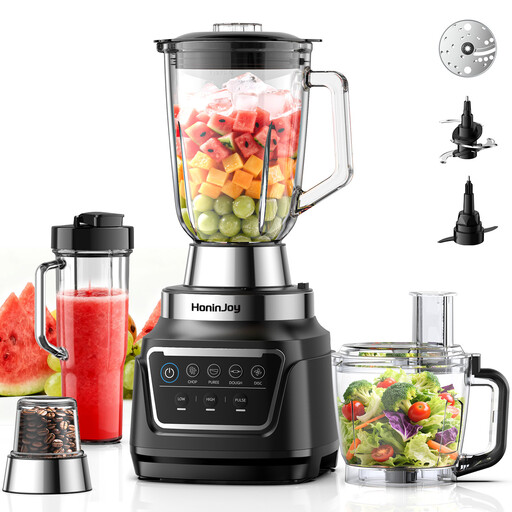
Why it suits this profile: This model combines a 5.5-litre bowl with eight speeds, a 1.5-litre glass blender and a meat grinder. The product description also mentions a timer and splash guard.
The accessories are specifically named rather than simply described as “multifunctional”. Do check that the functions you need are actually included in the box.
1000 watts; 5.5-litre stainless-steel bowl; blender and meat grinder; the HomeID app is mentioned in the product description.

Why it suits this profile: The product information lists a blender, meat grinder, citrus juicer and vegetable slicer. This makes the model well suited to households that want to use one base appliance for a range of preparations.
The accessories are designed for a range of tasks, not just mixing. Bear in mind the stated bowl capacity of 3.9 litres and check the compatibility of each attachment.
3.9-litre stainless-steel bowl; multiple attachments; stated capacity of up to 2.7 kg of kneaded dough and 1.9 kg of yeast dough.
Why it suits this profile: This appliance is primarily designed for blending, chopping, slicing, grating and grinding. It is suitable for anyone looking for a food processor who sees dough preparation as an additional function.
The functions and capacities of the components are specified: a 1.5-litre blender jug, a 2-litre food processor bowl and an 80-gram grinding cup. Check that this type of appliance suits the balance you need between blending and kneading.
According to the product description, up to 1300 watts; multiple bowls and cups; according to the listing, removable parts are suitable for the top rack of the dishwasher.
We have put together a complete, up-to-date list of products that fully meet these strict selection criteria and the applicable European safety regulations.
That depends on the motor, dough hook, maximum dough capacity and recommended operating time. In particular, check how many kilograms of dough the model can process. Start heavy dough at a low speed and follow the instructions. Stop if the motor noticeably slows down or becomes hot.
For a household of three to five people, a bowl of around 5 to 5.5 litres is often practical. For smaller quantities, a large bowl may mix less efficiently. So do not look only at the number of litres; also check the minimum quantity recommended by the manufacturer.
Consumption depends on the power rating and operating time. In theory, a 1,000-watt appliance uses 1 kilowatt-hour when running continuously at maximum power for one hour. In practice, mixing sessions are usually shorter and the motor does not run continuously at full power. Use the appropriate speed and avoid running the appliance for longer than necessary.
