
Vandaag of morgen in huis

Kwaliteit gegarandeerd

Welkomstaanbiedingen ontgrendelen: GRATIS bezorging | Tot 80% korting | Gratis 30 dagen JoyPlus-proefperiode
Download de app
A food mixer can take much of the effort out of baking and cooking. Even so, many people choose a model based solely on wattage, a large bowl or a long list of accessories. This can lead to disappointment: the appliance may not fit under your kitchen cupboards, may be unable to handle the desired quantity of dough or may come with accessories you hardly ever use.
This buying guide helps you assess a food mixer, stand mixer, kitchen mixer or food processor based on measurable features. That way, you pay for functions that suit the way you use the appliance every day.
A high wattage does not automatically mean that a food mixer will handle heavy dough better. The transmission, mixing system, maximum dough capacity and recommended operating time also play a part. Always check how much dough or batter the manufacturer says the machine can handle.
Also look out for conflicting information. Some product titles, for example, may state a different power rating or bowl capacity from the technical specifications. Use the full product page and manual to make your decision, rather than relying on the short title alone.
A 5.5-litre bowl does not automatically provide room for 5.5 litres of ingredients. The maximum quantity of dough, batter or liquid is lower and varies depending on the preparation. For bread dough, the stated maximum dough capacity is particularly relevant.
A large bowl is practical for families and larger baking sessions, but it also takes up more space. Measure the available worktop space beforehand, including the height when the mixing arm is raised.
A food mixer with a blender, meat grinder, grating or slicing discs sounds versatile. If you mainly bake bread, a sturdy dough hook, a suitably sized bowl and a stable housing are more important than accessories for making juice or ice cream.
Also check whether accessories are included or available separately. Some Kenwood models have additional attachments available, but that does not mean they are included as standard in the box.
For a food mixer used for dough and baking, three details are important:
A powerful food mixer should also remain stable during use. Non-slip feet, a relatively heavy metal housing and a securely locking bowl can help limit movement while kneading.
A food mixer with mixing bowl of around 4 litres is often suitable for everyday portions. For several loaves, celebration cakes or a large family, a bowl of 5 to 7 litres may be more convenient.
Stainless steel is hard-wearing and less likely to absorb smells or colours than some plastics. A glass blender jug makes the contents easy to see, but it is heavier and can break if dropped. Also consider cleaning: dishwasher-safe parts save time, while the motor unit must not be immersed in water.
A food mixer with built-in scales can weigh ingredients directly in the bowl. This reduces the number of separate bowls you need and can make weighing ingredients more straightforward. A timer is useful for recipes where you want to stick to a set mixing time, but check whether the timer also switches the machine off automatically.
If you want to do more than bake, look out for:
Bear in mind that claims about, for example, a particular kneading time or a specific mixing technique come from the brand. According to Philips’ own research, ProKnead technology can prepare dough in around three minutes. Treat this as a product claim and take the recipe, quantity and ingredients into account.

Why it suits this profile: This compact machine has a 4-litre stainless steel bowl, six speeds and a pulse function. The included K-beater, whisk and dough hook cover the basics for cakes, whipped cream and dough.
The stated maximum dough capacity of 1.4 kg makes it clear which portions are achievable. Check the dimensions before placing the appliance under a cupboard.
800 W, six speeds, pulse function and a high-speed connection for optional accessories.
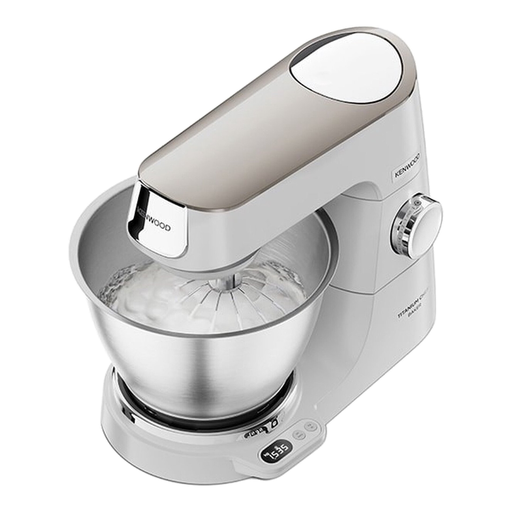
Why it suits this profile: This XL model combines a 7-litre bowl with built-in scales and a 1200 W motor. It is well suited to home bakers who regularly prepare larger quantities.
The product information lists both the power rating and the XL bowl and weighing function. This lets you assess capacity and convenience together, rather than looking at wattage alone.
7-litre capacity, built-in scales, LightLift head and delicate mixing function according to the product description.
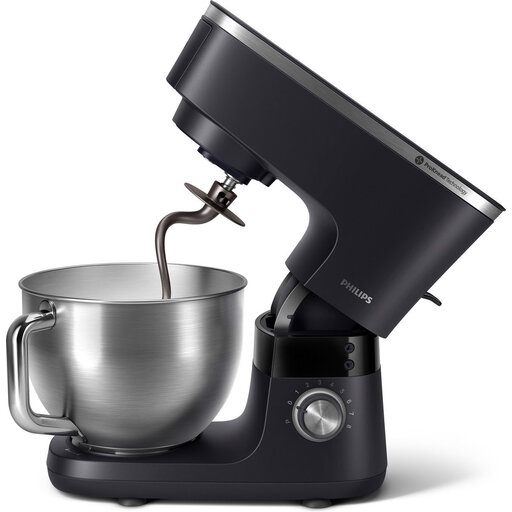
Why it suits this profile: As well as kneading, mixing and whisking, it comes with a 1.5-litre blender and a meat grinder. This makes the model suitable for families who want to use one base appliance for a range of preparations.
The key attachments are clearly specified. However, check beforehand that you have enough storage space for the blender, grinder and other components.
1000 W, 5.5-litre bowl, eight speeds, blender, meat grinder and automatic shut-off via the timer according to the product specifications.
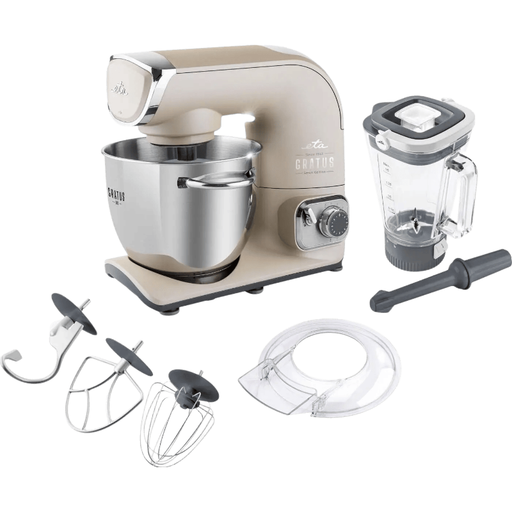
Why it suits this profile: This planetary mixer has a metal housing, a 5.5-litre bowl, a 1.5-litre blender jug and a stated maximum dough capacity of 2.5 kg.
The specifications list capacity, materials and safety features separately. This provides more useful guidance than a general description such as ‘powerful’.
1500 W, planetary mixing action, pulse function, thermal protection and a non-slip base.
We have put together a complete, up-to-date list of products that fully meet these strict selection criteria and the applicable European safety regulations.
Yes, provided the model has a dough hook and the maximum dough capacity suits your recipes. Do not look only at the power rating; also check the specified dough quantity and recommended operating time.
For everyday use, around 4 litres is often sufficient. If you bake for several people or prepare larger quantities of dough, consider a bowl of 5.5 to 7 litres. The usable capacity is always lower than the bowl’s total capacity.
Consumption depends on the power rating and how long the machine is used. A 1000 W motor uses more electricity at maximum load than a 700 W model, but a short preparation can still require less energy than prolonged use at a lower power level. Use the machine according to the manual and allow the motor to cool down during heavy preparations when instructed.
