
Vandaag of morgen in huis

Kwaliteit gegarandeerd

Welkomstaanbiedingen ontgrendelen: GRATIS bezorging | Tot 80% korting | Gratis 30 dagen JoyPlus-proefperiode
Download de app
A food mixer can mix batter, knead dough and whip cream, but not every appliance is suitable for every kitchen. A large stand mixer, for example, takes up more space than a hand mixer. A blender is ideal for smoothies and soups, but not automatically for bread dough.
If you focus mainly on wattage or a long list of accessories, you could end up buying an appliance that disappoints in everyday use. This buying guide compares food mixers, stand mixers, hand mixers and blenders based on the features that really make a difference at home.
Higher wattage does not automatically mean that an appliance can handle every type of dough without difficulty. Also consider the recommended quantity, maximum operating time and how the power rating is specified. Some models, for example, quote peak power, while the rated power is lower.
For kneading, a suitable dough hook, stable housing and a low speed are also important. An electric mixer with plenty of power but a small bowl may be less practical for family-sized portions.
A 6-litre bowl cannot always be filled to the brim. Monsga, for example, lists a maximum capacity of 6 litres, with a recommended usable capacity of 5 litres. Always check the recommended quantity for dough, batter or whipped cream.
A large mixer with a bowl is particularly well suited to families and regular home bakers. For a few pancakes or a small cake, a hand mixer is often easier to store and quicker to clean.
The term food mixer with accessories means little without a specific list. Check whether the box contains a dough hook, beater, whisk, mixing cup, chopper or blender jug. Also pay attention to compatibility: only use parts approved by the manufacturer.
A stick blender with a whisk and chopper can handle several smaller tasks, but it does not always replace a stand mixer for heavy bread dough.
Several speeds are useful for cake batter and whipped cream. A gentle start helps prevent splashes, while a higher setting helps create a light, airy texture. For dough, a low to medium setting and a suitable dough hook are particularly important.
Examples from the range:
Treat claims about speed or efficiency as brand-provided product information. According to Philips’ own product description, the HR3745/00 mixes up to 25% faster; this is not a universal guarantee for every recipe.
Measure the available worktop space in advance and also check the height if the head can be lifted. A 5 to 6.5-litre bowl is useful for larger quantities, but a heavy appliance is less convenient to move.
Pay attention to:
A food mixer should stand securely. Non-slip feet or suction cups can help limit movement during kneading, but always place the appliance on a flat, dry surface. Also check whether the product specifies protection against overheating and overloading.
Unplug the appliance before changing accessories or cleaning it. Do not immerse the motor unit in water. Blender and stick blender blades are sharp, so take extra care when cleaning them.
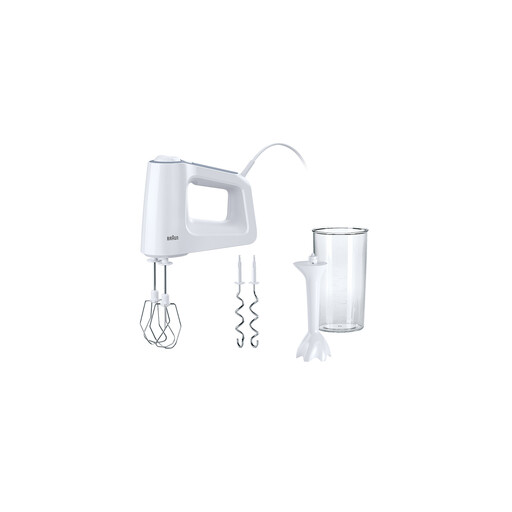
Why it suits this profile: A compact hand mixer for cake batter, whipped cream and simple dough recipes. You do not need a large bowl or a permanent space on the worktop.
The product specification lists adjustable speeds, a non-slip handle and ComfortClick for changing accessories. This means you can choose it specifically for basic baking, rather than paying for features you will not use.
SmartMix technology, multiple speeds and a flexible cable outlet according to the product description.
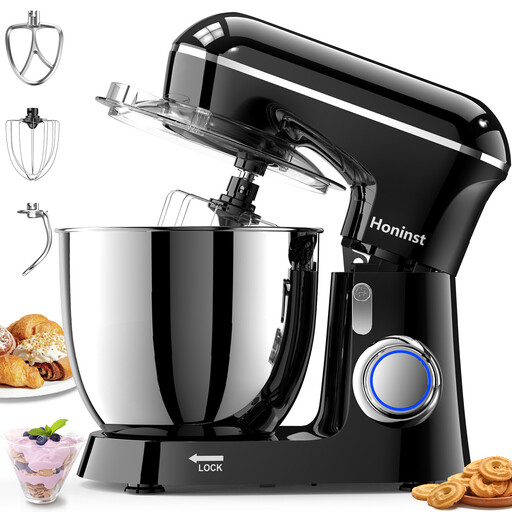
Why it suits this profile: A spacious stand mixer for home bakers who regularly make bread, pizza, cakes or pastries and want to keep their hands free while mixing.
The listed specifications are clear: a 6.5 QT stainless steel bowl, ten speeds, a tilting head and three specified accessories. However, check the maximum quantities in the manual.
Dough, whisk and beater attachments; non-slip suction feet and overheating protection according to the product information.
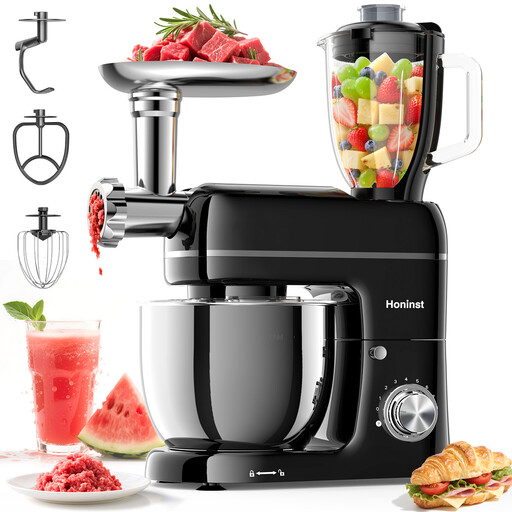
Why it suits this profile: For households that want to chop or blend as well as mix and knead, without buying several separate appliances.
The product description lists the functions separately: stand mixer, meat grinder and blender, with a 6 QT bowl and eight speeds plus pulse. Check in advance exactly which accessories are included with your version.
Maximum stated motor power of 1300 W, a tilting head and safety switch according to the product listing.
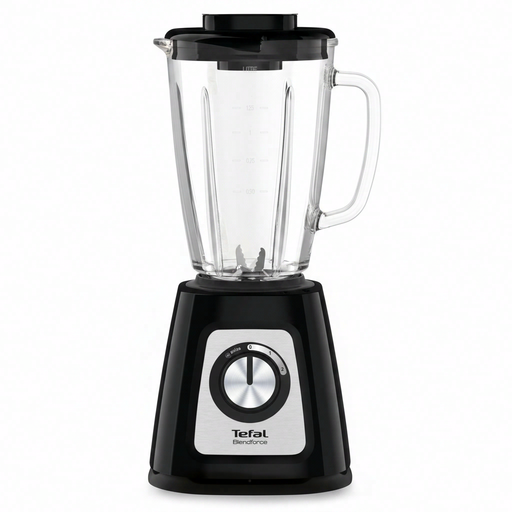
Why it suits this profile: A blender makes more sense than a food mixer when smoothies, cold drinks, soups and sauces are the main tasks.
You choose this appliance for blending, not for bread dough. The listed functions are two speeds, pulse and ice crushing; the jug has a capacity of 1.25 litres.
Glass jug, stainless steel blades, safety lock and dishwasher-safe parts according to the product information.
We have put together a complete, up-to-date list of products that fully meet these strict selection criteria and the applicable European safety regulations.
Choose a stand mixer if you often make dough or large quantities of batter. A hand mixer is suitable for smaller portions and takes up little storage space. A stick blender works directly in a pan or mixing cup and is practical for soup, sauce and smoothies. A blender usually has a fixed jug and is intended for liquid or soft mixtures.
When considering the total cost, also factor in accessories, replacement parts and cleaning time. An appliance with lots of functions is only good value if you actually use them.
Its lifespan depends on how often it is used, the workload, maintenance and storage. Follow the maximum quantities and recommended operating times in the manual. Allow the motor to cool down if the safety protection activates, and do not use damaged cables or accessories.
For light mixing and cake batter, a lower power rating is often sufficient. For regularly kneading heavy dough, a stable stand mixer, suitable dough hook and appropriate low speed are more important than a high wattage alone. Compare the rated power and operating limitations.
Energy consumption depends on the power rating and operating time. A 500 W appliance running for ten minutes theoretically uses around 0.083 kWh. In practice, speed, workload and the actual power draw determine the result. Cleanable parts and the availability of original accessories affect costs in the long term.
