
Vandaag of morgen in huis

Kwaliteit gegarandeerd

Welkomstaanbiedingen ontgrendelen: GRATIS bezorging | Tot 80% korting | Gratis 30 dagen JoyPlus-proefperiode
Download de app
An organised kitchen starts with good storage solutions. But the search for the perfect food containers can be frustrating. The market is flooded with options that make big promises but don't always deliver. Before you invest in a new set, it's wise to know what to look for. As a Product Recommendation Officer at Joybuy, I see daily which products truly work and which are mostly marketing fluff. Let's go over the three most common pitfalls that lead to buyer's remorse.
A set of cheap containers might seem like a good deal, but it often leads to frustration. Watch out for these three problems:
To avoid these problems, focus on a few concrete specifications. These are the features that make the difference between a helpful kitchen tool and a waste of money.
Most plastic containers with lids are made from polypropylene (PP), a sturdy and versatile material. The most important label to look for is BPA-free. Bisphenol A (BPA) is a chemical you'd rather not have in contact with your food. Also, always check if the containers are suitable for their intended use. Good freezer-safe containers and microwave-safe containers often have a specified temperature range, for example, from -40°C to +100°C. This indicates that the material can withstand both freezing cold and heat without cracking or releasing harmful substances.
A good seal is essential. Simple snap-on lids are fine for dry food, but for liquids or for taking food on the go, storage boxes with lids featuring a clip-lock mechanism or a silicone sealing ring are a better choice. These provide a truly airtight and leak-proof seal, making them ideal as meal prep containers or airtight food canisters.
Additionally, look at the design. Are the containers "nestable" (do they fit inside each other without lids) and "stackable" (can they stand securely on top of each other with lids)? A modular system, where different sizes share the same width or length, makes your cupboards and fridge much more organised. These are the details that distinguish good kitchen storage solutions from the rest.
Based on these criteria, we have selected a few popular choices that suit different households and needs.
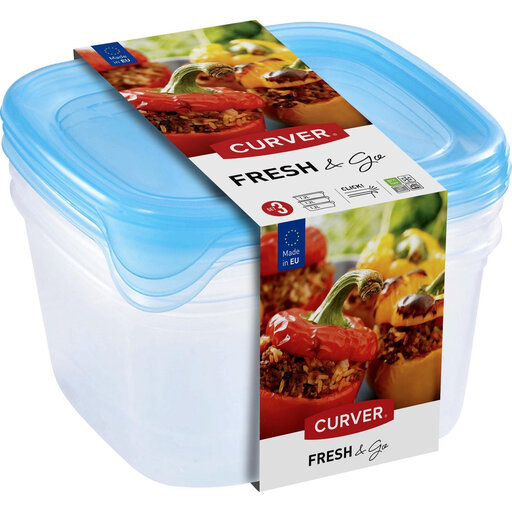
Why This Fits Their Persona: This set is ideal for preparing full meals. The 1.2-litre capacity is spacious enough for a main course. They are designed for the full cycle: freezing, transporting, reheating in the microwave, and cleaning in the dishwasher.
The sturdy snap-on lids close securely and prevent leaks, a common problem with cheaper containers. The material is resistant to temperatures from -40°C to +100°C, so it won't warp.
The set is nestable and stackable, which saves a lot of space. The tabs on the corners of the lid make opening easy, even with cold hands.
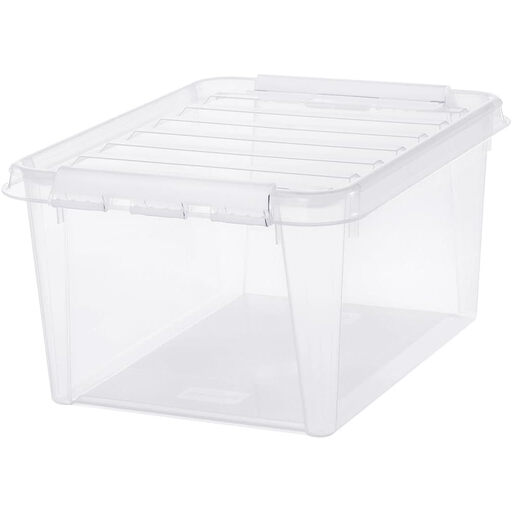
Why This Fits Their Persona: For those who think big. These 31-litre boxes are perfect for storing bulk ingredients, seasonal clothing, blankets, or tools. They are food-safe, so they're also suitable for large quantities of potatoes or flour.
These boxes are specifically designed to stack securely, allowing you to make optimal use of vertical space in a cupboard or storage room. This avoids the pitfall of impractical, non-stackable designs.
Made from durable polypropylene with reinforced corners. The manufacturer offers a 10-year warranty, which underscores the product's durability.
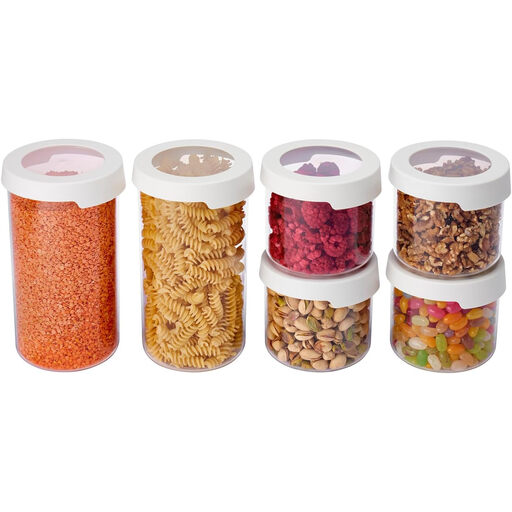
Why This Fits Their Persona: This modular set is perfect for organising dry ingredients in the pantry. Think pasta, rice, cereal, or nuts. The different sizes offer flexibility, and the clear design lets you see what's inside at a glance.
Prevents the chaos of half-open bags and boxes. The airtight lids keep contents fresh and prevent pests. The modular design solves the problem of clumsy, non-stackable packaging.
The stackable, modular design maximises space in drawers and cupboards. According to the manufacturer, the containers are partly made from bio-based plastic.
We have compiled a complete, real-time list of products that fully satisfy these strict selection criteria and UK safety regulations.
Discolouration from foods like tomato sauce or curry is difficult to avoid completely. One tip is to lightly coat the inside of the container with a neutral oil before adding the food. This creates a protective layer. If a stain does occur, it can help to fill the container with a mixture of water and a little baking soda and let it sit overnight.
No, not necessarily. BPA-free only means that the specific chemical BPA was not used. Whether a container is microwave-safe depends on the type of plastic and its design. Always check the symbols on the bottom of the product or the manufacturer's specifications. Typically, you should remove the lid before heating to prevent pressure build-up.
These terms are often confused.
The most convenient food containers are both stackable and nestable.
