
Vandaag of morgen in huis

Kwaliteit gegarandeerd

Welkomstaanbiedingen ontgrendelen: GRATIS bezorging | Tot 80% korting | Gratis 30 dagen JoyPlus-proefperiode
Download de app
A cupboard full of warped plastic containers, lids that never fit, and a lingering smell of last week's curry. Sound familiar? You're not alone. The market for food storage containers is vast, but many products overpromise and underdeliver. Before you buy another set that's destined for the bin after three months, it's wise to know what to look for.
As a Product Recommendation Officer at Joybuy, I see what's available on a daily basis. I'm here to help you see through the marketing jargon and avoid the common pitfalls that cost many people money.
The 3 Most Common Pitfalls of Food Storage Containers:
To avoid a bad purchase, you can focus on a few concrete features. These aren't opinions, but facts that determine the quality and usability of food storage containers.
The choice between glass and plastic is the most important one. Both have pros and cons, depending on your use case.
The lid determines whether a container is truly functional. A simple plastic lid that you just press on will leak sooner and lose its shape. For a reliable, airtight seal, lids with a silicone sealing ring and four-sided locking clips are a much better choice. This is especially important for meal prep containers that you take with you or for storing liquids.
Think about how you will use and store the containers.
Below are some products that align well with different needs, based on their specifications.
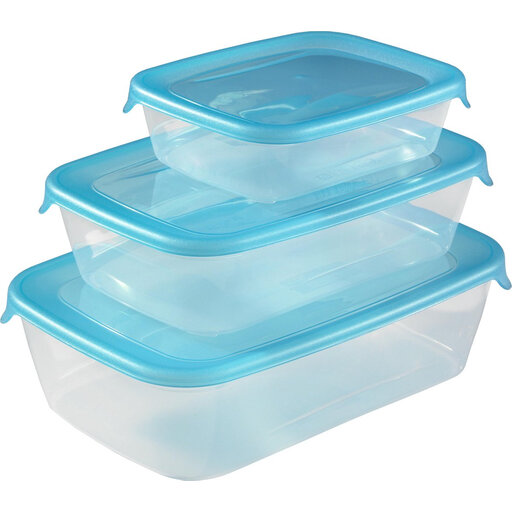
Why This Fits Their Persona: Ideal for students or those just starting out who need an affordable and versatile food storage container set. The three different sizes (0.5L, 1L, 2L) are handy for leftovers, lunch, and storing ingredients.
This set is designed to nest, which prevents 'stacking chaos' in the cupboard. The BPA-free plastic is specified for temperatures from -40°C to +100°C, reducing the risk of warping in the microwave or dishwasher with correct use.
A complete, nestable set with three sizes for various applications. Suitable for the freezer, microwave, and dishwasher for maximum convenience.
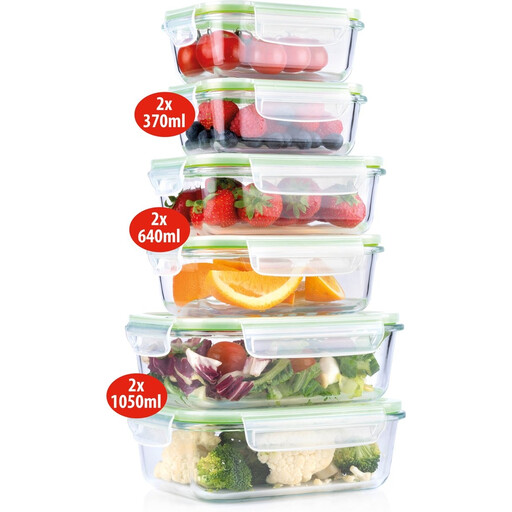
Why This Fits Their Persona: For those who are serious about meal prep and are looking for a durable, hygienic solution. Glass is perfect for storing and reheating all kinds of meals without discolouration or lingering odours.
The borosilicate glass completely solves the 'microwave trap': no stains or odours. The lids with a locking system ensure a reliable, leak-proof seal, thus avoiding the 'airtight lie'.
Made from strong, stain- and odour-free borosilicate glass. The containers themselves are oven-safe (without the lid) and the set offers multiple sizes for complete meals.
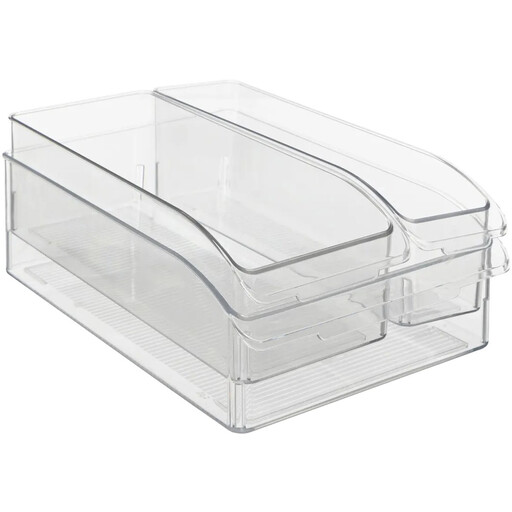
Why This Fits Their Persona: For those who want a well-organised fridge and are looking for specific solutions. This is not a standard food container, but a true fridge organiser to group vegetables, fruits, cans, or cartons.
This product tackles 'stacking chaos' at its root. It is specifically designed to create order, not to seal food airtight for on-the-go. It solves one problem very well: a cluttered fridge.
Transparent design for an instant overview. Features a handle to easily slide the bin out of the fridge. Made of sturdy PET plastic.
We have compiled a complete, up-to-date list of products that fully meet these strict selection criteria and UK/EU regulations.
Not necessarily "better," but they serve a different purpose. Glass is more hygienic, doesn't absorb stains or odours, and is often safer for heating in the oven or microwave. Plastic is lighter, cheaper, and less breakable, making it ideal for transport, for children, or for use in the freezer. The right choice depends on what you will be using the container for most.
The quickest way is to wash them immediately after use. For stubborn odours, you can let the container soak overnight in water with a splash of vinegar or some baking soda. Another tip is to store the containers without their lids on, allowing air to circulate and odours to escape.
BPA (Bisphenol A) is a chemical that was used in some types of hard plastic. In the past, concerns have been raised about the potential health effects of BPA exposure through food. A product that is 'BPA-free' has been manufactured without this specific substance. Within the European Union, this is a common safety standard for food storage containers and other plastic products that come into contact with food.
