
Vandaag of morgen in huis

Kwaliteit gegarandeerd

Welkomstaanbiedingen ontgrendelen: GRATIS bezorging | Tot 80% korting | Gratis 30 dagen JoyPlus-proefperiode
Download de app
Food storage containers may seem straightforward, but problems can quickly arise in practice. A lid may not close properly, a container may not fit in the fridge or the material may turn out to be unsuitable for the microwave. As a result, Dutch households, meal preppers and families sometimes buy a set of which only part is actually used.
So don’t just look at the number of containers or the price. Pay particular attention to the seal, dimensions, capacity and permitted uses. With the right selection, you can use food storage containers for leftovers, lunch, meal prep and dry goods without taking up more space than necessary in your cupboard or fridge.
An airtight storage container is useful for dry products and leftovers, but the term does not automatically mean that the container is suitable for transport, freezing or liquid foods. So check how the lid closes: with a clip-on lid, silicone seal or another type of closure.
A good seal also does not prevent a container from tipping over. For soup or sauce, a secure closure and enough room at the top are important. Do not fill a freezer container to the brim, as the contents may expand when frozen.
Not all plastic storage boxes are microwave-safe containers. A lid that is suitable for food storage must not automatically be placed in the microwave either. For example, the Curver Fresh & Go products state that the lid must be removed before heating. Never use a container in a conventional oven unless this is expressly stated.
Also check whether the product is dishwasher-safe. According to the product information, the 5five Flixo containers are not suitable for the dishwasher, while several Curver and Alpina models are.
Two containers with the same capacity can fit very differently in your fridge because of their shape. A rectangular 2-litre box takes up different space from a square 1.5-litre container. So measure shelves, fridge drawers and kitchen cupboards before ordering.
For small portions, stackable containers of around 0.45 to 1 litre are practical. Larger storage containers are better suited to leftovers from a family meal or dry ingredients, but take up more vertical space.
Choose the capacity based on how you plan to use the containers:
As well as capacity, consider the length, width and height. A narrow container may work better as a fridge organiser, while low-profile models are more convenient for a fridge drawer.
Check that the product description clearly states the material and whether the product is suitable for food use. Polypropylene, polystyrene and other plastics do not automatically have the same properties. Look for information about food contact, BPA-free material and the permitted temperature range.
According to the product description, the Curver Fresh & Go containers are BPA-free and suitable for temperatures from -40 °C to +100 °C. Based on these product specifications, this makes them suitable for the freezer, microwave and dishwasher, with the stated instruction to remove the lid before microwave use.
A clip-on lid can be convenient for everyday use, while a silicone seal is particularly useful for dry products. Check whether the containers are stackable and whether they fit inside one another without their lids. This saves cupboard space when the set is not in use.
Also consider maintenance. Washing by hand is not necessarily a problem, but dishwasher-safe containers can save time when used every day. Regularly check containers and lids for cracks, warping or a seal that no longer fits properly.
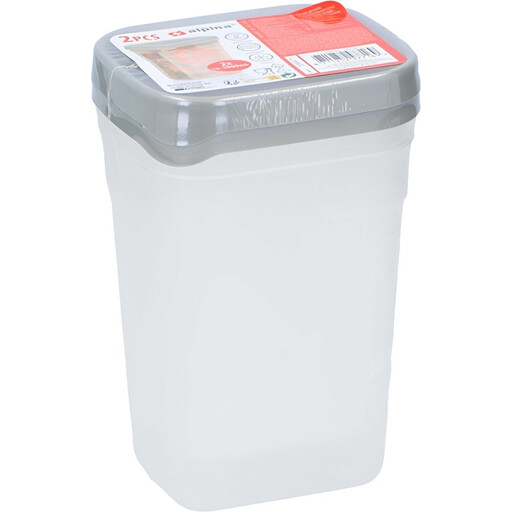
Why it suits this profile: Two 1-litre containers provide a convenient starting point for leftovers, lunch and meal prep without having to buy a large set straight away.
The product information explicitly states that the containers are stackable, airtight and suitable for the dishwasher, microwave and freezer. However, check the lid instructions before use.
Set of 2, 1-litre capacity per container, clip-on lids and a rectangular shape.
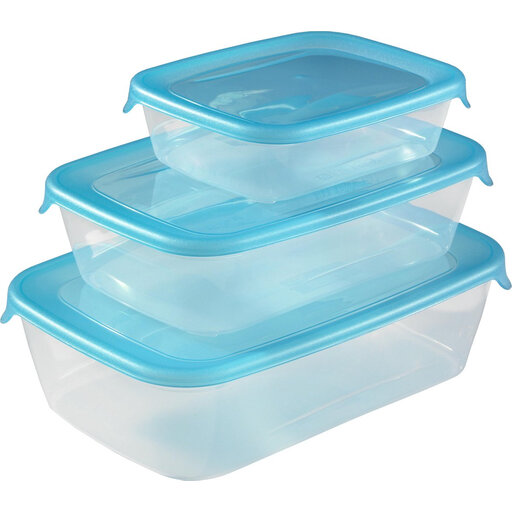
Why it suits this profile: The three different sizes accommodate a range of portions and make it easier to use one matching range in the fridge and freezer.
The specifications mention stackability, nesting, a clip closure and a temperature range. According to the safety information, the lid must be removed before microwave use.
Three sizes, suitable according to the product description for the freezer, microwave and dishwasher, plus BPA-free material.
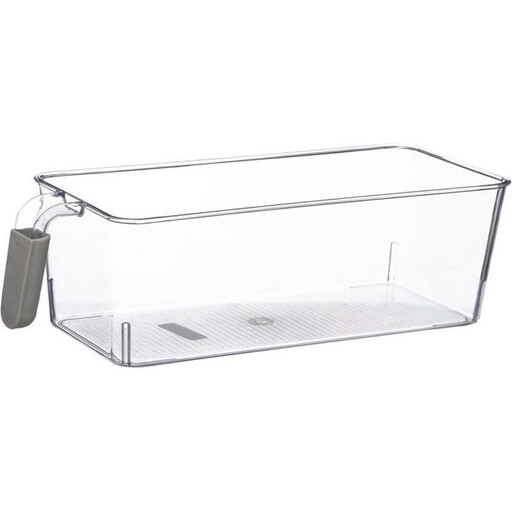
Why it suits this profile: This is not an airtight storage container, but a transparent fridge organiser for cans, small packages and loose products.
The product description makes it clear that this is a fridge container that must be washed by hand. So don’t expect a dishwasher-safe food storage container.
Transparent design, handles and dimensions of 30 x 12.5 x 11 cm for a neatly organised fridge.
We’ve put together a complete, up-to-date list of products that fully meet these strict selection criteria and the applicable European safety regulations.
For a main meal, 0.8 to 1 litre is often practical. Smaller food storage containers of around 0.45 litres are better suited to snacks, side dishes or small portions. If you cook larger quantities, you can use a 1.5 to 2-litre container. Always check that the dimensions fit in your fridge too.
This varies by model. Only use freezer containers and microwave-safe containers when this is clearly stated in the product information. Remove the lid before heating if instructed by the manufacturer. If the usage instructions recommend it, allow frozen food to partially defrost first, and do not fill containers completely.
Their lifespan depends on the material, usage and care. Replace a container if it is cracked, warped or permanently discoloured, or if the lid no longer closes properly. Dishwasher-safe containers can be convenient for everyday use, but follow the manufacturer’s care instructions to minimise unnecessary wear.
