
Livraison le jour même et le lendemain

Qualité garantie

Débloquez vos offres de bienvenue: Livraison GRATUITE | Jusqu'à -80 % | 30 jours d'essai gratuits à JoyPlus
Téléchargez l'application
Food storage containers may seem straightforward, but the difference between a useful set and a disappointing purchase often comes down to the details. A lid that stops sealing properly after a few weeks, a container that does not fit in the refrigerator door or a material that is unsuitable for the microwave can cause daily frustration.
For households, cooking enthusiasts and meal preppers, capacity, sealing, material and maintenance are especially important. Below, you will find what to look for in airtight food storage containers, glass storage containers, plastic food containers and storage jars with lids.
The term airtight sounds appealing, but check how the closure is designed. A snap-on lid, silicone seal or locking clips tells you more than a marketing term printed on the packaging. Also check whether the manufacturer specifies what the container is suitable for: dry ingredients, leftovers, liquids or transport.
For refrigerator and freezer containers, a well-fitting lid is useful for reducing odours and spills. However, an airtight seal does not automatically mean that food will stay fresh indefinitely. Always store food according to the usual temperature and shelf-life guidelines.
A large set may appear good value, but check the capacity of each container. Twelve small storage jars are not always practical if you mainly store leftovers or complete meals. For meal-prep containers, sizes from around 0.5 to 1 litre are often convenient. For pasta, rice and flour, larger storage containers are more suitable.
Also consider the shape. Rectangular kitchen storage containers generally make better use of space in the refrigerator and kitchen cabinets than round models. Stackability and nesting are useful specifications if storage space is limited.
Not every plastic container is suitable for the microwave, freezer or dishwasher. Always check the approved uses and temperature limits for each product. With some models, the lid must be removed before heating. A glass container may be microwave-safe while its lid is not.
Glass storage containers also have a few considerations: they are heavier and can break if dropped or exposed to a significant thermal shock. Plastic is lighter for transport, but may discolour or become damaged over time. Choose based on how you intend to use the container, not solely on the material.
First, make a list of what you want to store:
Check the external dimensions before ordering. A 1.73-litre container, for example, may be too tall for a refrigerator shelf even if its capacity seems suitable.
Borosilicate glass is often used for glass storage containers. Product information for certain models states that they are suitable for the refrigerator, freezer, microwave without the lid and dishwasher. Always check the specific instructions for the product you choose.
BPA-free plastic is a popular choice for lightweight food storage containers. For the Curver Fresh & Go set, the product information specifies BPA-free plastic, a temperature range of -40 °C to +100 °C and use in the freezer, microwave and dishwasher. The lid must be removed before heating.
Glass storage jars with lids are useful when you want to keep the contents visible. According to the product information, a 1.7-litre jar is intended for dry ingredients such as rice, pasta, salt and sugar. If the lid is made of metal, hand washing may be preferable; follow the manufacturer’s care instructions.
Check whether a product has clips, a snap closure or a rubber or silicone seal. Locking clips are practical for liquids and transport, but check whether the manufacturer explicitly states that the container is leak-resistant.
For dishwasher-safe food storage containers, it is useful to know whether this applies to both the container and the lid. Inspect containers regularly for cracks, warping and wear around the seal. A damaged container should no longer be used for transport or heating.
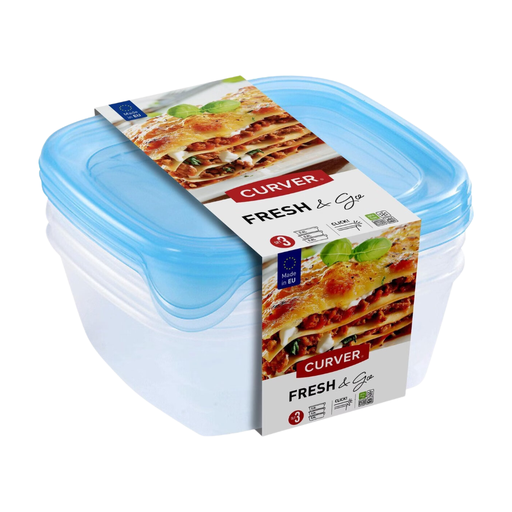
Why This Fits Their Persona: A well-balanced starter set for leftovers, lunch, snacks and simple meal prep in a household.
The three identical sizes help avoid a set filled primarily with impractically small containers. The product information states that they are stackable and nestable.
3 x 0.8 litres; according to the product information, suitable for the freezer, microwave and dishwasher; temperature range from -40 °C to +100 °C.
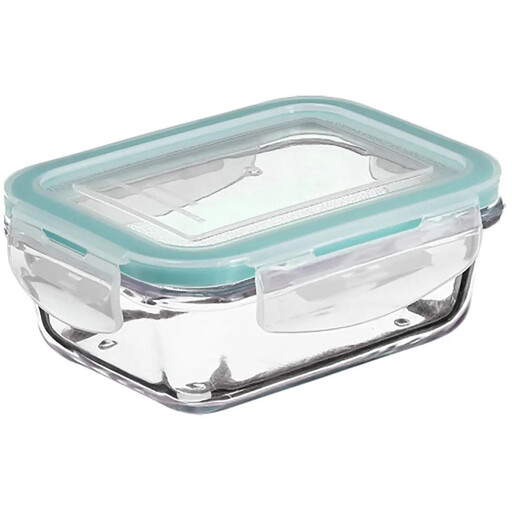
Why This Fits Their Persona: Ideal for anyone who prepares meals in advance and wants to see the contents immediately in the refrigerator or freezer.
The product description specifies borosilicate glass, locking clips and a leak-resistant closure. This makes the features more concrete than simply calling it a “food storage container”.
1.73 litres and 23 x 17 x 9 cm; according to the product information, suitable for the refrigerator, freezer, microwave without the lid and dishwasher.
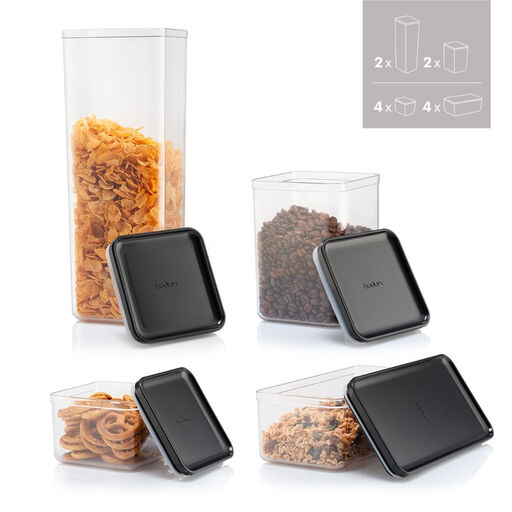
Why This Fits Their Persona: Useful for anyone who wants to store pasta, rice, flour, sugar, nuts and breakfast cereals separately in the pantry.
The set combines several sizes: 4 x 1 litre, 2 x 1.2 litres, 4 x 0.5 litres and 2 x 2.6 litres. You are not limited to a single capacity.
12 BPA-free plastic jars with lids; according to the product information, dishwasher-safe and suitable for a range of dry ingredients and liquids.
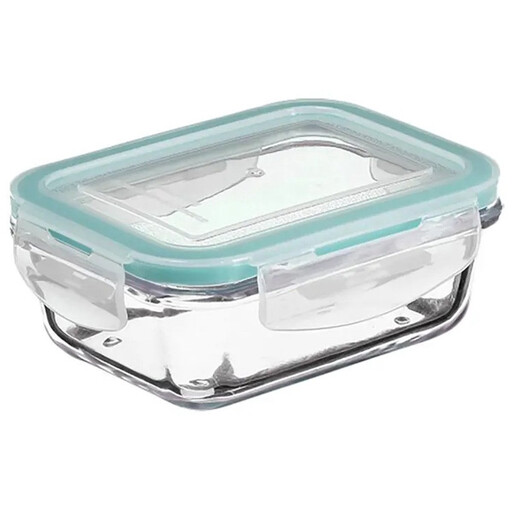
Why This Fits Their Persona: A compact size for yoghurt, fruit, snacks, sauces or a small lunch for work or school.
The dimensions of 14 x 10 x 5.5 cm make the size clear in advance, reducing the risk of choosing a container that is too large for a bag or lunch compartment.
0.33 litres; borosilicate glass; according to the product information, suitable for the refrigerator, freezer, microwave without the lid and dishwasher.
For coffee beans, tea leaves, sugar and rice, dedicated storage jars for pasta and rice are often more practical and organised than standard refrigerator containers. A 1.7-litre glass storage jar with a stainless-steel lid, for example, is designed for dry foods. For smaller quantities, there are also glass jars with airtight closures or a set of three YumiPLUS Inspired Airtight Glass Jars.
Pay attention to the difference between airtight, sealable and suitable for liquids. You should only assume that a model is intended for a specific application when this is stated in the product information. You can also browse the coffee, tea and sugar container category for additional sizes.
Browse a current selection of food storage containers and storage jars with verifiable information on capacity, material and intended use.
That depends on the model. According to the product information, the borosilicate-glass 5five containers mentioned above are suitable for the refrigerator, freezer and microwave without the lid. Always check the instructions and avoid significant thermal shocks.
Their lifespan depends on the material, usage and care. Plastic may discolour or warp over time. Glass generally remains transparent, but it is breakable. Replace a container if it has cracks, has become warped or if the silicone seal no longer fits properly.
Not necessarily. Some product information applies to the container, while the lid or a metal component may be better washed by hand. Always check whether both the container and lid are explicitly dishwasher-safe, and place plastic components in the dishwasher according to the manufacturer’s instructions.
