
Vandaag of morgen in huis

Kwaliteit gegarandeerd

Welkomstaanbiedingen ontgrendelen: GRATIS bezorging | Tot 80% korting | Gratis 30 dagen JoyPlus-proefperiode
Download de app
An organised kitchen and fridge bring a sense of calm. Good food storage containers are essential for this. They help reduce food waste, make meal prepping easier, and keep leftovers fresh for longer. But the search for the right containers can be frustrating. The selection is vast, and not every product delivers on its promise. As a Product Recommendation Officer at Joybuy, I see the issues consumers face every day. In this guide, I'll help you avoid the common pitfalls so you can make a choice you'll be happy with for years to come.
Before you invest in a new food storage container set, it's important to know what often goes wrong. Many containers look perfect in the store but prove to be impractical or of poor quality in practice.
lunch box leaks in your bag, or your food spoils faster.plastic storage containers. A serving of pasta with tomato sauce can leave behind an orange stain that never comes out. Odours from ingredients like onion or garlic can also get absorbed into the material.freezer container cracks as soon as it's taken out of the freezer. This happens when the material isn't suited for extreme temperature changes.To avoid a bad purchase, it's crucial to pay attention to a few key specifications. These determine the durability and functionality of your food storage containers.
The choice of material is the most important step. Both have distinct advantages.
A good seal keeps air and moisture out, which keeps food fresh longer and prevents leaks. The most reliable airtight food containers have a lid with a silicone gasket and a four-sided locking system. This creates even pressure and a watertight seal. Simple snap-on lids without a silicone gasket are often less reliable.
Think about how you will use the containers.
Stackable kitchen organisers are essential for a tidy fridge or pantry. Check whether the containers stack securely, both with and without their lids.meal prep containers, this is an absolute must.Based on these criteria, we have selected several products that suit different needs and households.
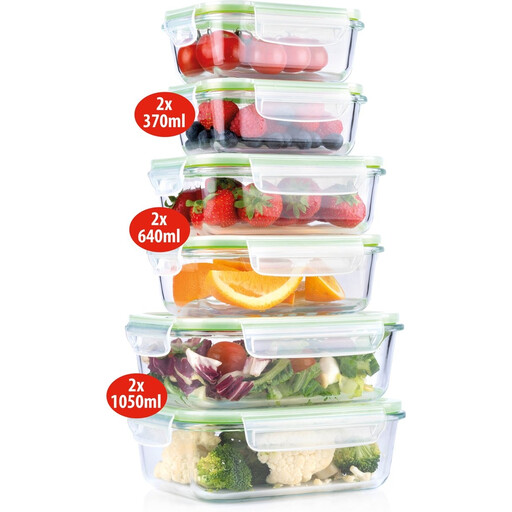
Why This Fits Their Persona: This set is ideal for those who prepare meals for the entire week. The three different sizes are perfect for main courses, salads, and snacks. The glass is hygienic and can go directly from the freezer to the microwave or oven (without the lid).
The borosilicate glass doesn't absorb stains or odours and won't warp. The lids with their locking system and silicone gasket ensure a reliable, airtight seal.
Highly versatile: suitable for the freezer, microwave, oven (up to 400°C without lid), and dishwasher. The set provides a complete solution for various portion sizes right out of the box.
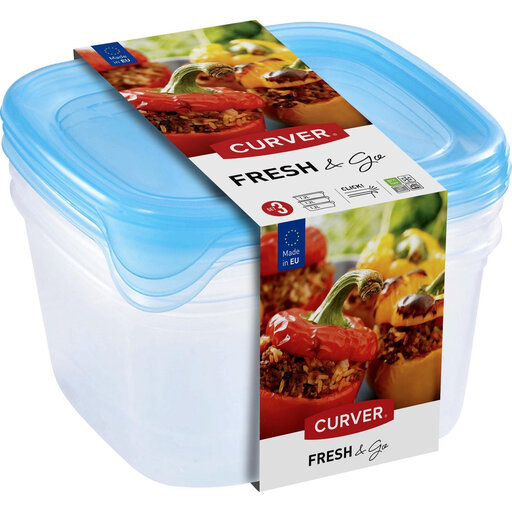
Why This Fits Their Persona: For families who store leftovers, pack lunches, and take snacks on the go. These large, square containers are practical for soup, salads, or a generous dinner portion. They are lightweight and stackable, which saves space in a crowded kitchen cabinet.
The BPA-free plastic is designed for a temperature range of -40°C to +100°C, minimising the risk of warping in the dishwasher or microwave. The lids provide a snug fit to help prevent leaks.
Practical and budget-friendly. The containers are nestable (fitting inside one another) for compact storage, and the tabs on the lids make them easy to open.
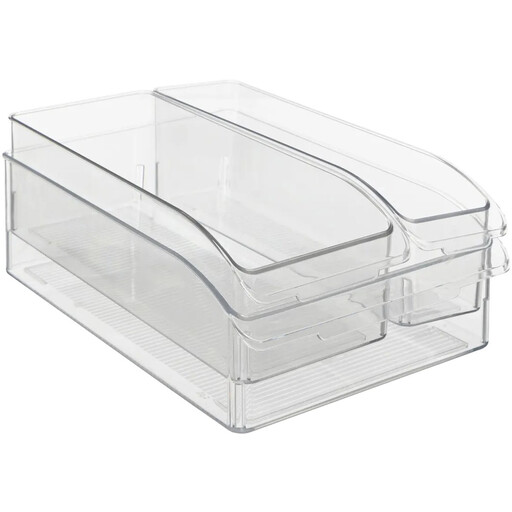
Why This Fits Their Persona: This set isn't a traditional food storage container but a pure fridge organiser. It's perfect for grouping loose vegetables, fruits, cans, or cartons. It instantly creates order and calm in a cluttered fridge.
This product solves a different problem: a lack of structure. Instead of preserving food, it organises space. It's made from sturdy, transparent PET plastic that is not intended for heating, so the pitfalls of melting and warping do not apply.
The built-in handles make it easy to slide the bins out of the fridge like a drawer. The transparent design ensures you can see what you need instantly.
We have compiled a complete, up-to-date list of products that meet these strict selection criteria and all relevant safety standards.
Can all plastic food containers go in the microwave? No, definitely not. Always check the symbols on the bottom of the container or its packaging. Only containers with a microwave-safe symbol (often wavy lines) are safe to use. It's always best to remove the lid before heating to prevent pressure build-up and warping.
How can I prevent my plastic containers from being stained by tomato sauce? It's difficult to completely avoid staining with plastic. One tip is to rinse the container with cold water immediately after use, before washing it with hot, soapy water. Rinsing with cold water first helps prevent the pigments from setting. For meals that stain heavily, like curries or tomato-based dishes, a glass food container is a better choice.
What is the difference between regular glass containers and those made of borosilicate glass? Regular glass (soda-lime glass) can crack when exposed to rapid temperature changes. Borosilicate glass has a different composition that makes it much more resistant to heat and cold. It can go from the freezer directly into the microwave without breaking. That's why this type of glass is used for oven dishes and high-quality food storage containers.
