
Vandaag of morgen in huis

Kwaliteit gegarandeerd

Welkomstaanbiedingen ontgrendelen: GRATIS bezorging | Tot 80% korting | Gratis 30 dagen JoyPlus-proefperiode
Download de app
Storing leftovers, meal prep and chopped vegetables seems simple. Yet many people end up with an impractical container in the kitchen: a lid that leaks, a size that won’t fit in the fridge or a plastic container that warps in the microwave. Use these practical checks to compare food storage containers based on the features that really matter in a British home.
A large set of storage containers might seem appealing, but check the capacity of each container too. Five small containers are useful for snacks or sauces, but less suitable for a meal for two. For families, capacities of around 0.8 to 1.2 litres are often more practical. A container of about 2 litres is better for larger portions, but takes up more space too.
An airtight lid helps prevent spills and limits contact with air. That doesn’t automatically mean a container is suitable for the microwave, freezer or hot food. Always check the individual product information. When using a container in the microwave, you’ll often need to remove or loosen the lid to prevent pressure from building up.
Glass food storage containers are transparent and, according to product information, are often suitable for the dishwasher, freezer and microwave. However, they are heavier and can break if exposed to sudden temperature changes. Plastic food storage containers are lighter and practical for taking with you, but not all plastic containers are dishwasher- or microwave-safe.
A fridge organiser is not the same as a food container either. A transparent fridge bin with handles can help keep products organised, but may only be suitable for handwashing and may not be designed to seal food airtight.
According to the manufacturer’s product information, several Curver Fresh & Go containers are BPA-free and suitable for temperatures from -40 °C to +100 °C. Treat this information as a product specification, not a general guarantee for every plastic container.
Don’t just look at the capacity in litres; consider the shape too. A rectangular storage container may make different use of fridge shelves than a square one. Measure the available space in your fridge, freezer or cupboard beforehand.
Useful guidelines:
Pay attention to the height too. A container may be wide enough but still not fit under a fridge shelf.
Check whether the product has a clip-on lid, clips or a silicone seal. A lid with clips can be useful for transporting food, while a simple closure is quicker to open for everyday use. “Airtight” and “leakproof” are product specifications that you should check for each model.
Also check:
According to the product information provided, the legal guarantee in the EU for the products mentioned is at least two years. Keep your proof of purchase and follow the care instructions to avoid unnecessary damage.
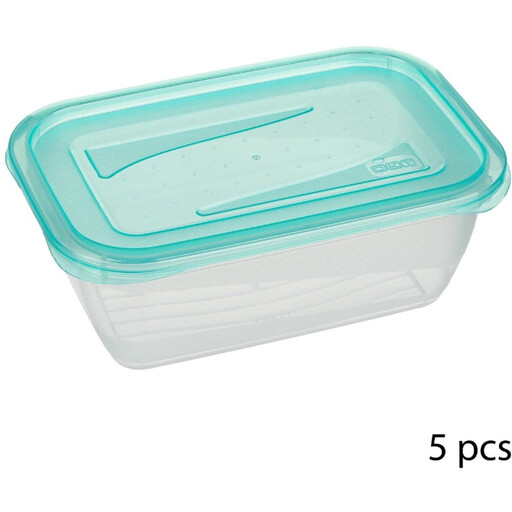
Why it suits these needs: Five compact 0.5-litre containers are suitable for small portions, snacks and sauces, and are a simple way to get started with meal prep.
The number of containers and their capacity are clearly stated. According to the product information, they are suitable for the freezer, microwave and dishwasher.
Set of 5; transparent; compact size of 15 x 10 x 5,2 cm; suitable for portioning.
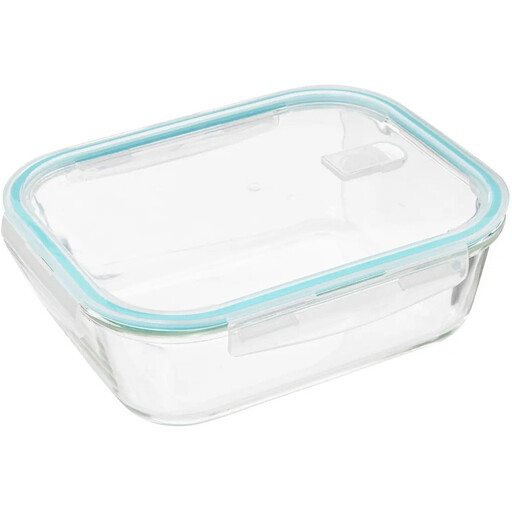
Why it suits these needs: This roomy glass storage container is designed for large portions, leftovers and meals you prepare in advance.
The 2.26-litre capacity and dimensions are clearly stated upfront. According to the product description, the clip closure helps prevent spills; don’t use the lid when heating in the microwave.
Borosilicate glass; 2.26 litres; according to the product information, suitable for the fridge, freezer, microwave without the lid and dishwasher.
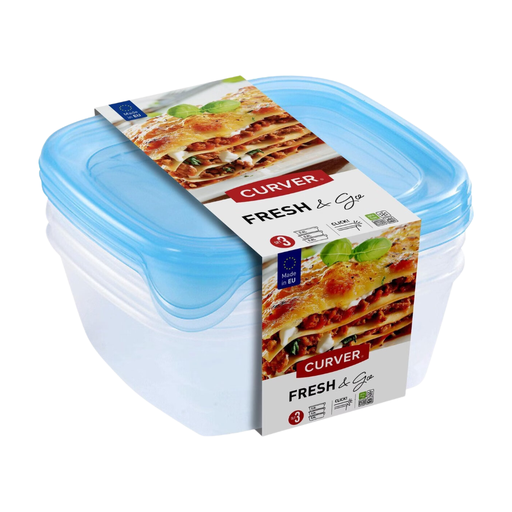
Why it suits these needs: The three matching containers are practical for regular portions, work lunches and keeping your fridge organised.
Each container in the set is the same size, so you won’t be left with unused mini or extra-large boxes. According to the product information, the containers can be nested and stacked.
Three 0.8-litre containers; clip-on lids with opening tabs; according to the product information, suitable for the freezer, microwave and dishwasher.
We’ve put together a complete, up-to-date list of products that meet these strict selection criteria and the applicable European safety requirements.
Choose a size that suits your portions. Containers of 0.7 to 1.2 litres are often practical for individual meals. Check whether they are freezer- and microwave-safe, and whether the lid needs to be removed before heating.
It depends on how you’ll use them. Glass is heavier, but according to the product information, various models are suitable for the dishwasher, freezer and microwave. Plastic is lighter and handy for taking with you or stacking. Always compare the material, temperature limits and care instructions for each product.
Their lifespan depends on how they’re used and cleaned, as well as the material. Replace a container if it is cracked, warped or no longer closes properly. Check silicone seals and clip-on lids regularly. Even a container that is listed as dishwasher-safe may wear out more quickly if it is often washed at a high temperature.
