
Vandaag of morgen in huis

Kwaliteit gegarandeerd

Welkomstaanbiedingen ontgrendelen: GRATIS bezorging | Tot 80% korting | Gratis 30 dagen JoyPlus-proefperiode
Download de app
A cluttered cupboard, open bags of flour and half-empty packets in the fridge: food storage containers can make everything much easier to organise. However, not every container is suitable for every task. An attractive design tells you little about the seal, maintenance or the space available in your cupboard.
The most common purchasing mistakes arise from three pitfalls:
For dry products such as rice, pasta, sugar, nuts and breakfast cereals, plastic food containers, polystyrene, PET or glass are common choices.
When in doubt, choose a container that is clearly described as a food container. A storage box for general household items is not automatically suitable for direct contact with food.
The capacity in litres is useful, but the external dimensions determine whether a container will fit in your cupboard. So measure the shelf, drawer or fridge door first.
For the fridge, a low fridge organiser is often more convenient than a tall storage container. A transparent box keeps the contents visible and stops small packets from disappearing at the back.
A silicone rim, clip-on lid or screw-top lid can seal the contents more effectively than a loose lid. That does not automatically mean that a container is suitable for liquids: check the product description and instructions for use.
Also consider:
Food storage containers that are not dishwasher-safe need to be washed by hand. This applies to several of the models below, for example. Allow containers and lids to dry completely before filling them again. This helps prevent residual moisture from getting into flour, rice or breakfast cereals.
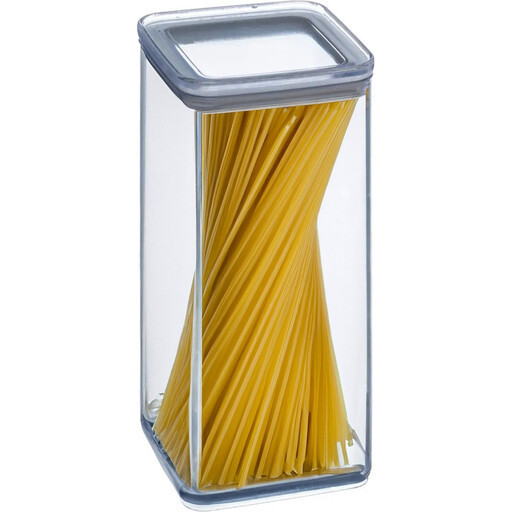
Why it suits this profile: The square shape and 1.5-litre capacity are ideal for smaller portions of pasta, rice, nuts or sugar in a neatly organised cupboard.
The product description mentions an airtight silicone seal and stackability. This makes it a targeted choice rather than a general storage box with no information about its closure.
1.5-litre capacity; 10 x 10 x 20 cm; transparent; suitable for dry food according to the product description. Not dishwasher-safe.
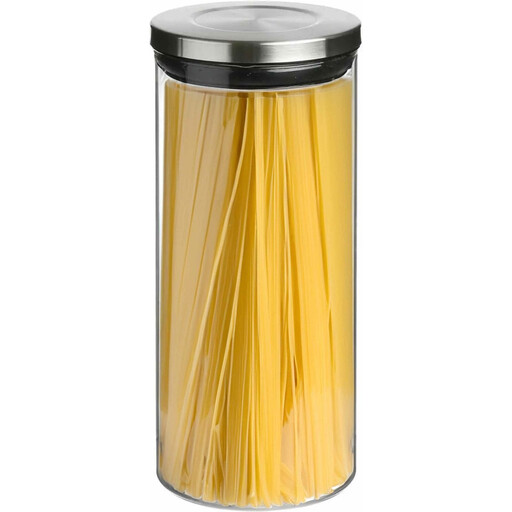
Why it suits this profile: This glass storage jar is ideal for anyone looking for a sturdy, transparent solution for rice, pasta, salt or sugar, and who is happy to accept the additional weight.
The product information specifies the material of the jar and lid separately. It also states that the jar is dishwasher-safe, while the lid is preferably washed by hand.
1.7-litre glass jar; diameter 11 cm; height 22 cm; stainless steel lid with polypropylene sealing component.

Why it suits this profile: This fridge organiser is designed for anyone who wants to group loose packets, cans or leftovers in a fridge compartment and easily pull them forwards.
The dimensions are clearly stated: 30 x 12.5 x 11 cm. This allows you to check in advance whether the box will fit in your fridge. According to the product description, hand washing is recommended.
Transparent; handles for easy lifting in and out; length of 30 cm; ideal for keeping the fridge organised.
We have put together a complete, up-to-date list of products that fully meet these strict selection criteria and the applicable European safety regulations.
Do not use one size for everything. A practical layout could look like this:
Do not automatically fill an airtight storage container to the brim. Leave enough space to scoop out the contents and regularly check that the seal is clean and undamaged.
That depends on how you intend to use them. Glass is heavier and transparent, and according to the product information, the jar mentioned is suitable for dry food. Plastic is lighter and often easier to move around. With both materials, pay particular attention to the seal, dimensions and cleaning requirements.
Their lifespan depends on the material, use and maintenance. Replace a container if it develops cracks, deep scratches or discolouration, or if the lid no longer seals properly. Wash a non-dishwasher-safe model by hand and do not use an abrasive scourer.
They can if the product description confirms that they are suitable for food and for the intended temperature. Also check the height and width of the fridge compartment. An organiser without an airtight seal is mainly intended for grouping products; for opened food, use a suitable lidded food container.
