
Vandaag of morgen in huis

Kwaliteit gegarandeerd

Welkomstaanbiedingen ontgrendelen: GRATIS bezorging | Tot 80% korting | Gratis 30 dagen JoyPlus-proefperiode
Download de app
A good set of food storage containers is an essential in any kitchen. Whether you're saving leftovers, preparing meals for the week (meal prepping), or taking your lunch to work, the right containers make life easier. But the search for the perfect set can be frustrating. An abundance of choices and marketing promises often leads to a bad purchase.
As a Joybuy Product Recommendation Officer, I see where things go wrong every day. Before you invest in a new set, let's first discuss the most common pitfalls that cost you unnecessary money.
A smart purchase isn't about the most attractive packaging, but about seeing through these problems.
To avoid a bad purchase, focus on a few objective features. These specifications determine whether a food storage container set is truly practical for daily use.
The most important factor is the material. Most plastic containers with lids are now made from polypropylene (PP). Pay specific attention to the BPA-free label. Bisphenol A (BPA) is a chemical used in some types of plastic that you'd rather not have in contact with your food. A BPA-free certification, compliant with EU food safety standards, is a basic requirement. This ensures the food storage containers are safe for you and your family.
A versatile set must be suitable for the entire cycle: freezing, storing, reheating, and cleaning.
A smart design saves precious space. Note the difference between stackable and nestable. Stackable containers (with lids on) create a stable tower in your fridge or cupboard. Nestable containers (without lids) fit inside each other, allowing for compact storage when not in use. A good set combines both features for maximum efficiency in your kitchen storage containers.
Based on these criteria, we have selected a number of products that suit different user profiles.
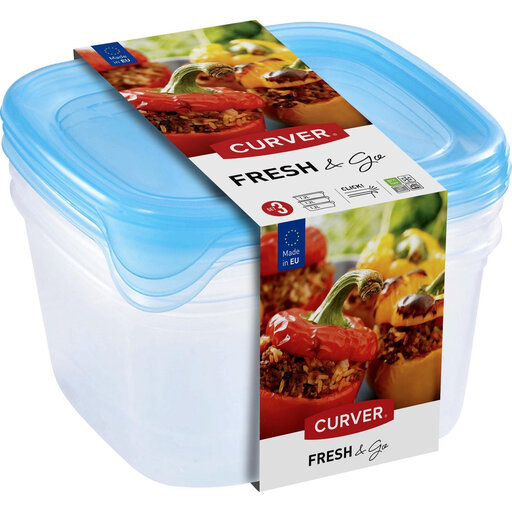
Why This Fits Their Persona: Ideal for those starting out with meal prep containers. This set of three identical, spacious containers (1.2L) is perfect for preparing full meals. No fussing with different sizes—just practical and straightforward.
The durable, BPA-free plastic is designed for a temperature range of -40°C to +100°C. This prevents warping in the microwave or cracking in the freezer (pitfall 2).
The set is both stackable and nestable, saving space in the fridge and kitchen cupboards. The lids have convenient tabs for easy opening.
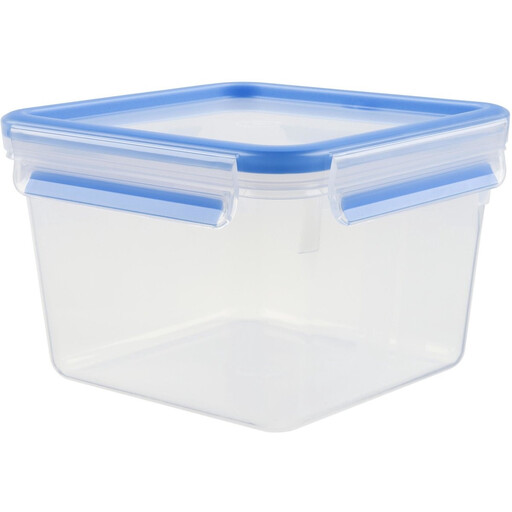
Why This Fits Their Persona: For those who are tired of leaks and are looking for a reliable, durable solution. Perfect for transporting soups, sauces, or salads without worrying about a wet bag.
This product directly tackles pitfall 1. According to the manufacturer, Tefal, the seal is 100% leak-proof thanks to a special seal integrated into the lid, with no gaps where dirt or bacteria can accumulate.
The seamless seal ensures better hygiene. The product is made in Germany, and the manufacturer offers a long 30-year warranty, indicating confidence in its durability.
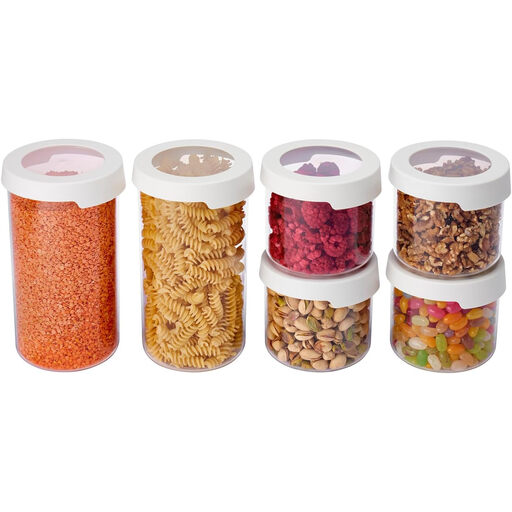
Why This Fits Their Persona: For those who want to end the chaos in their pantry. This set is designed for the neat and organised storage of dry ingredients like pasta, rice, flour, and nuts.
This set solves pitfall 3. It's a modular and stackable system with two practical sizes, allowing you to create a uniform and space-saving setup instead of a messy collection of loose containers.
The containers are fully transparent, so you can see the contents at a glance. According to the manufacturer, they are made with 20% bio-based plastic, a plus for those who value sustainability.
We have compiled a complete, up-to-date list of products that fully meet these strict selection criteria and safety regulations.
No, not all of them. Always check the bottom of the container or the packaging for the microwave-safe symbol (usually wavy lines). If you use a container not designed for this, it could melt or leach chemicals into your food. Additionally, always remove the lid to allow steam to escape.
Stains and odours can be a problem, especially with dishes containing tomato, curry, or other strong colours and flavours. Rinse the container immediately after use with cold water before washing it with hot water and soap. For stubborn odours, it can help to let the container soak overnight in a solution of water and a little baking soda.
BPA-free means the plastic was produced without the chemical Bisphenol A. This substance, when it leaches into food, can disrupt the endocrine system. Although the risks of low exposure are debated, choosing BPA-free food storage containers is a simple precaution for food safety, especially if you use the containers for heating food or for children.
