If you want to keep chunks in your salsa, choose a food processor with a chopping blade and pulse function, and compare its processing capacity with your recipe rather than looking at bowl capacity alone. For example, Kenwood lists a 3 l bowl and a separate liquid capacity of 1.5 l for the FDM71.450SS. You may need to process large or wet batches in several rounds. The Dutch Consumers’ Association describes a blender or hand blender as an alternative if you’re looking for a generally smooth sauce.
Who is a food processor for salsa relevant for?
Anyone making larger batches of salsa
If you want to prepare a lot of ingredients at once, compare the stated processing capacity with the quantity you plan to process in each round. Kenwood and Magimix list a separate capacity for specific models as well as the total bowl capacity.
Fans of chunky salsa
If you want to keep pieces of tomato and onion in your salsa, look for a chopping blade and pulse control so you can check the texture as you go. The Dutch Consumers’ Association distinguishes between chopping with a food processor and the generally smooth sauce made with a blender or hand blender.
Anyone who regularly meal preps
If you use your food processor regularly, cleaning, detachable parts and storage space matter too. Check which parts you need for salsa and the cleaning instructions for each one.
What should you look for when buying?
First decide how much you want to process in each round and what texture you’re after. Then consider the cleaning involved and the space you have in your kitchen.
| Consideration |
What to look for |
Who should consider this most? |
| Quantity per round |
Compare the usable processing or liquid capacity with your recipe; don’t confuse it with the bowl capacity. |
If I want to make fewer batches, I check how much the exact model can actually process at a time. Around 36% of consumers make capacity their top priority. |
| Salsa texture |
Check whether the model has a chopping blade and pulse function. Choose a blender if you’re looking for a smooth result. |
I want to decide for myself how many chunks to leave in my salsa. Around 29% of consumers prioritise having control over the texture. |
| Cleaning |
Check the cleaning instructions for each part and which accessories you’ll actually use for chopping. |
After making several batches, I want to keep the washing-up to a minimum and avoid cleaning lots of parts I don’t need. Around 21% of consumers make ease of cleaning their main consideration. |
| Space and use |
Measure the space available for the appliance and its accessories, then weigh this against the features you’ll use for salsa. |
If I have limited worktop or storage space, I only want to make room for features I really need. Around 14% of consumers prioritise footprint and practical use. |
Common pitfalls when making salsa
-
Confusing bowl capacity with processing capacity
Bowl capacity and the stated processing or liquid capacity can be different. So a large bowl doesn’t guarantee that you can fill it completely with wet ingredients.
Compare the capacity of the exact model with the quantity of ingredients you want to process in each round.
A lower processing limit may mean working in several rounds and transferring the ingredients between them.
-
Assuming a blender and food processor do the same job
The Dutch Consumers’ Association describes blenders and hand blenders as appliances that generally make a smooth, even sauce. That’s different from chopping ingredients for a chunky salsa.
Choose an appliance to suit the texture you want. If you opt for a food processor, check that the model has a chopping blade and pulse function.
-
Assuming lots of accessories are automatically more convenient
Extra discs and attachments can mean more parts to store and clean, even if you don’t need them for salsa.
Check which parts you’ll actually use and follow the cleaning instructions for each one. The Netherlands Nutrition Centre recommends using clean kitchen utensils.
Extra detachable parts may require more storage space and cleaning time.
-
Confusing a large batch with a long shelf life
A large batch also needs enough chilled storage space and a plan to use the salsa in good time. The Netherlands Nutrition Centre recommends keeping prepared leftovers in the fridge for no more than two days and chilling them within two hours.
Plan your portions and storage space before making a large batch.
Brands to consider
Kenwood
Kenwood lists a 3 l bowl and a separate liquid capacity of 1.5 l for the MultiPro Express Weigh+ FDM71.450SS.
- Kenwood lists a blade and several accessories.
- The stated capacity is not a measured quantity of salsa or a test of the chopping results.
KitchenAid
According to KitchenAid, the 5KFP1319EBM has a 3.1 l bowl and a multi-purpose blade with a pulse mode.
- KitchenAid also lists slicing and shredding attachments.
- Don’t use the bowl capacity as a guide to how much salsa you can process in each round.
Magimix
According to Magimix, the CS 3200 XL with citrus press has three bowls, a total capacity of 2.6 l and a stated processing capacity of 1 l.
- The separate capacity figure makes it easier to compare processing capacity with total bowl capacity.
- On its own, the capacity figure doesn’t tell you how much finished salsa the appliance will make.
Bosch
According to Bosch, the MultiTalent 3 MCM3501M has a 2.3 l bowl, a universal blade and a pulse function.
- Bosch lists external dimensions of 375 × 220 × 260 mm, in height × width × depth order.
- Bosch describes the accessories as generally dishwasher-safe; check the cleaning instructions for each part.
Joybuy products for chopping salsa ingredients
These product picks are choppers and food processors for preparing salsa ingredients in batches. Compare the stated bowl sizes and pulse controls with your recipe and the texture you want.
 No image available
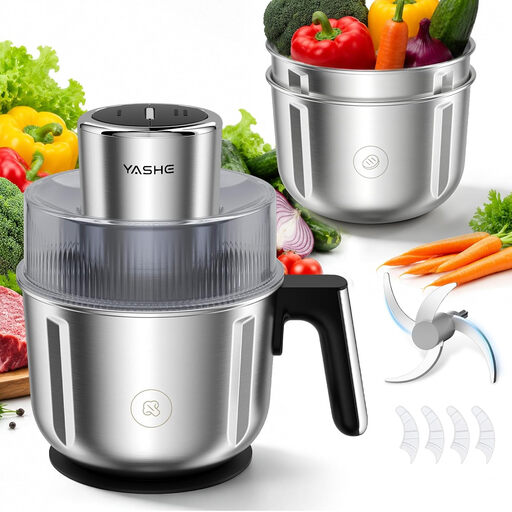
YASHE 25JM08-Q electric chopper with three bowls
The pulse control may suit you if you want to check the texture of chopped ingredients as you go.
Three bowls with capacities of 1.8 l, 2 l and 2.5 l; two speeds and pulse control. The bowls are described as dishwasher-safe.
View on Joybuy
 No image available
ochama food processor, 750 W, 1.8 l
The product description mentions chunky salsa and short pulses, making this a good match if you want to keep pieces in your salsa.
1.8 l bowl and detachable parts. Allow the motor to cool for two minutes between cycles when under heavy load; continuous blending should last no more than 60 seconds per cycle.
View on Joybuy
 No image available
Bear QSJ-D03Q1 electric chopper with two glass bowls
The two speeds are useful if you want to prepare different ingredients separately.
2 l and 0.6 l glass bowls with separate blade sets; two speeds. The bowls and lids are not heat-resistant: avoid temperature changes of more than 50 °C.
View on Joybuy
 No image available
IAGREEA MS-25JM08 chopper with three bowls
The description mentions pulsing to chop vegetables, making it a good option if you want to adjust the texture as you prepare your ingredients.
350 W; three bowls with capacities of 2.5 l, 2.2 l and 1.8 l. The pulse function can be used for a maximum of 30 seconds per cycle.
View on Joybuy
 No image available
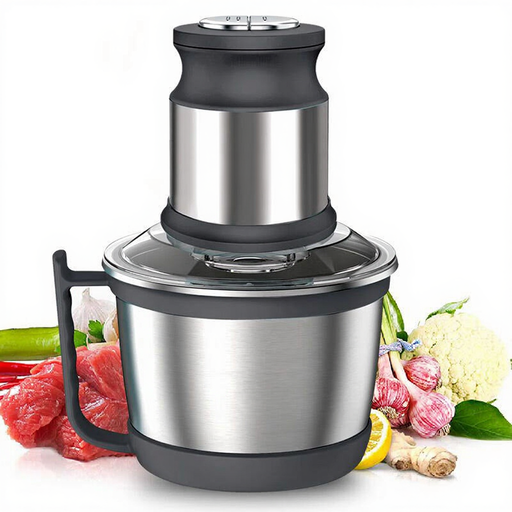
SOKANY SK-7027 food processor with 3 l bowl
This food processor is described as suitable for chopping vegetables. Compare the bowl size with the quantity you want to process in each round.
800 W, 3 l bowl and an EU plug for 220–240 V.
View on Joybuy
Frequently asked questions
Is the bowl capacity the same as the amount of salsa I can make at once?
No. Compare the bowl capacity with the separately stated processing or liquid capacity. Kenwood lists a 3 l bowl and a liquid capacity of 1.5 l for the FDM71.450SS; Magimix lists a total capacity of 2.6 l and a processing capacity of 1 l for the CS 3200 XL. These figures aren’t measured yields for your recipe.
Which food processor will help me keep chunks in my salsa?
Look for a food processor with a chopping blade and pulse function if you want to check the texture as you go. The Dutch Consumers’ Association describes a blender or hand blender as a better option for generally smooth sauces. Check the features of the exact model you’re considering.
How should I clean a food processor after making fresh salsa?
Follow the manual for the exact model and check the cleaning instructions for every part. The Netherlands Nutrition Centre recommends washing your hands, vegetables and fruit, and using clean kitchen utensils. Don’t assume that every part is dishwasher-safe.
Can I keep a large batch of homemade salsa in the fridge all week?
Don’t assume that you can. The Netherlands Nutrition Centre recommends keeping prepared leftovers in the fridge for no more than two days, chilling them within two hours and covering them well. Ideally, store them at 4 °C. This general advice for leftovers isn’t the same as storage advice for commercially made salsa sauce.
What guarantee applies when buying a food processor in the Netherlands?
According to the Dutch government, you’re entitled to a product that is fit for purpose, but there’s no fixed statutory guarantee period in the Netherlands. If a product is faulty, contact the seller. A manufacturer’s guarantee is in addition to your statutory rights.


