
Vandaag of morgen in huis

Kwaliteit gegarandeerd

Welkomstaanbiedingen ontgrendelen: GRATIS bezorging | Tot 80% korting | Gratis 30 dagen JoyPlus-proefperiode
Download de app
A food processor with blender might seem like a handy all-rounder on paper. With one appliance, you can chop, slice, grate, purée and make smoothies. Yet many households end up buying a model that’s too large, too limited or difficult to clean. With multifunctional kitchen appliances in particular, the number of features doesn’t always tell you how practical they’ll be for everyday use.
Look out for these three common pitfalls:
A food processor with blender is most useful when you prepare a range of dishes. Check whether you need these specific accessories:
If you mainly make smoothies, a multifunctional blender may be all you need. For meal prep, salads and grated vegetables, a full-size food processor with slicing and grating discs is a better choice. An appliance that combines a blender and chopper is also handy if you’re short on worktop space.
Motor power is usually given in watts. A 600 to 800-watt model may be suitable for everyday smoothies, sauces and soft vegetables. For larger quantities, firm dough or regular chopping, a motor of around 900 to 1,000 watts may give you more headroom.
Also consider:
So, high power doesn’t mean you can process hard ingredients without limits. Always follow the instructions and the stated maximum quantities.
A glass blender jug can stand up to plenty of everyday use and is less likely to retain food smells. Plastic is usually lighter, but check whether it’s labelled BPA-free. Stainless steel is a common choice for blades and slicing discs.
Important safety features include:
Wash blades carefully and unplug the appliance before changing accessories. For a food processor for baby food, cleaning it straight away is especially important, particularly after processing raw ingredients. Also check whether individual parts are dishwasher-safe and what temperature they can withstand.
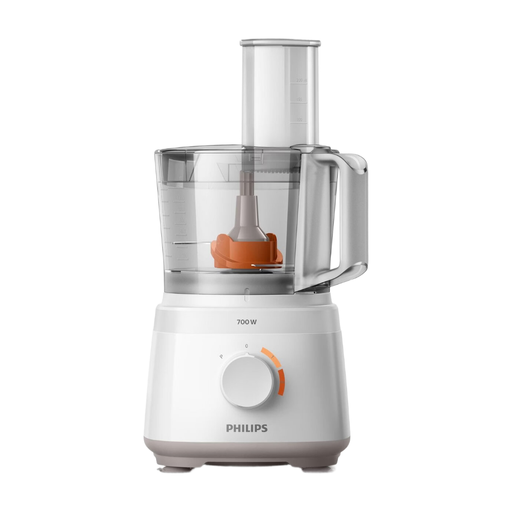
Why it suits this user: A compact choice for smaller kitchens and everyday tasks such as chopping, puréeing, grating and kneading. The bowl has a capacity of 1.5 litres, and the appliance has 19 functions according to the product specifications.
The included S-blade unit, kneading accessory, emulsifying accessory and reversible disc make its functions clear. The accessories are also suitable for the top rack of the dishwasher.
700 watts, 1.5-litre bowl, 19 functions, non-slip feet and overheating protection.
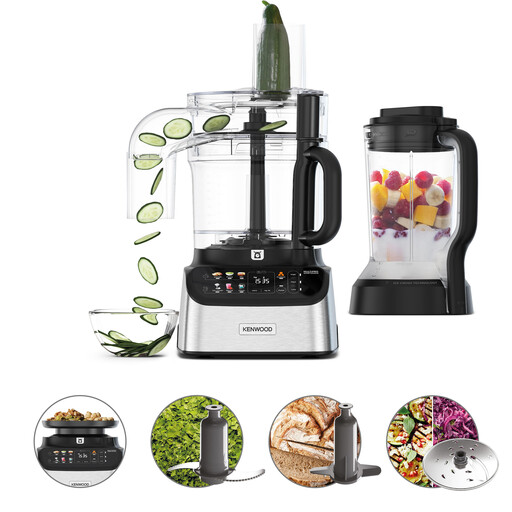
Why it suits this user: Ideal for families and keen cooks who want to combine chopping, weighing, mixing, kneading and blending in one system.
Each function has a specific attachment: a 1.5-litre blender, a 2-in-1 slicing and grating disc, a dough hook and integrated scales.
1000 watts, six automatic programmes according to the product description, a pulse function and a bowl with a stated capacity of 3 litres.
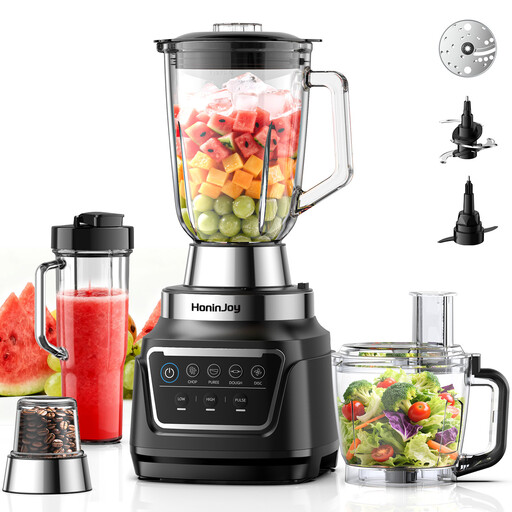
Why it suits this user: An option for meal preppers and households looking to chop, grind, slice, grate and occasionally prepare dough, as well as make smoothies.
The product description lists separate bowls and accessories for blending, chopping and grinding. However, check the current package contents before buying.
Up to 1300 watts according to the product specifications, a 1.5-litre blender jug, a 2-litre food processor bowl and dishwasher-safe removable parts.
If you want a compact food processor for a range of everyday tasks, the Philips is a sensible option. If you’re mainly looking for a food processor with a chopper, blender and dough function, the Kenwood is a better fit. The HoninJoy may appeal if you want a wide range of accessories, with several bowls and grinding options.
Parents preparing small portions could also consider a specialist appliance, such as the Bc Babycare mini food processor. Its stated bowl capacity is 10 fluid ounce, making this type of appliance best suited to small quantities of baby food. It won’t replace a large food processor for family use.
We’ve put together a complete, up-to-date list of products that meet these strict selection criteria and the applicable European safety regulations.
Yes, if it comes with a blender jug and a suitable blade. Check the capacity and maximum operating time, and see whether the product specifications specifically say it can crush ice. A food processor bowl isn’t always designed for liquid preparations.
Its lifespan depends on how you use it, maintain it and how hard you work it. Don’t run the appliance for longer than the manual recommends, don’t exceed the maximum quantities and let the motor cool down when instructed. Blades and discs are also only practical if they’re cleaned and stored safely.
Electricity use depends on the wattage and how long you use the appliance. A 700-watt motor uses a theoretical maximum of 0.7 kilowatt-hours per hour during one minute of operation, converted to that usage period; in practice, a food processor often runs for shorter periods and in intervals. So don’t look at wattage alone: consider how often and for how long you use the appliance.
