
If you’re making a large bowl of dip
You want to make enough dip for a family gathering in one or a few batches. As well as the bowl’s total capacity, check the stated processing capacity.


A mini chopper with a purée function may be enough for one small bowl of white bean dip. For a larger family gathering, it’s wiser to choose an appliance with a suitable processing capacity or work in several batches. Don’t compare bowl capacity alone: check for a purée function, the maximum quantity you can process at a time and how many parts you’ll need to clean.
You want to make enough dip for a family gathering in one or a few batches. As well as the bowl’s total capacity, check the stated processing capacity.
You mainly make a modest-sized bowl and would rather have a compact appliance that’s easy to store than a large bowl.
After the gathering, for example, you might want to slice or grate ingredients. Consider whether the extra attachments are worth the storage space and cleaning they require. The Consumers’ Association (Consumentenbond) lists chopping, slicing and grating among the uses of a food processor.
A good fit if: you usually make a small quantity and want a compact appliance. KitchenAid describes the 5KFC3516 as suitable for small quantities, puréeing and dips.
Keep in mind: you may need to process a larger bowl in several batches; 830 ml is the bowl capacity, not a confirmed quantity of white bean dip.
A good fit if: you want to slice or grate as well as make dip, and are looking for a mid-sized appliance. Kenwood lists a 2.1 l bowl, a blade and attachments for the FDP31.360GY.
Keep in mind: the stated liquid capacity isn’t automatically the maximum quantity of thick dip you can make; extra attachments also need storing and cleaning.
A good fit if: you often make larger quantities for guests and use the extra slicing or grating attachments. Magimix lists a total capacity of 3 l and a processing capacity of 1.3 l for the CS 4200XL.
Keep in mind: the total capacity isn’t the quantity you can process at a time; also check how much space the appliance takes up.
A good fit if: you only make bean dip occasionally and want to see whether an appliance you already own will do the job. The Netherlands Nutrition Centre (Voedingscentrum) suggests a food processor or hand blender for a similar legume spread.
Keep in mind: that recipe doesn’t compare hand blenders for white beans, or show that every model can handle a large, thick portion.
| What to consider | What to look for | Who should consider this |
|---|---|---|
| Quantity per batch | Decide how much dip you want to make and compare it with the stated processing capacity of the exact model. | For a family gathering, I want to make enough dip per batch and not assume I can use the bowl’s full capacity; around 33% of consumers prioritise the portion size they need. |
| Puréeing | Check whether the model has a suitable blade and a purée function. | If I mainly want to make white bean dip, I’m looking for an appliance specifically designed for puréeing; around 33% of consumers prioritise this function. |
| Storage and cleaning | Check the dimensions, how many parts you’ll use and the cleaning instructions. | After making a smaller bowl, I don’t want to have to store or wash lots of unnecessary parts; around 17% of consumers prioritise a compact design and easy tidying away. |
| Other kitchen tasks | Check which blades and discs come with the model, and whether you expect to use them. | If I want to use the appliance for slicing or grating after the gathering too, suitable attachments matter to me; around 17% of consumers prioritise versatility. |
The total capacity may be greater than the quantity the manufacturer says you can process at a time. For example, Magimix lists a total capacity of 3 l and a processing capacity of 1.3 l for the CS 4200XL.
Plan your portions around the stated processing limit and the instructions for the exact model, rather than relying on the largest capacity figure.
The Consumers’ Association distinguishes a stand mixer, used for tasks such as baking, from a food processor, used for tasks such as chopping and mixing.
Check that the exact model has a suitable blade and a purée function.
Slicing and grating discs are only useful if you actually do those jobs; unused parts take up space and need extra cleaning.
Choose extra discs or a blender only if you expect to use them after the gathering.
According to Magimix, the CS 4200XL is designed for people who expect to use it for other food preparation tasks as well as making dip.
According to Kenwood, the MultiPro Compact FDP31.360GY combines a food processor with a blender.
The 5KFC3516EAC mini chopper is an option for small portions; the 5KFP0719EAC food processor is designed for those who also want to consider slicing and grating tasks.
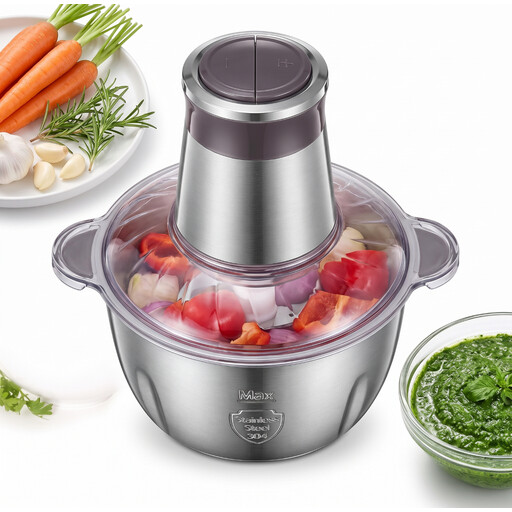
This selection includes choppers described as having a purée function, as well as a compact food processor for anyone who wants to tackle other kitchen tasks too. For each model, check the bowl, intended uses and included parts described.
 No image available
The product description lists puréeing as a use; check the stated bowl capacity against the quantity you want to make.
The description lists 2.5 l, 2.2 l and 1.8 l bowls that fit inside one another. The 1.8 l bowl is listed for purées and cooked ingredients, and the 2.5 l bowl for chopping vegetables.
A curved stainless steel blade and two pulse settings are also listed.
 No image available
The product description lists puréeing as a function; the two bowls give you options for different quantities.
It lists 2 l and 0.6 l glass bowls, each with its own blade set.
The description lists two speeds and says the glass bowls are dishwasher-safe.
 No image available
The product description lists puréeing and smooth purées as uses; this isn’t a test of the results with white beans.
It lists three stainless steel bowls that fit inside one another, measuring 2.5 l, 2.2 l and 1.8 l, plus three curved blades.
The description says the stainless steel bowl is dishwasher-safe.
 No image available
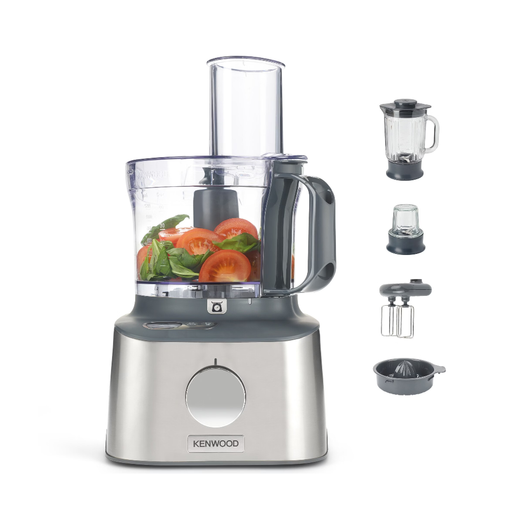
The product description lists a glass Multi-Mill for uses including puréeing; the appliance is also described as suitable for slicing and grating.
The product information lists a 2.1 l bowl, a blade, and slicing and grating discs.
Removable parts are described as dishwasher-safe.
It’s an alternative worth trying first if you already own a hand blender. The Netherlands Nutrition Centre suggests a food processor or hand blender for a similar legume spread; the recipe uses chickpeas and doesn’t test a specific appliance for white bean dip.
No. Total bowl capacity and processing capacity aren’t the same. For example, Magimix lists a total capacity of 3 l and a processing capacity of 1.3 l for the CS 4200XL; check the model’s instructions for your recipe.
The Netherlands Nutrition Centre advises keeping your fridge at 4 °C and not leaving highly perishable food out of the fridge for more than 2 hours. The 1–3 day storage period it gives applies specifically to homemade hummus; it isn’t a general guideline for every white bean dip recipe.
According to the Netherlands Food and Consumer Product Safety Authority (NVWA), CE marking is compulsory for electrical products covered by the Commodities Act Decree on Electrical Equipment. The NVWA gives the applicable voltage range as 50 to 1,000 V AC. Check the product information and markings on the specific appliance; CE marking doesn’t assess the quality of the dip.
If you bought it in the Netherlands, you can contact the seller to claim your statutory guarantee rights. The Dutch Government says there is no fixed statutory guarantee period and that the seller must provide a solution; any manufacturer’s guarantee is in addition to those rights.