
Workshop host making several batches of dough
Wants to know how much dough can go into the machine per batch, so the recipe quantities and schedule work together.


Choose a food processor if you mainly make small batches of light dough and want to use the appliance for other prep tasks too. Compare the maximum dough capacity per batch, not just the bowl capacity. If mixing, whisking and kneading are the main tasks at your workshop, a stand mixer is likely to be a better fit. The Consumentenbond draws the same distinction between food processors and stand mixers; check the attachments and cleaning instructions for the model you choose, too.
Wants to know how much dough can go into the machine per batch, so the recipe quantities and schedule work together.
Wants to decide whether a food processor is suitable for quick mixing, or whether a stand mixer is a better choice for mixing, whisking and kneading.
Wants to clean parts between participants or recipes, so checks which accessories are dishwasher-safe for each model.
A good fit if: you’re mixing light dough for a short time and want to use the appliance for tasks such as slicing or chopping, too.
Consider: the Consumentenbond describes a food processor as less suited to mixing, kneading and whisking than a stand mixer.
A good fit if: mixing, whisking or kneading makes up most of the work at your workshop.
Consider: check whether the machine can also handle the other prep tasks you need it for.
| What to consider | What should you check? | Who should pay particular attention? |
|---|---|---|
| Suitability for mixing | Check which dough tool is included and follow the instructions for the model you choose. A review of how it handles bread dough doesn’t tell you how it will mix cinnamon biscuit dough. | If I mainly want to mix biscuit dough briefly, I look for the right type of appliance and attachment; around 36% of consumers say suitability for mixing is their top priority. |
| Dough quantity per batch | Weigh the recipe ingredients and compare the total with the maximum dough capacity for the exact model. Bosch lists a capacity of 0.8 kg for the MCM3501M and 1.5 kg for the MC812W620. | If you’re planning a set recipe for each workshop batch, you’ll want to know whether it falls within the dough limit; around 29% of consumers prioritise batch size. |
| Cleaning between batches | Check which bowls and attachments are dishwasher-safe. Three included bowls, as with the Magimix CS 3200XL, also mean more cleaning and storage space to consider. | If I want to reuse parts quickly, I check how each one needs to be cleaned; around 21% of consumers put cleaning time first. |
| Parts and servicing | Compare the warranty terms for the motor and accessories separately, and check whether parts are available for the exact model. | If you use the machine regularly, you’ll also want to know what servicing and replacement parts are available; around 14% of consumers start by considering these running costs. |
The bowl’s capacity in litres and the maximum amount of dough it can handle are two different specifications. For example, Bosch lists a 2.3 l bowl and a maximum dough capacity of 0.8 kg for the MCM3501M.
Weigh the recipe batch and check the limit for the exact model before planning how many workshop batches you’ll need.
If a recipe batch exceeds the dough limit, you may need to divide it between more mixing sessions.
The Consumentenbond distinguishes between a food processor’s slicing and chopping tasks and the mixing, kneading and whisking a stand mixer is designed for.
List your workshop tasks in order of priority, then choose the type of appliance that suits them. Also check whether it can handle your other baking tasks.
If a food processor isn’t suitable for your other baking tasks, you may still need a separate mixer or stand mixer for them.
Magimix lists different warranty periods for the motor and accessories of the CS 3200XL; the cover isn’t the same for both.
Read the terms for each part and check whether replacement parts are available for the model you’re considering.
Different warranty terms may apply to accessories and the motor if a replacement is needed.
The MultiTalent MCM3501M and MC812W620 models have different stated maximum dough capacities.
According to Kenwood, the MultiPro Compact FDM301SS is a compact food processor supplied with a dough tool.
The CS 3200XL comes with three bowls and a dough blade, making it an option if you have other prep tasks to tackle as well as baking.
According to KitchenAid, the 5KFP1319EER food processor has a 3.1 l bowl, a dough blade, a pulse function and slicing accessories.
The products below are stand mixers with mixing bowls, suited to workshops where mixing or kneading dough is a priority. Before using one for your recipe, check the stated capacity, attachments and instructions for the model you choose.
 No image available
The product details list dough hooks, designed for mixing dough.
4.5 L bowl; six speeds and pulse setting; 1300 W.
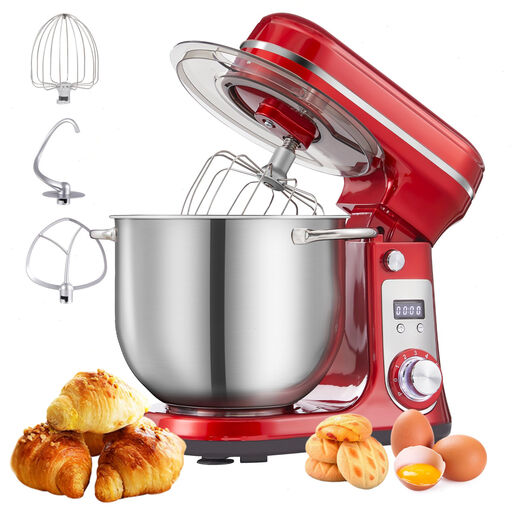 No image available
The product details mention dough processing; check whether the stated bowl capacity suits the quantity you’ll make per workshop batch.
6 L bowl; six speeds and pulse setting; timer; tilt-head; 1200 W motor.
 No image available
The product title lists attachments for different mixing tasks, including a dough hook.
5 L bowl; 10 speeds; dough hook, whisk and beater.
 No image available
The product details list a dough hook and flat beater for mixing and kneading.
5.0 L bowl; eight speeds; dough hook, flat beater and whisk. The product description says the attachments are dishwasher-safe; check the manual for each part.
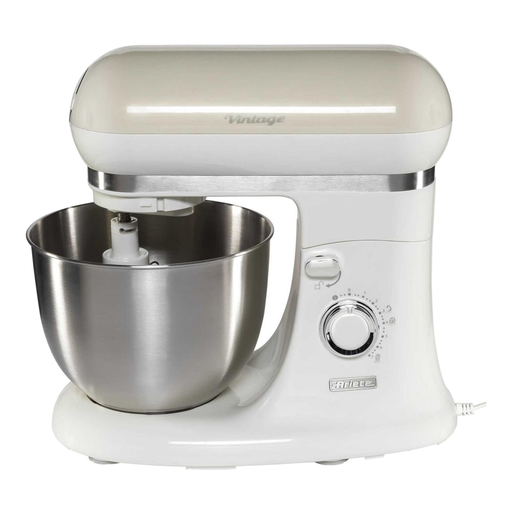 No image available
The product details list a dough tool and planetary mixing action for dough-based recipes.
5 L stainless steel bowl; 1000 W.
If mixing, whisking and kneading make up most of the work, a stand mixer is likely to be a better fit. A food processor is more suitable if you’re mixing light dough for a short time and also want to use the machine for chopping, slicing or grating. The Consumentenbond makes this distinction between the two types of appliance.
No. Compare the weighed recipe batch with the separate maximum dough capacity for the exact model. For example, Bosch lists a 2.3 l bowl and a maximum dough capacity of 0.8 kg for the MCM3501M.
Check the manual to see which bowls and attachments are dishwasher-safe. Wash your hands before and after making raw dough, and don’t let participants taste it uncooked; the Voedingscentrum offers advice on handling raw dough safely.
Compare the manufacturer’s warranty for each part and contact the seller if you think a consumer product may be faulty. ACM ConsuWijzer explains that statutory warranty in the Netherlands doesn’t have a fixed two-year period: what you could reasonably expect with normal use is what matters. Discuss your intended workshop use with the seller in advance.
If you sell food to consumers as a business, the Netherlands Food and Consumer Product Safety Authority (NVWA) says you must provide information about any allergens present. Food businesses must also follow registration and food safety rules, including working with an HACCP plan or an applicable hygiene code. Whether these rules apply to your workshop depends on the activities and how your business is set up.