
Weekend biscuit baker
Wants to make oat biscuit dough and check whether a food processor attachment is suitable for the mixing steps in their recipe.


If your oat biscuit recipe starts by creaming butter and sugar, a mixer with a flat beater is better suited to that step. KitchenAid Netherlands uses this method in its recipe, and the Dutch Consumers’ Association says a stand mixer generally mixes and kneads better than a food processor. If you do choose a food processor, compare the attachment and the permitted dough quantity for the exact model; the bowl capacity doesn’t tell you how much dough it can handle. A larger multifunctional model is worth considering if you also want to use it for other preparations and have the space for it.
Wants to make oat biscuit dough and check whether a food processor attachment is suitable for the mixing steps in their recipe.
Wants to compare the dough quantity per batch with the limit for the exact model, rather than looking only at the bowl capacity.
Wants to make biscuits with an appliance that can also be used for other preparations, while considering the space needed for the machine and its attachments.
Start by checking the mixing steps in your recipe and the attachments they call for. Then compare the dough quantity per batch, the available worktop and storage space, and how to care for the parts you’ll actually use.
| What to consider | What should you look for? | Who is this most relevant to? |
|---|---|---|
| Mixing method and attachments | Follow the recipe steps and check which attachments and mixing instructions apply to the exact model. | If my recipe starts by creaming butter and sugar, I want an appliance suited to that step. Around 36% of consumers prioritise the mixing method. |
| Permitted dough quantity | Weigh the recipe quantity and compare it with the dough limit and usage instructions for the exact model. | If I want to know whether my recipe will fit in one batch, I compare the dough weight with the model instructions. Around 29% of consumers prioritise the permitted dough quantity. |
| Worktop and storage space | Measure the available height, width and depth, and allow space for separate attachments. | If I have little room on the worktop or in a cupboard, I want to know where I can store both the machine and its parts. Around 21% of consumers prioritise the space available. |
| Cleaning and other uses | Check the care instructions for each part and consider which extra functions you’ll actually use. | If I want to use the appliance for other cooking tasks too, I weigh that up against the cleaning and storage involved. Around 14% of consumers prioritise care and uses beyond baking. |
For the Bosch MCM3501M, Bosch Netherlands lists a bowl capacity of 2.3 litres and, separately, a maximum dough quantity of 0.8 kg. These figures describe different things.
Compare the weight of your recipe with the dough limit and usage instructions for the exact model.
The KitchenAid Netherlands oat biscuit recipe we consulted starts by creaming butter and sugar with a flat beater. A dough tool isn’t automatically intended for this mixing step.
First check the steps in your recipe, then choose an appliance with a suitable attachment and instructions.
A model with several bowls or discs can handle a range of preparations, but it also means more parts to clean and store.
Compare the capacity of the exact model and check the care instructions for each part you use.
The MultiTalent 3 MCM3501M is worth considering if you’re looking for a food processor with a stated dough limit and a plastic dough tool included.
The MultiPro Go FDP22.140GY is a compact food processor option, while the MultiPro XL Weigh+ FDM72.990BK shows how limits and usage instructions vary between models.
The CS 4200XL with creative cooking kit is worth considering if you’re also weighing up other uses and the accessories included.
A useful alternative to compare if your recipe starts by creaming butter and sugar.
These Joybuy product picks are aimed at mixing and dough preparation for home baking. Check whether the attachments included with each model are suitable for the steps in your oat biscuit recipe.
 Image unavailable
The product name suggests this appliance is designed for mixing and dough preparation; check the manual for suitable attachments and the right quantity for your recipe.
4.5-litre stainless steel bowl, 1300 W and 6+P speed settings.
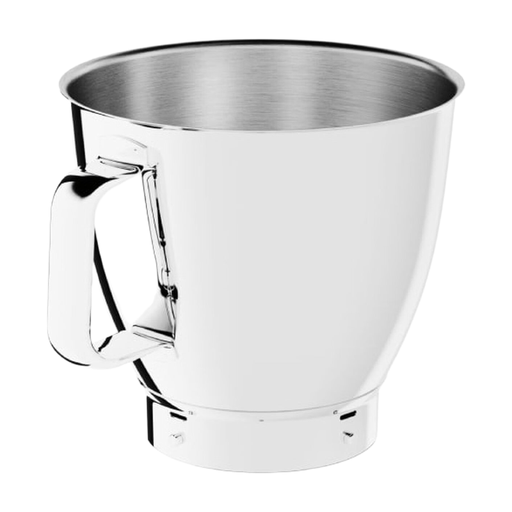 Image unavailable
The product name describes it as a food processor and stand mixer; check which included attachments are suitable for the mixing steps in your recipe.
700 W motor and 4.3-litre stainless steel bowl.
 Image unavailable
This food processor is a good option if you want to prepare dough in a food processor; check the manual for the right attachment and permitted quantity.
800 W power and a 2.3-litre bowl.
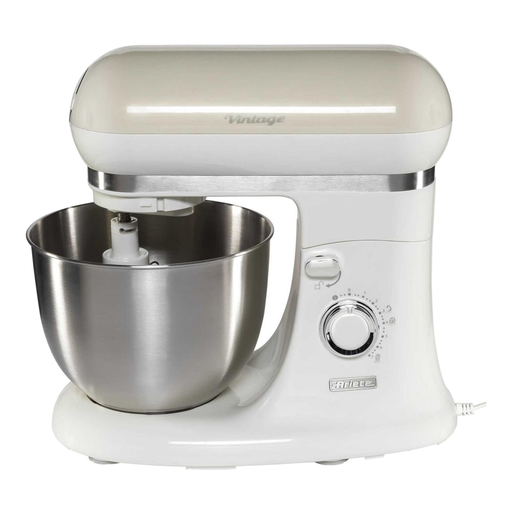 Image unavailable
The product information mentions mixing and dough preparation; check which attachments come with this model and whether they suit your recipe.
1000 W motor, 5-litre stainless steel bowl and planetary mixing action.
Don’t decide based on the attachment’s name alone. KitchenAid Netherlands’ recipe starts by creaming butter and sugar with a flat beater; check the steps in your own recipe and the instructions for the exact appliance.
No. For the MCM3501M, Bosch Netherlands lists both a bowl capacity of 2.3 litres and a separate dough limit of 0.8 kg. Compare the weight of your recipe with the instructions for the exact model.
Follow the instructions for your model. For the Kenwood FDM72.990BK, Kenwood specifies a maximum dough quantity of 1 kg, a maximum running time of 60 seconds and a 15-minute cooling period between batches. Don’t apply these figures to other models.
The Netherlands has no fixed statutory warranty period. If a product is faulty despite being used normally, the seller remains responsible for providing an appropriate solution. The Dutch government explains that there is no fixed statutory warranty period, and ACM ConsuWijzer outlines the seller’s responsibilities.
According to the Netherlands Food and Consumer Product Safety Authority, CE marking is mandatory for electrical products placed on the market in the Netherlands. Parts intended to come into contact with food must meet the applicable requirements for food contact materials. These general rules don’t confirm that a specific model complies.