
Baker making one tart base
You want to briefly process cold butter and flour, checking as you go whether small pieces of butter are still visible. Rutger Bakt describes this method for pie pastry.


For a single sweet tart base, choose a food processor with a blade and pulse control to briefly process cold butter and flour. If you’re making several bases, check the maximum dough quantity specified for the exact model. Rutger Bakt’s tart pastry recipe leaves small pieces of butter visible, while the Consumers’ Association distinguishes food processors from stand mixers with a mixing arm, which are designed for tasks including longer kneading. A larger bowl alone doesn’t tell you how much dough an appliance can process.
You want to briefly process cold butter and flour, checking as you go whether small pieces of butter are still visible. Rutger Bakt describes this method for pie pastry.
You want to know whether the weight of your recipe is within the maximum dough quantity for the exact model, so you can decide whether to make the dough in batches.
You want an appliance that fits where you store it and is practical to clean after baking, even if you prefer to process smaller batches.
For sweet tart pastry, your choice mainly comes down to short, controllable processing, portion size and the space you have for the appliance.
Suitable for: making one base and having limited storage space.
Keep in mind: a smaller machine may mean smaller batches. Kenwood specifies 250 g of flour and 150 g of water for the dough tool and warns against processing for longer than 30 seconds; this is not a stated quantity for sweet butter pastry.
Suitable for: larger recipes or several bases, provided the maximum dough quantity allows for it.
Keep in mind: bowl capacity and maximum dough quantity are different specifications; a larger appliance also needs more storage space.
Suitable for: longer kneading or whisking as your main task, or making crumble pastry by hand occasionally without buying another appliance.
Keep in mind: a recipe for briefly processed tart pastry isn’t a performance test comparing these methods; mixing by hand takes work.
| What to consider | What to look for | Who it matters to |
|---|---|---|
| Short, controllable processing | Check whether the exact model has a blade and pulse or momentary control. | I want to briefly process cold butter and flour and check as I go whether pieces of butter are still visible; around 36% of consumers prioritise this level of control. |
| Recipe batch size | Compare the recipe weight with the maximum dough quantity in the manual for the exact model; bowl capacity doesn’t replace that limit. | If I’m making several bases, I want to know whether the dough weight is within the limit for that exact model; around 29% of consumers prioritise batch size. |
| Storage and cleaning | Check the dimensions and look at the cleaning instructions for each component. | With limited cupboard space, I want to work out in advance where the appliance and its parts will fit and how to clean them; around 21% of consumers prioritise space and maintenance. |
| Other kitchen tasks | Check which accessories are included with the exact model. | I want to use the food processor for other kitchen tasks too, such as slicing or grating; around 14% of consumers value this versatility most. |
A bowl’s capacity doesn’t automatically tell you how much dough the manufacturer allows. For the MCM3201B, Bosch lists a 2.3 l bowl and a maximum of 0.8 kg of dough separately.
Compare the total weight of your recipe with the maximum dough quantity specified for the exact model.
If the recipe exceeds the permitted load, you may need to process the dough in several batches.
Wattage alone doesn’t tell you how the pastry will turn out. Rutger Bakt’s method calls for cold ingredients and small pieces of butter; processing for too long won’t necessarily suit that goal.
First, check whether the model has a blade and pulse control, then follow the recipe and the manual.
How you store and transport a filled tart depends on its filling and storage conditions, not on the machine you used to make the pastry.
The Netherlands Nutrition Centre advises keeping food chilled during a picnic and transporting it hygienically. Choose packaging and any cooling based on the filling itself.
Depending on the filling, you may need a cool bag or different packaging.
The MultiTalent 3 MCM3201B gives you specific details to compare bowl capacity, pulse function and stated dough load.
The compact MultiPro Go FDP22 is worth considering if storage space is important and you usually make smaller batches.
The 5KFP0719EBM model combines a 1.7 l bowl with a blade, dough blade and pulse mode.
The CS 3200XL is an option for comparing different bowl sizes and the accessories included.
This selection includes food processors and stand mixers for anyone who wants to combine dough preparation with other kitchen tasks. For sweet tart pastry, pay particular attention to pulse control, the permitted dough quantity and the difference between brief processing and longer kneading.
 No image available
The stated pulse control may suit you if you want to process butter and flour in short bursts; check the manual for the permitted quantity for your recipe.
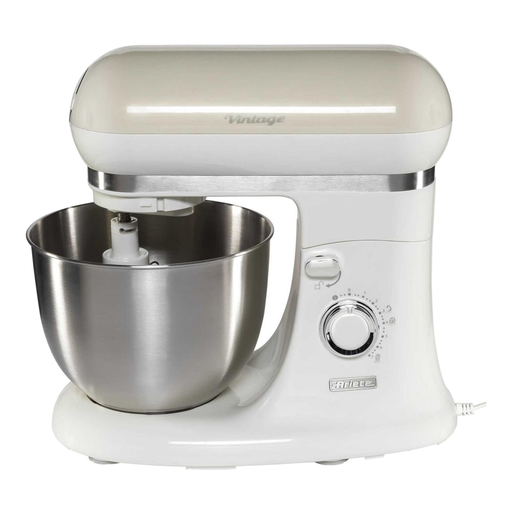
4.5 l bowl; 1300 W; six speeds plus pulse function; beige model.
 No image available
The 1.8 l bowl may suit smaller batches; compare its capacity with the quantity required by your recipe.
750 W; 1.8 l bowl. The operating instructions recommend short pulses and a maximum of 60 seconds of continuous operation per cycle.
 No image available
This combination may suit you if you’re looking for a stand mixer as well as food processor functions; for tart pastry, follow your recipe’s brief processing method.
700 W; 4.3 l stainless steel bowl; attachments included.
 No image available
The product name describes both a food processor and a stand mixer with planetary mixing action; compare this combination with the brief processing your tart pastry recipe calls for.
1000 W; 5 l stainless steel mixing bowl; planetary mixing action.
 No image available
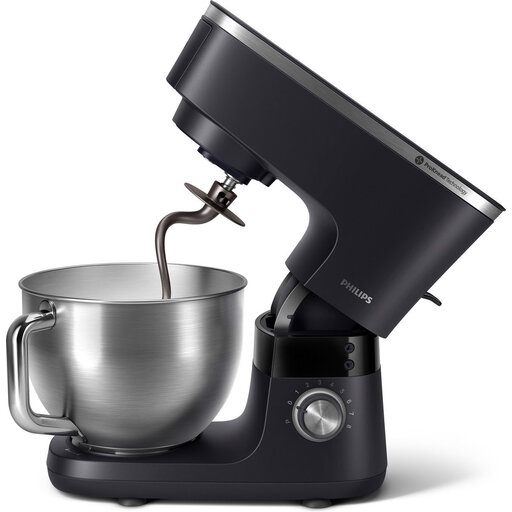
This stand mixer may suit you if you’re mainly looking for a machine for kneading; Philips describes a method that produces smooth dough, while Rutger Bakt’s tart pastry contains small pieces of butter.
5.5 l bowl; eight speeds; 1000 W; blender and chopper attachments. Philips describes the ProKnead method as producing smooth dough in around 3 minutes.
No. The Consumers’ Association describes food processors as being mainly for slicing, grating and chopping, and stand mixers with a mixing arm as being for tasks including mixing, whisking and longer kneading. For a tart pastry recipe that briefly processes the butter, a food processor with a blade may be suitable.
Follow the recipe and the manual for your model. In Rutger Bakt’s pie pastry recipe, cold ingredients and small pieces of butter are part of the method, so don’t keep processing until the mixture is smooth if your recipe doesn’t call for it.
That depends on the filling. The Netherlands Nutrition Centre advises keeping food chilled during a picnic and transporting it hygienically. Follow the storage guidance for the tart’s filling; using a food processor doesn’t change what it needs.
Yes. Statutory consumer rights may apply if a product doesn’t perform as you could reasonably expect during normal use. ACM ConsuWijzer explains that the retailer is responsible and that a shorter manufacturer’s warranty doesn’t remove this right. The outcome depends on the circumstances of the fault.
Electrical appliances sold in the Netherlands must meet the applicable European safety requirements. According to Business.gov.nl, once the technical and administrative requirements have been met, the manufacturer must affix the CE marking and draw up an EU declaration of conformity. A CE marking isn’t an independent test of the baking results.