
Workshop baker making small batches of dough
Wants to make cold butter crumbs and briefly mixed tart pastry without having to set up a large machine for every participant.


For sweet tart pastry, a food processor with a blade is suitable for the short-mixing method: mix the cold butter with the dry ingredients first, then add the egg, as described by Rutger Bakt for tartlet pastry. Next, compare the stated dough capacity of the exact model with the amount you need for each workshop batch; bowl capacity in litres is not the same as dough weight. A pulse setting can help with short bursts of mixing, but on its own it does not prove that the results will be optimal for this dough.
Wants to make cold butter crumbs and briefly mixed tart pastry without having to set up a large machine for every participant.
Needs to coordinate batch sizes, available time and cleaning between successive rounds of preparation.
Wants the machine, bowl and separate parts to fit in the available space during and after the workshop.
Start with the method used in the recipe, then compare the amount of dough per batch and the space the machine takes up with its accessories. For tartlet pastry, Rutger Bakt describes briefly mixing cold butter with the dry ingredients, then adding the egg.
| What to consider | What should you check? | Who is this important for? |
|---|---|---|
| Brief mixing | Check which blade is included, whether there is a pulse setting and which short mixing steps the manual recommends. | If I want to briefly mix butter with flour and other dry ingredients before adding the egg, I focus mainly on the blade and controls. Around 36% of consumers prioritise brief mixing. |
| Dough per batch | Compare the weight of your recipe with the stated maximum dough weight for the exact model. | If several participants are making dough one after another, I want to know how much my recipe can handle per batch without exceeding the stated limit. Around 29% of consumers mainly need enough dough capacity per batch. |
| Worktop and storage space | Measure the available space and compare it with the machine's dimensions and the space needed for separate accessories. | If the worktop is shared, I want to know in advance whether the machine and its parts will fit and can be put away afterwards. Available space is the deciding factor for around 21% of consumers. |
| Cleaning between batches | Check which parts are dishwasher-safe according to the manual and which accessories are included. | When preparing several batches, I want to know which parts need cleaning between batches and how to clean them. Around 14% of consumers prioritise cleaning and maintenance. |
A bowl's capacity in litres doesn't tell you how much dough the appliance can process at most. For example, Bosch lists a 2.3-litre bowl and a maximum of 0.8 kg of dough separately for the MCM3501M.
Weigh your recipe and compare its weight with the instructions for the exact model.
The tartlet method described uses blades to briefly mix butter with dry ingredients. A manufacturer may recommend a dough blade for other types of dough; that doesn't automatically tell you how it will work for this recipe.
Check the manual for the blade supplied and follow the recipe's short mixing steps.
Cleaning instructions can vary between models and parts, which may mean more hand-washing when the appliance is used repeatedly during a workshop.
Before use, check the manual for the bowl, lid and each blade or attachment.
The MultiTalent 3 MCM3501M lists bowl capacity and maximum dough weight separately, which can help you plan workshop batches.
The 5KFP0719EBM is a 1.7-litre food processor supplied with several different blades.
The MultiPro Compact FDM301SS combines a bowl and blade with other food preparation functions.
The CS 3200 XL and Mini Plus are different models worth comparing for a range of workshop preparations.
This selection includes food processors and a compact chopper with chopping or mixing functions for short preparation steps. Check the parts supplied, capacity and manual for each model before using it to make workshop dough.
 No image available
The product description lists stainless steel blades and a pulse setting for short mixing steps.
The product name gives the bowl capacity as 1.8 litres; this isn't a stated dough weight. The description mentions removable parts.
 No image available
The product description lists two speeds and pulse control for short chopping and mixing steps.
The three bowls have stated capacities of 2.5, 2.2 and 1.8 litres. A three-blade stainless steel blade is listed; bowl capacity isn't the same as dough capacity.
 No image available
The product information lists two speeds and a pulse function for chopping and mixing.
The stated bowl capacity is 2.3 litres; this isn't a maximum dough weight. Check the manual for the permitted quantity for your recipe.
 No image available
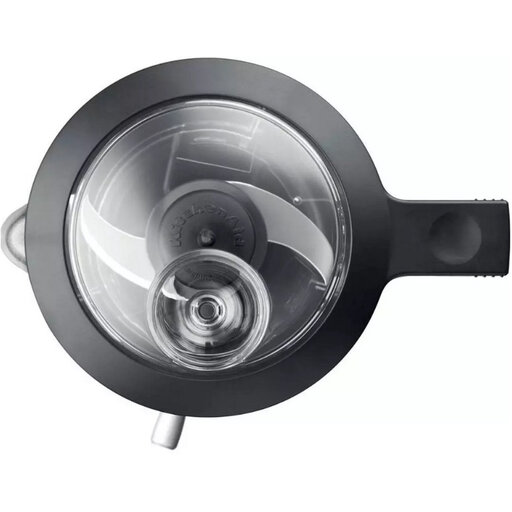
The product information lists a multi-purpose stainless steel blade and pulse control for small, light preparations.
The bowl has a capacity of 830 ml. The product description positions this model for small ingredients and light tasks.
 No image available
The product information lists a chopping blade and pulse function for short chopping and mixing steps.
The stated bowl capacity is 1.3 litres and the power is 650 W. The product information also lists dishwasher-safe parts and cord storage.
Rutger Bakt's recipe describes using a food processor with blades: first mix the cold butter into the dry ingredients, then add the beaten egg last. Check which blades come with the exact model; a dough blade described as suitable for bread isn't automatically the right choice for this dough.
For the tartlet pastry recipe referenced, the recipe author recommends resting the dough in the fridge for at least one hour after briefly mixing it. This is an instruction for that recipe, not for all types of dough.
According to the Netherlands Food and Consumer Product Safety Authority, a business that prepares, processes or sells food must work with an HACCP food safety plan; an approved hygiene code can be used for this. Whether a workshop falls under this requirement depends on the actual business activity. Rules on allergen information also apply to non-prepacked food.
A manufacturer's guarantee is in addition to consumers' statutory rights. According to the Dutch Government, if a product is faulty, the retailer is the point of contact for a remedy under the statutory guarantee. Check the terms of any additional manufacturer's guarantee separately.
Parts that come into contact with food must comply with the applicable rules for food contact materials; the Netherlands Food and Consumer Product Safety Authority explains these rules. CE marking is only compulsory for products covered by EU rules that require it. For the exact model, consult the relevant product information and conformity documents.