
Workshop leader preparing several batches of dough
You want to prepare batches one after another. So compare the permitted dough capacity and any required rest time between batches, rather than just the bowl capacity in litres.


A food processor is a good fit if you want to mix measured batches of dough and use the same appliance for chopping or slicing. If baking is your main priority, also compare a stand mixer with a suitable mixing attachment. Choose based on the maximum dough capacity and instructions for consecutive batches, not just the bowl capacity, and check which accessories are included with the exact model.
You want to prepare batches one after another. So compare the permitted dough capacity and any required rest time between batches, rather than just the bowl capacity in litres.
You may want to chop or slice ingredients as well as prepare dough. Check which functions and accessories come with the model you choose.
You want to clean the bowl and dough attachments between workshop sessions. Check how easily they can be dismantled, the cleaning instructions and which parts come into contact with food.
A good fit when: you want to make separate batches of dough and also use the same appliance for chopping or slicing.
Bear in mind: bowl capacity is not the same as maximum dough capacity. Usage and cooling instructions can vary between models.
A good fit when: baking is your main task and you choose a model with a suitable mixing or dough attachment.
Bear in mind: chopping and slicing functions are not always included. The Consumers' Association focuses more on mixing and kneading when assessing stand mixers than food processors; this does not tell you which appliance will handle every recipe better.
| Point to consider | What to check before buying | Who is this important to? |
|---|---|---|
| Mixing dough | Check the dough attachment supplied and the instructions for making dough with the exact model. | If jam biscuit dough is the main task, I want to be sure the right attachment suits the way I work. Around 36% of consumers prioritise being able to mix dough successfully. |
| Batch size and preparation time | Weigh a recipe batch and compare it with the maximum dough capacity; also read the instructions for making several batches. | When I'm catering for several workshop groups, I want to know how much dough I can process in each batch and whether I need to wait between batches. For around 29% of consumers, batch size and preparation time are the top priorities. |
| Cleaning and food contact | Check which parts can be removed and how the manufacturer says to clean them; look at the information about parts that come into contact with food. | If different groups use the same equipment, I want to be able to clean the parts according to the instructions. Around 21% of consumers give cleaning and food contact the highest priority. |
| Extra functions and space | Compare the appliance's external dimensions and included functions with the available worktop and storage space. | If I also want to use the appliance for other preparation tasks, I'll weigh up those functions against the space it takes up. Extra uses and available space are the main priorities for around 14% of consumers. |
A specific model shows the difference between bowl capacity and dough capacity: Bosch lists a 2.3 l bowl and a maximum dough capacity of 0.8 kg for the MCM3501M. These figures apply to that model; don't assume they're the same for another version.
Litres describe the bowl's capacity and don't automatically tell you how much dough the appliance can process. For example, Bosch lists separate figures for the bowl and maximum dough capacity of the MCM3501M.
Weigh the batch from your recipe and compare it with the dough limit for the exact model you're considering.
The Consumers' Association focuses more on mixing and kneading when assessing stand mixers, and on slicing, grating and chopping when assessing food processors. That difference in test tasks doesn't prove that every model is suitable for your jam biscuit dough.
Check the mixing or dough attachment supplied and read the manual. Only choose extra chopping and slicing functions if you need them.
Maximum quantities, running times and cooling breaks don't automatically apply to other models. For example, Kenwood provides instructions for the MultiPro XL Weigh+; these don't necessarily apply to a different model.
Plan consecutive batches according to the capacity and usage instructions for the exact model.
The models listed illustrate different product specifications; a brand mention is not an endorsement of its entire range.
The MCM3501M is worth comparing if you're looking for a food processor with a stated dough capacity and a dough attachment.
The CS 4200 XL may suit a comparison where multiple bowls and the stated processing capacity are important.
Kenwood describes the MultiPro OneTouch FDM73.480SS as a food processor with a blender, suitable for tasks including mixing and kneading.
The HR7778/00 is worth comparing if you're looking for a food processor with dough controls and a metal kneading hook.
These Joybuy products include food processors and stand mixers that may suit dough preparation at a baking workshop. Check the accessories supplied with each model and the instructions for your recipe and intended use.
 No image available
A stand mixer option for anyone looking to prepare dough. Before buying, check which kneading attachments are included with this model.
The product title lists a 4.5 l bowl, 1300 W, six speeds and a pulse function.
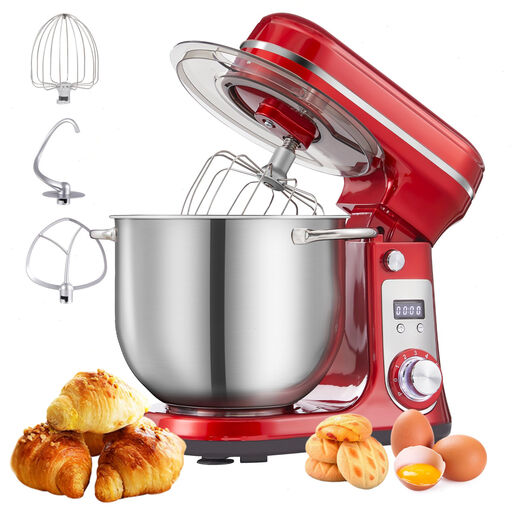 No image available
This stand mixer is worth comparing if kneading is a priority. Check which mixing attachments come with this model and what the instructions say about dough.
The product title lists a capacity of 6 l, 1200 W, six speeds, pulse, an LCD display and a timer.
 No image available
A food processor option if you want to slice and grate as well as prepare dough. Check whether the instructions cover the type of dough task required for your recipe.
The product title lists a blender, meat mincer, vegetable slicer, slicing and grating discs, and removable parts.
 No image available
A food processor worth comparing if you're looking for this type of appliance. For dough, check the manual and attachments for the MCM3200W itself.
The product title lists 800 W and a 2.3 l bowl.
 No image available
A stand mixer option for preparing dough. Check the usage instructions and whether the dough hook listed is suitable for your recipe.
The product title lists a 5 l bowl, a tilt-head design, a dough hook, a whisk and a beater.
Before buying an electric food processor, check the CE marking and documentation for parts that come into contact with food. The Netherlands Food and Consumer Product Safety Authority (NVWA) describes the applicable requirements; check them for the exact model you intend to buy.
No. Bowl capacity and maximum dough capacity are different specifications. For example, Bosch lists a 2.3 l bowl and a maximum dough capacity of 0.8 kg for the MCM3501M. Compare your recipe batch with the dough limit for the exact model.
That depends on the usage instructions for the model. For the MultiPro XL Weigh+, Kenwood recommends running it for no more than 60 seconds and allowing it to cool for 15 minutes between dough batches. Don't apply these instructions to other models.
A food processor is a good fit if you also need chopping or slicing functions. If you're choosing an appliance mainly for baking, compare a stand mixer with a suitable mixing attachment. The Consumers' Association focuses more on mixing and kneading when assessing stand mixers, but that doesn't prove every model will handle your dough better.
Check which parts can be removed, how the manufacturer says to clean them and what documentation applies to parts that come into contact with food. The Netherlands Food and Consumer Product Safety Authority (NVWA) describes the Dutch requirements for food contact materials; check the information for the specific model.
The NVWA says that businesses preparing, processing or selling food need an HACCP food safety plan or hygiene code. Rules on allergen information apply to non-prepacked foods offered to consumers. The requirements that apply to your workshop depend on how it is organised and how the biscuits are provided.