
Baker making small picnic portions
You want to mix a small amount of speculaas dough briefly and have limited storage space. Albert Heijn Allerhande’s recipe uses the machine to make crumbs; you then finish bringing the dough together by hand.


For Albert Heijn Allerhande’s letter-shaped speculaas recipe, a food processor is used to briefly mix the ingredients into crumbs; you then bring the dough together into a ball by hand. Choose a machine based on the total weight of the ingredients and the maximum dough capacity for the exact model, rather than relying on bowl capacity alone.
You want to mix a small amount of speculaas dough briefly and have limited storage space. Albert Heijn Allerhande’s recipe uses the machine to make crumbs; you then finish bringing the dough together by hand.
You’re scaling up the recipe and want to know how much dough the exact model can process, and whether you need to pause between batches. Bosch and Kenwood provide model-specific guidance.
You’d also like to use the machine for slicing or grating. Compare the attachments included and consider how much storage space and cleaning they’ll involve; KitchenAid and Magimix list different attachments for their models.
Start with the total weight of the ingredients and your recipe’s method. Then check that the dimensions and extra attachments suit your kitchen and the other jobs you’ll use it for.
| What to consider | What to look for | Who is this important for? |
|---|---|---|
| Brief, controlled mixing | Check whether the model has a pulse setting or a suitable blade, and follow the instructions for use. | If I want to mix the ingredients briefly and then bring the dough together by hand, I look at the controls and the blade supplied. Around 36% of consumers prioritise controlled mixing. |
| Portion size and dough capacity | Add up the ingredients in your recipe and compare the total weight with the maximum dough capacity and any required pauses between batches for the exact model. | If you want to make several picnic portions, you need to know whether the dough is within the model’s limit and whether repeated batches require a break. Around 29% of consumers prioritise the permitted amount per batch. |
| Size and storage | Compare the dimensions of the base, bowl and attachments with your available cupboard and worktop space. The bowl’s capacity to the brim is not a dough limit. | If I have limited space, I want to know where I can store the machine and its separate attachments. Around 21% of consumers prioritise limited kitchen space. |
| Other uses and cleaning | Check which slicing and grating attachments are included, and read the cleaning instructions for each part. | If you also want to use the machine for other recipes, weigh up the extra features against the parts you’ll need to store and clean. Around 14% of consumers prioritise versatility. |
A 2.3 l bowl does not mean the machine can handle 2.3 kg of dough. Bosch states that the MCM3501M has a maximum dough capacity of 0.8 kg. Kenwood recommends a maximum of 1 kg of dough for the MultiPro XL Weigh+, with a 15-minute cooling break between dough batches.
When planning your recipe, use the dough limit and any operating or cooling instructions for the exact model.
If you’re making several batches, a required cooling break can make preparation take longer.
In Albert Heijn Allerhande’s letter-shaped speculaas recipe, machine mixing stops once the mixture has formed crumbs; you then bring the dough together by hand.
Choose a machine based on the step it needs to perform in your recipe, rather than simply looking for a general kneading function.
ACM ConsuWijzer distinguishes between a commercial guarantee and your statutory guarantee. Your statutory guarantee applies even if you haven’t bought a separate guarantee contract.
First check what remedy you can expect under your statutory guarantee if there’s a problem with a product. Then compare the terms of any optional contract.
Bosch lists a pulse setting and a plastic dough tool for the MultiTalent 3 MCM3501M.
Kenwood’s range includes the compact MultiPro Go and the larger MultiPro XL Weigh+.
The manufacturer lists a 1.7 l bowl for the 5KFP0719EBM food processor.
Magimix lists three bowls and a range of food preparation accessories for the CS 3200 XL.
This selection includes compact food processors for brief mixing and a larger machine with mixing and dough tools. Always check the instructions for the exact model before using it for your recipe.
 No image available
The pulse control may suit brief mixing tasks where you want to control the machine yourself.
800 W; 2.3 l bowl; two speeds and pulse control.
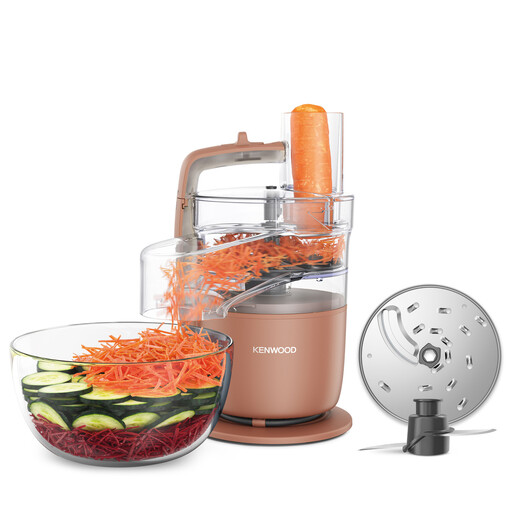 No image available
Its compact design and pulse control may suit smaller preparations and brief mixing tasks.
1.3 l bowl; pulse control.
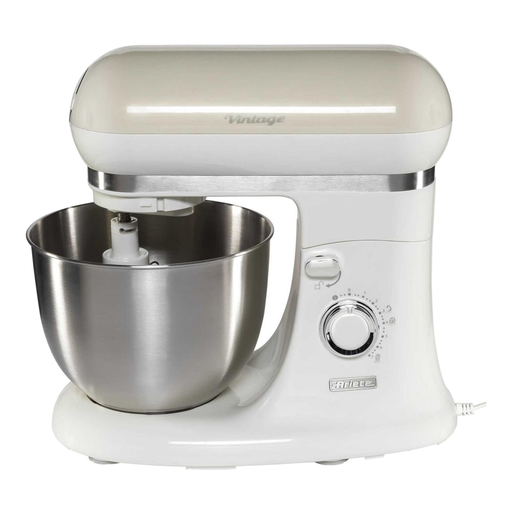 No image available
The mixing and dough tools may suit anyone who wants to tackle other mixing jobs as well as brief mixing tasks.
1000 W; 5 l mixing bowl; mixing and dough tools.
No. In Albert Heijn Allerhande’s letter-shaped speculaas recipe, you mix the ingredients into crumbs and then bring the dough together into a ball by hand. That’s the method for this recipe, not necessarily for every speculaas recipe.
No. Compare the total weight of the ingredients with the dough limit and instructions for the exact model. Bosch states that the MCM3501M can handle up to 0.8 kg of dough; Kenwood lists a maximum of 1 kg for the MultiPro XL Weigh+ and specifies a cooling break between dough batches.
Voedingscentrum recommends using clean hands and clean utensils, and keeping perishable parts of the meal chilled. This general picnic advice does not specify a particular storage period for homemade speculaas.
Online purchases usually come with a statutory 14-day cooling-off period from the day after delivery, with some exceptions. ACM ConsuWijzer also distinguishes between this cooling-off period and your statutory guarantee: if a product used normally doesn’t meet the standard you’re entitled to expect, you may have rights if it’s faulty. The rules and conditions depend on the circumstances.
The Netherlands Food and Consumer Product Safety Authority states that CE marking is mandatory for electrical products, and that kitchen appliances fall within the category of electrical appliances. Parts that come into contact with food must meet the applicable requirements for food contact materials. This does not, by itself, mean that a particular model has been checked individually.