
Baker making small batches of pastry
You make one tart case or a small batch of pastry at a time, and want a suitably sized bowl and control over mixing. Check the recommended batch size and included blade, not just the motor power.


For small batches of shortcrust pastry and limited cupboard space, a compact food processor could be a good fit, provided it comes with a suitable blade and the manufacturer approves the intended dough quantity for that model. For larger batches, compare the stated maximum dough capacity rather than just the bowl capacity, and weigh it up against the extra storage space and cleaning required.
You make one tart case or a small batch of pastry at a time, and want a suitably sized bowl and control over mixing. Check the recommended batch size and included blade, not just the motor power.
You share worktop and storage space with housemates and want an appliance whose base and removable parts can be stored neatly after use.
You want to leave the kitchen ready for others to use after baking, so you pay attention to how easily the appliance comes apart, how accessible its parts are and the cleaning instructions for the exact model.
Start with the amount of shortcrust pastry you make at a time. Then check whether the bowl, removable parts and cleaning requirements suit your shared kitchen.
| What to consider | What should you check? | Who is this important for? |
|---|---|---|
| Processing pastry | Check the included blade and the maximum dough quantity for the exact model. Follow the recipe instructions when mixing. | If I make shortcrust pastry, I want to know whether the blade and approved batch size suit my recipe; around 36% of consumers prioritise dough preparation when choosing. |
| Storage | Compare the dimensions, the number of removable parts and how they can be stored. | If I have limited shared cupboard space, I want to be able to put away the appliance and its parts after use; around 29% of consumers say storage space is their top priority. |
| Cleaning | Check the cleaning instructions for each part and see which items need to be washed by hand. | After baking, I want to leave the shared kitchen clean and tidy; around 21% of consumers focus mainly on cleaning and tidying when choosing. |
| Larger batches | Compare the weight of your recipe with the maximum dough quantity in kilograms for that model. Bowl capacity in litres is a different measurement. | If I make several batches or larger quantities, I want to know how much dough the appliance can process at a time; around 14% of consumers prioritise this capacity. |
Bosch lists both a 2.3-litre bowl capacity and a maximum dough quantity of 0.8 kg for the MCM3501M. These figures describe different things.
Look up the maximum dough quantity for the exact model and compare it with the total weight of your recipe.
Model numbers within a product range can have different specifications or come with different accessories.
Before buying, check the full model number and compare the included parts with what you need for your recipe.
Bosch describes the MCM3501M accessories as generally dishwasher-safe. This does not necessarily apply to every part.
Check the cleaning instructions for the bowl, lid, blade and discs separately.
The MultiPro Go range could be worth considering if compact storage is important.
The MultiTalent 3 offers an option with a separately stated maximum dough quantity.
The CS 3200XL is worth comparing if different bowl sizes and a dough blade are important to you.
The PurEase range could be interesting if you want to compare appliances with a range of functions and straightforward controls.
This selection includes food processors and a dough mixer/food processor. For each exact model, compare the approved dough quantity, the included tools and the space needed to store the appliance.
 No image available
The product description mentions dough hooks; check that the approved quantity and method suit your shortcrust pastry recipe.
4.5 l stainless steel bowl, 1300 W power and 6 speeds plus pulse.
 No image available
The removable parts could be useful if you need to clear space in a shared kitchen after use; check the cleaning instructions for each part.
750 W power and 1.8 l capacity.
 No image available
This compact model could be a good fit if you need to store it in a drawer; check the model-specific quantity for shortcrust pastry.
1.3-litre bowl; kneading is listed as a function.
 No image available
Compare the bowl capacity with the space you have available, and look up the maximum dough quantity for this exact model.
800 W power and a 2.3-litre bowl; the design is described as compact.
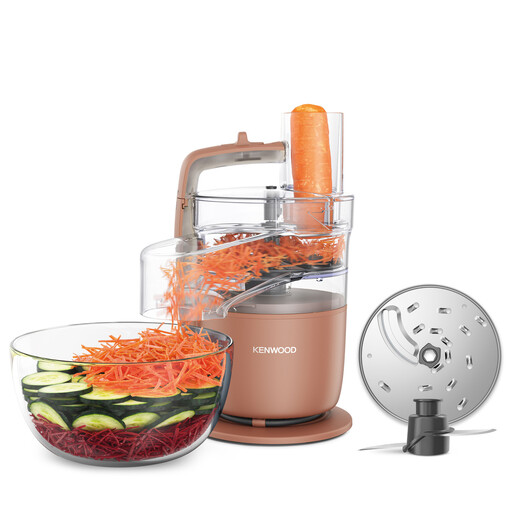 No image available
The compact design and cable storage could be useful if you need to put the appliance away after use; check the instructions for each part.
1.3-litre bowl, pulse function and parts described as dishwasher-safe in the product description.
A food processor could be suitable for a quick mix or a light dough; according to the Consumentenbond, a stand mixer is generally better for kneading. Base your choice on the tasks you actually need to do, especially if you want to knead heavy dough for a long time.
Follow the recipe and the instructions for your chosen appliance. Magimix’s shortcrust pastry recipe says to stop as soon as the dough forms a ball; this instruction does not automatically apply to other recipes or models.
Clean the parts that come into contact with food according to the manual, and use clean equipment for your next preparation. The Voedingscentrum advises washing your hands and kitchen equipment, and keeping raw and cooked food separate to prevent cross-contamination.
No. According to the Dutch government, there is no fixed statutory warranty period in the Netherlands. You are entitled to a product that works as it should, and the retailer is your point of contact if there is a problem. Any manufacturer’s warranty is in addition to this.
Electrical equipment sold in the Netherlands must meet the applicable requirements for electrical appliances and materials that come into contact with food. Ondernemersplein explains the CE marking and EU declaration of conformity for electrical equipment; the Netherlands Food and Consumer Product Safety Authority (Nederlandse Voedsel- en Warenautoriteit) explains the rules for food-contact materials.