
Baker with limited storage space
Makes small batches of dough and needs to be able to store the appliance, bowl and accessories after use.


For small batches and limited storage space, a compact food processor with a chopping blade and pulse control is an obvious choice. For larger recipes, the permitted dough quantity and the appliance’s dimensions are what matter most. With shortcrust pastry, the key is to process cold butter briefly, rather than kneading the mixture for a long time. So compare the manual and accessories for the exact model with your recipe and available storage space.
Makes small batches of dough and needs to be able to store the appliance, bowl and accessories after use.
Is looking for a chopping blade and pulse control to briefly mix cold butter into the flour, without kneading the dough for a long time.
Wants to know in advance whether the permitted dough quantity suits their recipe, even if the appliance takes up more space.
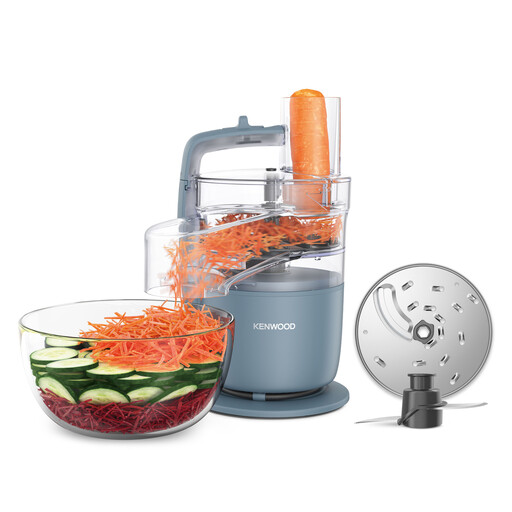
Suitable for: small batches of dough and limited space; Kenwood lists a 1.3-litre bowl, chopping blade and pulse function for the MultiPro Go.
Trade-off: the smaller bowl limits batch size. Kenwood’s warning about a maximum of 30 seconds relates to its own dough example, not a confirmed capacity for shortcrust pastry.
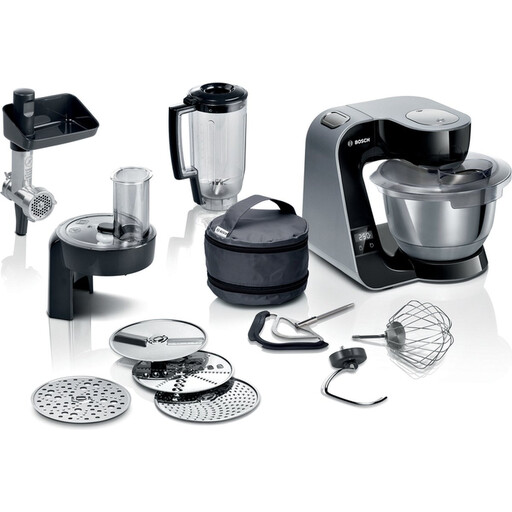
Suitable for: anyone who wants to process larger batches; Bosch Nederland lists a 2.3-litre bowl and a maximum of 0.8 kg of dough for the MCM3501M.
Trade-off: according to Bosch Nederland, the MCM3501M measures 375 × 220 × 260 mm, so be sure to measure your available storage space too.
Suitable for: a space where width is the main constraint; Magimix lists a width of 155 mm for the Mini Plus.
Trade-off: measure the height and depth too. The 600 ml processing quantity stated by Magimix is not a confirmed quantity for shortcrust pastry.
Suitable for: anyone who rarely makes shortcrust pastry or has no room for an appliance and its accessories; butter and flour can also be mixed by hand.
Trade-off: you avoid having an appliance to store, but mix the dough by hand.
| What to consider | What to look for when buying | Who does this matter most to? |
|---|---|---|
| Storage in a small kitchen | Measure the available width, depth and height, and check how the accessories are stored. | If I have limited cupboard space, the whole machine, including the bowl and attachments, needs to fit; around 36% of consumers prioritise storage space. |
| Control over the dough texture | Check whether the exact model has a chopping blade and pulse control; follow the recipe steps and process the dough briefly. | Anyone who wants to mix cold butter into flour briefly and with control is mainly looking for greater control over the process; around 29% of consumers prioritise this need. |
| Dough quantity per batch | Compare the weight of your recipe with the dough guidance for the exact model, not just the bowl capacity. | If I need to make my tart case in one suitable batch, I check the stated dough quantity; around 21% of consumers put batch size first. |
| Cleaning and support | Check which parts are included, how each part should be cleaned, and what terms apply to the warranty and spare parts. | Anyone who wants to spend less time cleaning and values support after purchase should check the parts and terms; around 14% of consumers name this as their main consideration. |
Litres and the permitted quantity of dough are different specifications. Bosch Nederland lists both a 2.3-litre bowl and a maximum of 0.8 kg of dough for the MCM3501M.
Check the dough guidance for the exact model and compare it with your recipe.
Getting this wrong could mean processing the dough in several batches or finding that the appliance isn’t suitable for your usual recipe.
BBC Good Food recommends short pulses until the mixture resembles fine breadcrumbs, and advises adding the liquid gradually. Kenwood’s warning against processing for longer than 30 seconds relates to a specific dough example from the manufacturer.
Use cold ingredients, pulse briefly and follow your appliance’s manual.
The bowl and accessories also need to fit in the available cupboard or worktop space.
Measure the entire space and check which parts come with the exact model.
Attachments and storage boxes may need extra room if you don’t leave them on the appliance.
The MultiPro Go is a compact range worth considering if you make small batches and have limited storage space.
The MultiTalent 3 MCM3501M is worth comparing if you value more bowl space and being able to store accessories inside the bowl.
The Mini Plus is worth considering if a slim housing and the availability of spare parts are important to you.
This selection includes food processors with different bowl capacities and features. Compare the accessories and usage guidance for the exact model with your recipe and available storage space.
 No image available
An option to compare if you’re looking for a food processor with a 1.8-litre bowl.
The product name lists 750 W, a blender, meat grinder, vegetable chopper, and discs for slicing, grating and mincing.
 No image available
An option to compare if you’d like a personal blender as well as food processor functions.
The product information lists seven speed settings, a 1.3-litre mixing bowl, a personal blender and a kneading function.
 No image available
An option to compare if you’re looking for accessories for other preparations as well as a chopping disc.
The product information lists 1000 W, a 3.9-litre bowl, a dough hook, whisk, blender and chopping disc.
 No image available
An option to compare if you’re looking for a 2.3-litre bowl and pulse control.
The product information lists two speeds, a pulse function and dimensions of 397 × 263 × 369 mm.
 No image available
An option to compare if you’re looking for a compact food processor with pulse control.
The product information lists a 1.3-litre bowl, chopping blade, reversible slicing and grating disc, cable storage and dimensions of 23.9 × 15.8 × 29.7 cm.
Pulse control helps you keep processing time short. BBC Good Food recommends pulsing until the mixture resembles fine breadcrumbs; also check that the model you choose has the required chopping blade, and follow the manual.
Use cold butter and pulse according to the recipe until the mixture has the desired crumbly texture; add liquid gradually. Follow the manual for the exact model when cleaning it and checking the maximum operating time.
For a consumer purchase in the Netherlands, the seller is responsible for the statutory guarantee if the product does not meet what you could reasonably expect under normal use. An additional manufacturer’s guarantee does not replace that responsibility, as explained by the Netherlands Authority for Consumers and Markets (ACM).
You generally have a statutory cooling-off period when you buy a food processor online; ACM ConsuWijzer states that this is 14 days after delivery, subject to statutory exceptions. Check the seller’s returns policy too.
The Dutch government states that electrical appliances placed on the market in the EU must meet the applicable safety requirements and carry the required CE marking. Check the product information and marking on the specific item; a statement on a sales page is not, by itself, an independent conformity assessment.