
Baker making several tart cases
You’re making pastry for several tarts and want to know how many recipe batches you can practically prepare at a time.


Choose a food processor to suit the size of your recipe batch and the maximum dough capacity of the exact model. A bowl’s capacity in litres is not the same as its maximum dough capacity in kilograms. A larger model may suit you if you want to make bigger batches, while a more compact appliance used for separate batches may be more practical if storage space is limited. Before buying, check which dough tool is included and what the manufacturer recommends for your recipe.
You’re making pastry for several tarts and want to know how many recipe batches you can practically prepare at a time.
You’d rather make separate batches of pastry if a more compact appliance is easier to store and clean.
You’d like to use the food processor for chopping, slicing or grating after the get-together too, so you’re checking which attachments are included.
A good fit if: you want to prepare several recipe batches and the exact model’s maximum dough capacity is suitable.
Trade-off: a larger appliance takes up more space. Bowl capacity alone doesn’t tell you how much dough it can handle.
A good fit if: you want to plan batches based on a dough weight specified by the manufacturer. Bosch states a maximum dough capacity of 0.8 kg for the MCM3501M.
Trade-off: larger quantities may require several batches; this specification is not an independent assessment of shortcrust pastry results.
A good fit if: storage matters more and you’re happy to make the pastry in separate batches. Kenwood lists a 2.1 l bowl for the FDM316SS; Magimix lists a 2.6 l bowl for the CS 3200 XL.
Trade-off: bowl capacity isn’t the maximum weight of prepared shortcrust pastry, and making several small batches may mean extra work.
A good fit if: it’s a one-off baking job, you don’t need much pastry and you can work the ingredients by hand.
Trade-off: working by hand takes effort. According to Consumentenbond, cleaning up after small jobs can take longer than using a machine saves.
| What to consider | What to look for | Who does this matter most to? |
|---|---|---|
| Pastry per batch | Compare the weight of your recipe batch with the stated limit for that type of dough. Don’t treat bowl capacity as dough weight. | If I’m making several tart cases, I want to know how much pastry is allowed per batch before choosing a bowl size; around 36% of consumers prioritise batch size. |
| Dough tool and operation | Check the attachment supplied with the exact version, and follow the manual or a suitable recipe for instructions. | When I make shortcrust pastry, I want to know which blade or attachment and method are right for my recipe; around 29% of consumers focus on these checks. |
| Cleaning and storage | Check the appliance’s dimensions and weight, and read the cleaning instructions for each part. | If I have limited cupboard space and don’t want lots of washing-up, I may prefer smaller batches to a larger appliance; around 21% of consumers prioritise cleaning and storage. |
| Using it after the get-together | Check which attachments are actually included and whether you’ll use the functions later. Check the manufacturer’s and retailer’s warranty terms separately. | If I want to use the appliance for more than baking, I’ll also consider its future uses and maintenance; around 14% of consumers focus mainly on this trade-off. |
Manufacturers may state bowl capacity, processing capacity and dough weight separately. These figures aren’t necessarily interchangeable.
Add up the weight of the ingredients in your recipe batch and compare it with the limit for that type of dough. If only a volume is specified, don’t assume you can make twice as much by doubling the recipe.
A separate food processor attachment for a stand mixer isn’t the same as a standalone food processor. A similar model number doesn’t prove that it’s the same version either.
Check the full model number, the base unit and the attachments actually included.
According to Consumentenbond, cleaning up after smaller jobs can take longer than using a machine saves.
Think about whether you’ll also want to chop, slice or grate after the get-together. If not, compare the washing-up and storage involved with making pastry in batches or working by hand.
ACM ConsuWijzer explains that your legal guarantee is in addition to any manufacturer’s warranty; manufacturer’s terms can vary by product and component.
Read the terms for the motor and attachments separately, and remember that these are distinct from your legal rights against the retailer.
The CS 3200 XL and CS 5200 XL are worth comparing if you’re looking for a smaller or larger bowl.
The MultiTalent 3 MCM3501M is worth comparing if you want to plan batches around a stated maximum dough capacity.
The MultiPro Compact+ FDM316SS and MultiPro Express Weigh+ FDM71.450SS are worth comparing if size or extra functions matter to you.
These product options are intended for food processing and pastry preparation. For each exact version, check that the appliance, dough tool and permitted batch size are suitable for your shortcrust pastry recipe.
 No image available
The product title mentions dough mixing, making this a relevant option if you’re looking for an appliance for food processing and pastry preparation.
The title specifies a 4.5 l stainless steel bowl, 1300 W and 6 speeds. Check the permitted dough weight and the attachment included for your recipe.
 No image available
This could suit you if you’re looking for a more compact appliance and want to make pastry in separate batches.
For shortcrust pastry, check whether this exact version includes the dough tool you need and which batch size and method the manufacturer recommends.
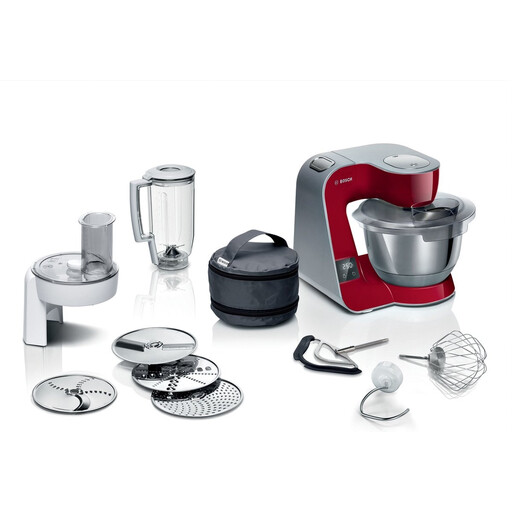 No image available
This could be a relevant option if you want to plan pastry batches in advance and are also looking for a larger bowl.
The product title specifies 1000 W and a 3.9 l bowl. These figures don’t indicate the maximum weight of shortcrust pastry; check the permitted quantity and the right attachment for your recipe.
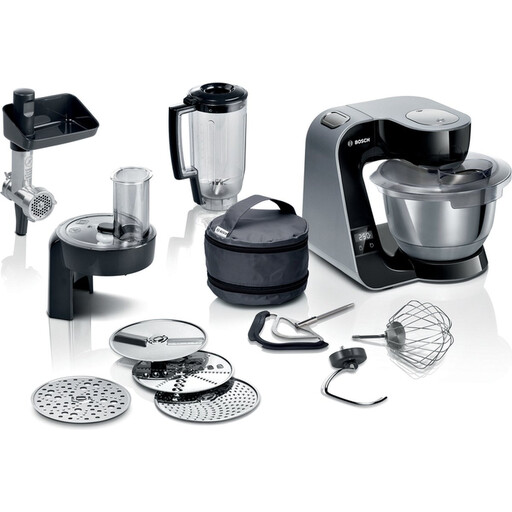 No image available
This could suit you if you want to weigh ingredients for your pastry as you prepare it.
The product title specifies 1000 W. Check which accessories are included with this exact version and whether Bosch recommends them for your shortcrust pastry recipe.
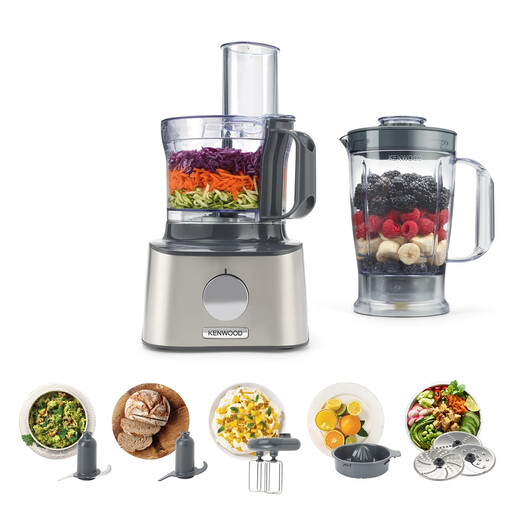 No image available
This could suit you if you’re looking for a compact model and want to make pastry in batches.
Check the information for this version to see whether the right dough tool is included and what instructions apply to making shortcrust pastry.
Start by choosing a recipe and adding up the ingredients for each batch. Magimix’s recipe for one tart case includes 250 g of flour and 140 g of butter, among other ingredients. Compare the total recipe weight with the instructions and dough limit for the model you choose. Bowl capacity in litres alone won’t tell you how much prepared pastry the appliance can handle.
It depends on the model: Magimix recommends a dough blade in its shortcrust pastry recipe, but a metal blade for the Mini Plus. Switch off the machine and follow the manual before removing any parts; check whether each part is dishwasher-safe.
Voedingscentrum advises against tasting raw dough, as flour and raw egg may contain harmful bacteria. This is especially important if young children, pregnant women, older people or anyone with a weakened immune system will be eating. Bake the pastry and wash your hands after handling raw ingredients.
According to ACM ConsuWijzer, consumers in the Netherlands have a legal guarantee in addition to any manufacturer’s warranty. If a product doesn’t do what you could reasonably expect during normal use, the retailer is responsible for providing an appropriate solution free of charge. There isn’t one fixed legal guarantee period that applies to every food processor.