A food processor is handy if you want to briefly mix cold butter into the ingredients for sweet shortcrust pastry, and you’ll use the appliance for other kitchen tasks too. For one small tart case, mixing by hand may be enough. If you mainly need to knead or whisk for longer, a stand mixer is generally a better choice, according to the Dutch Consumers’ Association. When choosing a food processor, check for a pulse function, the accessories included and the maximum dough capacity of the exact model: bowl capacity and dough capacity are not the same thing.
Who is a food processor for pastry suitable for?
For bakers making a crumbly tart case
You want to mix cold butter into the ingredients for sweet shortcrust pastry carefully and briefly, without working the dough for longer than necessary. Rutger Bakt explains how to rub cold butter into the flour mixture with your fingertips when making tartlet cases, then bring the dough together briefly.
For students on a budget or with limited cupboard space
You want to weigh up whether a multi-purpose appliance suits the other dishes you’ll make after the potluck, or whether it’s better to make the tart case by hand. The Dutch Consumers’ Association explains the differences between food processors and stand mixers, and a Rutger Bakt recipe also shows how to make pastry by hand.
For bakers making several potluck portions
You want to know whether you can process all the dough at once or need to divide it up. To find out, compare the total weight of your recipe with the maximum dough capacity of the exact model.
What should you look for when choosing?
Food processor with a pulse function
Choose this when: you want to briefly mix the ingredients for crumbly pastry and also use the machine for chopping, slicing or grating.
The trade-off: the Dutch Consumers’ Association says a stand mixer is generally better suited to baking tasks such as prolonged kneading and whisking.
Mixing by hand
Choose this when: you only make one small sweet tart case now and then and would rather not have an appliance to store.
The trade-off: you do the mixing yourself. Rutger Bakt describes rubbing cold butter in with your fingertips, then briefly bringing the dough together.
Stand mixer
Choose this when: as well as making this tart case, you mainly prepare cake batter, whipped cream or egg whites, or want to knead dough for longer.
The trade-off: according to the Dutch Consumers’ Association, a food processor is more focused on chopping, slicing and grating.
| What to consider |
What should you check? |
Who is this most relevant to? |
| Short mixing stages |
Check whether the exact model has a pulse setting and which blades or dough accessories are included. |
If I want to briefly mix cold butter into the dry ingredients, I look for control at each short stage. Around 33% of consumers prioritise control over mixing. |
| Use after the potluck |
Check which accessories are included and what other kitchen tasks you’ll genuinely use the appliance for. |
If I only make a tart case now and then, I want to know whether I’ll use the appliance afterwards too. Around 27% of consumers prioritise usefulness for their expected needs. |
| Amount of dough |
Compare the total weight of your recipe with the maximum dough capacity of the exact model. Divide the dough into batches if needed. |
For several potluck portions, I want to know whether my recipe is within the permitted capacity. Around 20% of consumers focus on processing capacity. |
| Storage and cleaning |
Check the appliance’s dimensions, how the accessories are stored and the cleaning instructions for each part. |
If cupboard space is limited, I want to know whether the appliance and its separate parts will fit and are practical to clean. Around 20% of consumers prioritise storage and washing up. |
Common points to consider when buying
-
Confusing bowl capacity with dough capacity
Bowl capacity and maximum dough capacity are different specifications. Bosch lists a 2.3 l bowl and a maximum dough capacity of 0.8 kg for the MCM3100W.
Add up the weight of your recipe and compare it with the dough capacity of the exact model.
-
Assuming a dough hook or high power means it’s suitable for pastry
The Dutch Consumers’ Association distinguishes between briefly mixing light dough in a food processor and baking tasks that are generally better suited to a stand mixer. For sweet shortcrust pastry, Rutger Bakt describes briefly bringing the dough together.
First choose the process your recipe calls for, then check the model’s accessories and instructions.
-
Confusing the manufacturer’s guarantee with a fixed statutory period
The Netherlands government states that there is no fixed statutory guarantee period in the Netherlands, and that you can contact the retailer if a product is faulty.
If you’re offered an additional guarantee, check what it adds to your existing rights.
Brands to consider
Bosch
The MultiTalent 3 MCM3100W is a food processor with a pulse function and accessories for general food preparation.
- Bosch lists a universal blade, a plastic dough tool and storable accessories for the MCM3100W.
- The maximum dough capacity of 0.8 kg applies to the MCM3100W; compare it with the weight of your own recipe.
Kenwood
The MultiPro Compact+ FDM316SS and MultiPro OneTouch FDM73.480SS are different models, each with its own accessories and features.
- Kenwood lists a pulse setting, dough tool and integrated scales for the FDM316SS.
- Accessories vary by model; check what’s included with the exact version. Manufacturer specifications are not an independent test of sweet shortcrust pastry.
Magimix
The CS 3200 XL is worth considering if you want to use the appliance for other food preparation tasks as well as pastry.
- Magimix lists three bowls and a dough blade included with the CS 3200 XL.
- Magimix lists bowls of 2.6 l, 2.2 l and 1.2 l, and an appliance weight of 6.7 kg. Bear in mind how much space it takes up.
Food processors at Joybuy
This selection focuses on food processors with a pulse function for short mixing stages, with a range of features for other kitchen tasks.
 No image available
Bosch MCM3200W MultiTalent 3 food processor, 800 W, 2.3 l
The listed pulse function is suitable for short mixing stages when making pastry.
The product name lists 800 W and a 2.3 l bowl. The description mentions two speeds and a pulse function.
View at Joybuy
 No image available
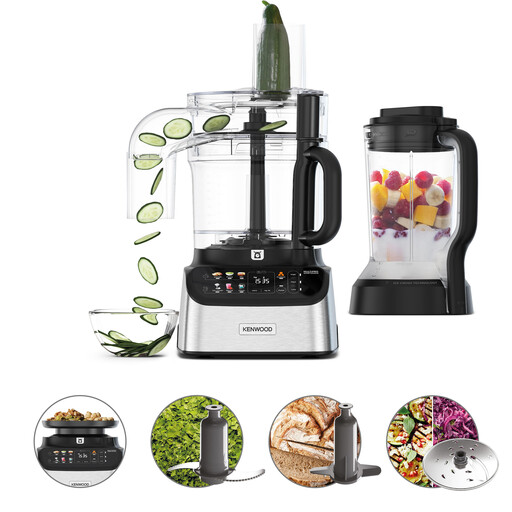
Kenwood MultiPro OneTouch FDM73 food processor and blender
The pulse setting is useful for short mixing stages; the listed features also cover other kitchen tasks.
The description mentions a dough hook, integrated weighing and a 3 l bowl.
View at Joybuy
 No image available
Kenwood MultiPro Go FDP22 food processor
The listed pulse function is suitable for short mixing stages; the compact design may be useful if storage space is limited.
The description mentions a chopping blade, a reversible slicing and grating disc, and cord storage.
View at Joybuy
 No image available
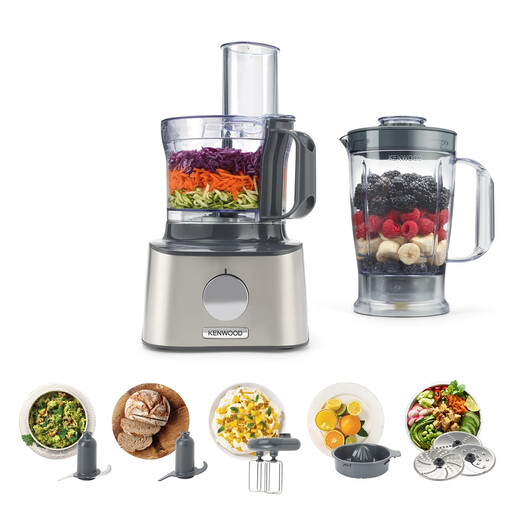
Kenwood MultiPro Compact FDM301 food processor
The description lists a pulse function for short mixing stages and several food preparation tasks.
The product description gives the bowl capacity as 2.1 l.
View at Joybuy
 No image available
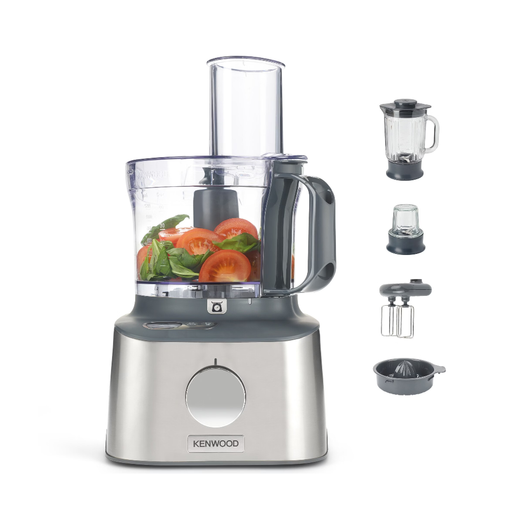
Kenwood MultiPro Compact+ FDM313 food processor
The described pulse function is suitable for short mixing stages; this model also includes features for other kitchen tasks.
The description lists a 2.1 l bowl, built-in scales and a glass blender.
View at Joybuy
Frequently asked questions
Do you need to knead sweet pastry for a long time in a food processor?
Not for the tartlet shortcrust pastry described by Rutger Bakt: cold butter is mixed in until crumbly, the dough is briefly brought together, then left to rest for at least 1 hour. Another pastry recipe from Albert Heijn Allerhande uses short pulses; that doesn’t mean the two recipes are the same.
How can you tell whether one batch will be enough for the potluck?
Add up the weight of the ingredients in your chosen recipe and compare it with the maximum dough capacity of the exact model. Bosch lists a maximum dough capacity of 0.8 kg for the MCM3100W; its 2.3 l bowl capacity is no substitute for that limit.
Who can help in the Netherlands if a newly bought appliance is faulty?
According to the Netherlands government, you can contact the retailer to resolve an issue with a faulty product. The Netherlands has no fixed statutory guarantee period; a manufacturer’s guarantee is separate from your legal rights.
Does an electrical kitchen appliance sold in the Netherlands have to meet product safety requirements?
Electrical appliances are subject to European safety requirements. The Netherlands government states that many consumer products on the EU market must carry a CE marking; check the product documentation for the requirements and marking that apply to the specific appliance.


