
Parent baking several tart cases
Wants to divide the total amount of pastry into batches that are within the appliance’s stated dough limit.


For shortcrust pastry, a food processor with a pulse function is a practical choice if you want to briefly mix butter into flour. Check the maximum dough quantity for the exact model against your recipe, and make several batches if needed: bowl capacity is not automatically the same as the dough limit. If you mainly want to whisk ingredients or knead heavy dough for longer, you could also consider a stand mixer.
Wants to divide the total amount of pastry into batches that are within the appliance’s stated dough limit.
Wants to briefly mix butter into flour without buying an appliance mainly for prolonged kneading. For a single batch, mixing by hand may also be an option.
Is looking for a compact appliance with a pulse function and weighing up whether extra batches and cleaning are worth having a smaller bowl.
| What to consider | What should you check? | Who is this important for? |
|---|---|---|
| Pastry texture | Check whether the exact model has a pulse function and which blade or attachment is included. | When I make shortcrust pastry, I want to mix the butter briefly and check the texture as I go. Around 31% of consumers prioritise this level of control. |
| Pastry per batch | Weigh your ingredients and compare the amount with the stated maximum dough quantity; plan extra batches if needed. | Anyone baking several tart cases will want to know how much pastry can be processed at once. Around 25% of consumers prioritise batch size. |
| Cleaning and allergens | Check which parts the manufacturer says can be cleaned, and keep track of the ingredients used in each bake. | When I bake for others, I want to manage contact between different batches and keep track of the ingredients. Around 19% of consumers prioritise cleaning and allergen information. |
| Space and versatility | Measure your storage space and check which attachments come with the version you’re considering. | Anyone short on space will want to know whether the appliance can be stored away after the bake sale and used for other kitchen tasks too. Around 13% of consumers prioritise space and versatility. |
| Buying an extra appliance | Decide whether you’ll use the appliance again; for a small, occasional batch, you could also mix by hand. | If I’m only baking once, I want to consider whether I really need another appliance. Around 12% of consumers consider this the most important factor. |
Bowl capacity and the permitted dough quantity are different specifications. For example, Bosch lists a 2.3 l bowl for the MCM3501M and separately states a maximum dough quantity of 0.8 kg.
Weigh the ingredients for one batch and check the dough limit for the exact model version.
If the dough limit is lower than your recipe requires, you may need to make extra batches.
The Good Food recipe recommends cold butter and short pulses until the mixture has a crumbly texture. Prolonged mixing is not the same as briefly processing shortcrust pastry.
Follow the recipe steps and stop as soon as the mixture reaches the desired crumbly texture.
The included parts can vary between versions; a similar model name does not confirm which set you’ll receive.
Compare the full model code and list of accessories before you choose.
A clean appliance doesn’t tell customers which allergens are in a bake. The NVWA requires information about allergens present to be available to consumers.
Keep a record of the ingredients in each bake and make sure customers can access the allergen information.
The MultiTalent 3 MCM3501M is a useful comparison for anyone who wants to take the stated dough limit into account.
The MultiPro Compact+ FDM316SS and MultiPro Express Weigh+ FDM71.450SS have different bowl sizes and accessories.
The CS 4200XL is a larger food processor to consider if you’re also looking at other food preparation tasks and multiple bowls.
The 5KFP0719EOB is a more compact model to consider if small batches and storing everything in the bowl are important to you.
The products below range from food processors to a chopper. Check the product type, included parts and whether a dough limit applies to your batch for each model.
 No image available
The product description lists dough hooks and a pulse function; check the permitted dough quantity for your recipe.
Bowl: 4.5 L. Power: 1300 W. Speed: 6+P.
 No image available
The product information mentions short pulses and removable parts; check which parts need cleaning after your preparation.
Power: 750 W. Capacity: 1.8 L.
 No image available
The product information mentions a pulse function and dough preparation. Check the maximum dough quantity for this exact version.
Power: 800 W. Capacity: 2.3 L.
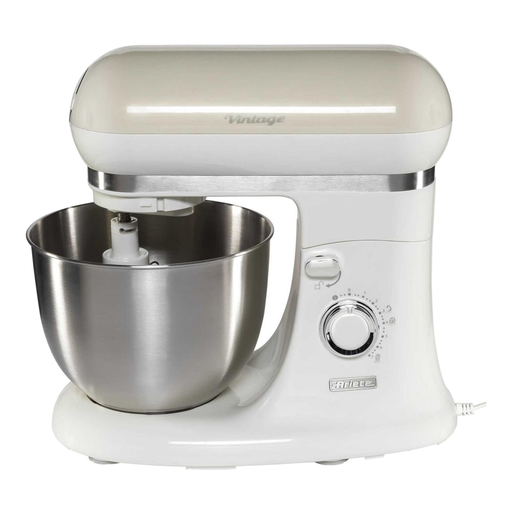 No image available
The product information lists a dough tool. Check whether its operation and permitted dough quantity are suitable for your recipe.
Power: 1000 W. Mixing bowl: 5 L.
 No image available
This product is described as a food chopper and meat grinder, not a food processor. The product description lists two speeds with pulse control.
Power: 350 W. Three stainless steel bowls: 2.5 L, 2.2 L and 1.8 L.
No. The Good Food recipe recommends using cold butter and short pulses until the mixture resembles fine crumbs; then follow the recipe’s chilling time. This advice doesn’t guarantee the same result with every appliance.
No, bowl capacity isn’t the same as the maximum dough quantity. Compare the weight of your recipe with the dough limit for the exact model version. For example, Bosch lists a 2.3 l bowl for the MCM3501M and separately states a maximum dough quantity of 0.8 kg.
Clean parts that come into contact with food according to the instructions, and keep the ingredients for different bakes separate. Check which parts of your version the manufacturer says are dishwasher-safe. Washing up alone is not a reason to describe a product as allergen-free.
The NVWA requires consumers to be given information about allergens present. For unpackaged products, this information can be provided in writing or verbally, subject to certain conditions. Keep a record of the ingredients in each bake; the NVWA also states that the specific type must be made clear for cereals containing gluten and for nuts.
That depends on the type and frequency of the sale; simply describing it as ‘one school bake sale’ doesn’t provide a complete answer. The NVWA states that rules for selling food safely and hygienically at events also apply to private individuals, and mentions a HACCP plan for anyone who prepares and sells food several times a year. The NVWA also notes an exemption from registration for schools registered with DUO. If needed, check the arrangements with the school and the NVWA.