
Baker with limited cupboard space
You want to make a small batch of shortcrust biscuit dough and need to store both the appliance and its accessories. Compare the dimensions and usable bowl capacity with your recipe.


Choose a food processor with an attachment and dough capacity that suit your recipe, and check that both the appliance and its accessories will fit in your kitchen. A food processor may be suitable for short spells of light dough mixing, while the Consumentenbond says a stand mixer is generally better for regular or prolonged kneading. A bowl’s capacity in litres does not automatically tell you the maximum amount of dough it can handle.
You want to make a small batch of shortcrust biscuit dough and need to store both the appliance and its accessories. Compare the dimensions and usable bowl capacity with your recipe.
You want one appliance for quick dough mixing as well as tasks such as chopping or grating. Check that the exact model comes with the attachments you need.
You bake often and want to know whether a food processor is enough for quick mixing, or whether a stand mixer would be better for other, longer kneading tasks.
A good fit if: you mix small batches for short periods and use the same appliance for other food preparation too.
The trade-off: a compact model may have a smaller bowl. Check the dough instructions too, and make sure you have space for the accessories.
A good fit if: you regularly prepare foods other than biscuit dough and have room for a larger appliance.
The trade-off: a larger bowl is not necessarily useful for small batches. Check the dough capacity of the exact model.
A good fit if: you regularly knead dough for longer periods, or only occasionally make a small batch and would rather not use another appliance.
The trade-off: a stand mixer also takes up space; mixing by hand takes effort.
| What to consider | What to look for | Who this matters to |
|---|---|---|
| Space for the appliance and accessories | Measure the space where you plan to keep the appliance and compare it with the dimensions of the exact model. Leave room for bowls, lids and attachments too. | In a small kitchen, I want to be able to store the accessories as well, without filling up my worktop. Around 36% of consumers prioritise how well it fits and stores away. |
| Dough quantity and attachment | Compare the quantity in your recipe with the dough limit and instructions for the exact model. Don’t assume the limit from the bowl’s total capacity. | When I make shortcrust biscuit dough, I want to know that the attachment supplied can handle the amount in my recipe. Around 36% of consumers prioritise being able to mix their own batch. |
| Other kitchen tasks | Check which discs, blades and other accessories come with the exact model, and consider whether you’ll actually use those functions. | I want to prepare other foods as well as dough with one appliance, but only if the extra parts are worth the space they take up. Around 14% of consumers prioritise this versatility. |
| Cleaning and servicing | Check the cleaning instructions for each part and find out which compatible replacement parts are available. The manufacturer’s warranty is separate from your statutory rights. | I want to know how to clean the bowl and attachments after use, and who to contact if something goes wrong. Around 14% of consumers make maintenance and servicing a deciding factor. |
The bowl’s total capacity doesn’t tell you how much dough the appliance can process according to its instructions. For example, Bosch lists a 2.3 l bowl capacity and a maximum dough-processing capacity of 0.8 kg separately for the MultiTalent 3 MCM3501M.
Compare the quantity in your recipe with the instructions for the exact model and attachment.
If the batch is too large or too small for the appliance, you may need to process the dough in several batches or use a different appliance.
The appliance isn’t the only thing that needs storage space: bowls, lids, discs and other attachments need somewhere to go too.
Measure the space for the appliance as well as the space for the parts you plan to use.
The Consumentenbond distinguishes between quick, light dough mixing with a food processor and longer kneading, for which a stand mixer is generally more suitable.
Choose based on the dough you make most often. If you regularly knead for longer periods, check whether a stand mixer would better suit the way you use it.
The MultiPro Go is designed for smaller kitchens. According to Kenwood, the MultiPro Compact+ FDM315SS combines a 2.1 l bowl with a range of features, including a dough tool and scales.
According to Magimix, the Mini Plus has a 1.7 l bowl and a separate small bowl with a capacity of 0.5 l.
The MultiTalent 3 MCM3501M is a multifunctional food processor with storage space for accessories inside the bowl.
According to Braun, the PureEase FP3132BK has two speeds and pulse control.
This selection includes compact and multifunctional food processors for quick dough mixing, as well as a stand mixer as an alternative if regular or prolonged kneading is more important. For each model, check the dimensions and the instructions for your recipe.
 No image available
This food processor may suit you if you want to mix dough and prepare other foods too.
This model has a 1.3 l bowl, seven speeds, a kneading function and six accessories. The stated dimensions are 37.9 × 33.8 × 23.4 cm; measure your available space first.
 No image available
This food processor may suit you if you want to chop, mix, slice and grate as well as prepare dough.
It has a 2.3 l bowl capacity and an 800 W motor. This model has two speeds and a pulse function; the stated dimensions are 397 × 263 × 369 mm.
 No image available
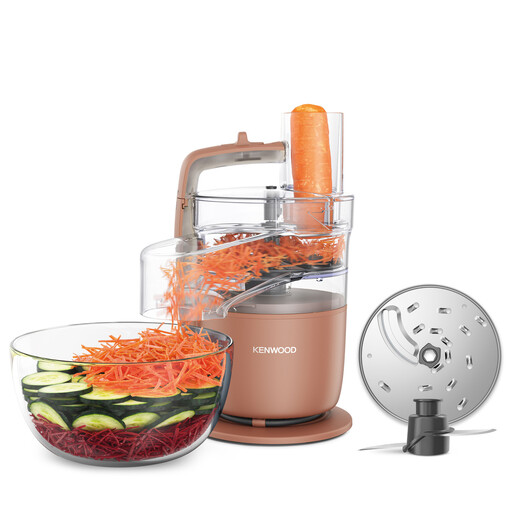
This compact food processor may suit you if you want to process small quantities quickly and have limited storage space.
It has a 1.3 l bowl, pulse control and two slicing and grating discs. The stated dimensions are 15.8 × 23.9 × 29.7 cm. For its example using 250 g flour and 150 g water, Kenwood warns against processing dough for more than 30 seconds; this isn’t a universal setting for shortcrust biscuit dough.
 No image available
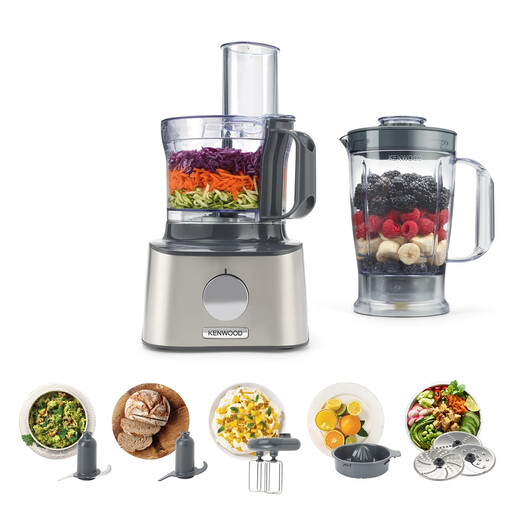
This model may suit you if you want to mix dough and use one appliance for other tasks, such as slicing and grating.
It has a 2.1 l bowl capacity, two speeds and pulse control. The stated dimensions are 20 × 23 × 36.5 cm.
 No image available
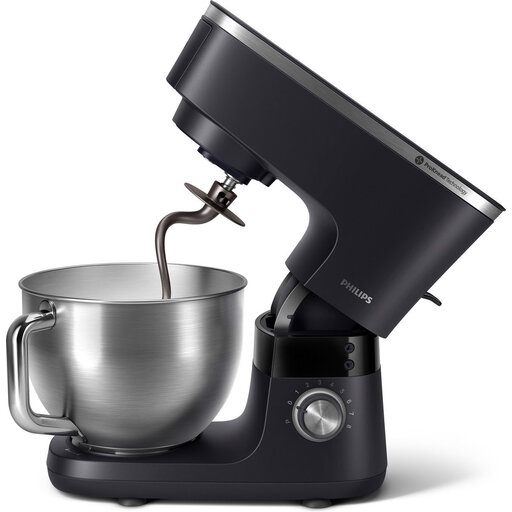
This stand mixer is an alternative worth considering if you regularly do more involved or prolonged dough preparation.
This model has a 5.5 l bowl, eight speeds, a timer and a dough hook with ProKnead kneading technology. The listed accessories also include a blender and meat grinder.
A food processor may be suitable for quick, light dough mixing; a stand mixer is generally better for regular or prolonged kneading. The Consumentenbond makes this distinction for mixing, whisking and kneading. Choose based on your main task, not just because a product description mentions ‘dough’.
No. Don’t use the capacity in litres as the dough limit. Bosch lists a 2.3 l bowl capacity and a maximum dough-processing capacity of 0.8 kg separately for the MultiTalent 3 MCM3501M. Check the specific instructions for your model and recipe.
Follow the instructions for your appliance and stop when your recipe says to. In its shortcrust pastry recipe, Magimix advises stopping as soon as the dough forms a ball. For a separate MultiPro Go example using 250 g flour and 150 g water, Kenwood warns against processing for longer than 30 seconds. These examples don’t provide interchangeable timings for every recipe.
In the Netherlands, statutory consumer rights apply alongside any manufacturer’s warranty. If there’s a problem, contact the retailer. ACM ConsuWijzer explains that statutory rights are not the same as a manufacturer’s warranty, and that there isn’t one fixed statutory warranty period for every appliance.
For online purchases in the Netherlands, you generally have a statutory 14-day cooling-off period after delivery. Check the terms and any applicable exceptions before using or returning the appliance.