What should you look for when choosing?
Start by deciding where you’ll keep both the appliance and its separate parts. Then check that the dough limit and mixing instructions are suitable for your recipe and the amount you want to make.
| What to consider |
What should you check? |
Who is this important for? |
| Worktop space and storage |
Measure the available height, width and depth, and decide where the bowls, discs and any accessory box will go. |
If I have limited worktop and cupboard space, I want to be able to put the complete appliance away after use. Around 36% of consumers say that space is their main concern when buying. |
| Brief mixing |
Check whether there’s a pulse setting, which blade or attachment comes with the model, and what the manual says about how long you can use it for dough. |
When I make scones, I want to be able to work the dough briefly and stop as soon as the recipe says to. Around 29% of consumers prioritise control over mixing. |
| Batch size |
Compare the amount in your recipe with the model-specific dough limit; don’t treat a weight limit as equivalent to the bowl’s capacity in litres. |
If I want to make a whole recipe at once, I need to know whether it’s within the stated dough limit. Around 21% of consumers focus mainly on batch size. |
| Cleaning and extra functions |
Check the cleaning instructions for each part and whether you’ll actually use the included discs or other attachments. |
If I’m mainly doing a small baking job, I want to know whether extra functions are worth the additional cleaning and storage. Around 14% of consumers prioritise easy maintenance and useful extra functions. |
Food processors at Joybuy
This selection includes models whose product names mention food processing or dough mixing, from appliances described as compact to models with a larger bowl. Check the dimensions of the complete appliance to make sure it will fit on your worktop, and compare the information for the exact version with your recipe.
 No image available
Food processor and dough mixer, beige
The product name mentions both dough mixing and a food processor; check the dimensions before choosing it for a small worktop.
The product name lists a 4.5 l stainless steel bowl, 1300 W and a 6+P speed setting, and also mentions a pasta maker.
Joybuy
 No image available
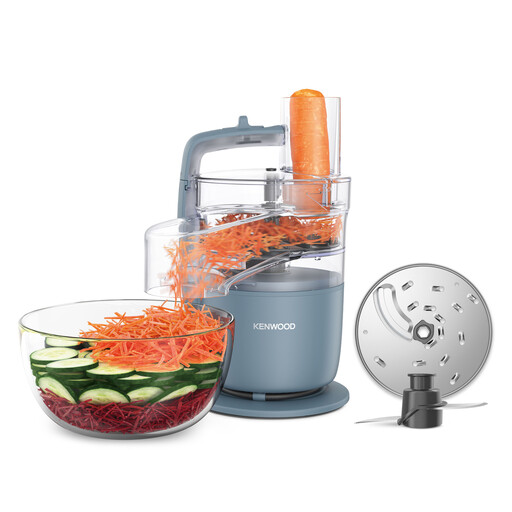
Kenwood MultiPro Go FDP22, grey
The MultiPro Go is the compact food processor option in this selection; check the bowl limit and permitted operating time for your recipe and version.
Joybuy
 No image available
Kenwood FDP23.380GR GO Blend, eucalyptus green
For savoury scones, check which parts come with this version and what mixing instructions and quantity limits apply to the model.
Joybuy
 No image available
Bosch MCM3200W MultiTalent 3
The product name lists a 2.3 l bowl and describes the model as multifunctional; measure your available space and check the dough limit for this specific version.
The product name lists 800 W and a bowl capacity of 2.3 l.
Joybuy
 No image available
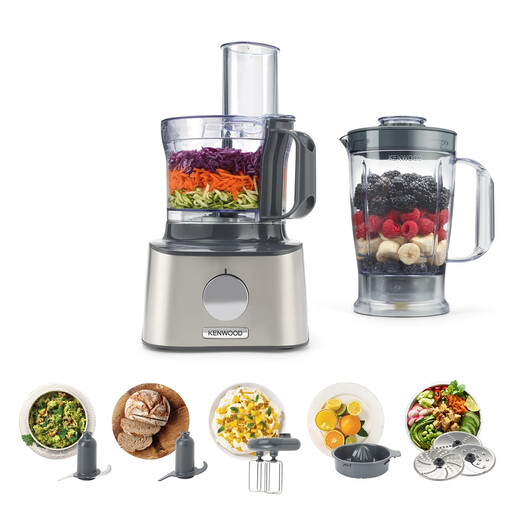
Kenwood MultiPro Compact FDM301, silver
Check which accessories come with this version, how much space they take up, and which mixing and cleaning instructions apply to the model.
Joybuy
Frequently asked questions
Does a food processor need to knead scone dough for a long time?
No, there’s no need to knead for a long time when making the scones described here. The KitchenAid recipe advises handling the dough as little as possible; the Consumentenbond distinguishes between briefly mixing light dough in a food processor and prolonged kneading in a stand mixer designed for baking. Also follow the operating limit for your own model.
Can I process a large recipe for savoury scones all at once?
You can’t tell from the bowl capacity alone. A Dutch recipe for 15–20 scones includes 500 g of flour, 75 g of butter and 200 g of cheese; compare the ingredients with the dough limit for your chosen model and divide the recipe into batches if needed. This recipe has not been tested for machine preparation.
How do I clean a food processor properly after use?
Follow the manual for the exact model when cleaning the bowl, blade and discs. The Consumentenbond warns that accessories aren’t always dishwasher-safe and that plastic parts can warp if washed at too high a temperature.
What are my rights when buying online in the Netherlands?
According to ACM ConsuWijzer, online purchases generally come with a statutory cooling-off period of up to 14 days after delivery, subject to applicable exceptions. You’re also entitled to a legal guarantee if a product doesn’t perform as you could reasonably expect under normal use; the seller is responsible for this. This is separate from any additional manufacturer’s warranty.
What should I look for to ensure an electrical appliance is safe?
The Dutch government states that electronic appliances offered for sale in the EU must carry a CE marking. Check the product information and instructions; a statement on a retailer’s website isn’t, in itself, an independent check of the individual appliance.


