
Small-batch baker with limited storage space
You make savoury scones occasionally and share worktop and cupboard space. A compact bowl, pulse control and quick clean-up matter more to you than lots of accessories.


For small batches in a shared kitchen, key things to consider include pulse control, a suitably sized bowl and parts that are easy to clean. For larger batches, also check the maximum dough capacity and which accessories are included. King Arthur Baking Company recommends using cold butter and working quickly when making scones: stop as soon as the dough comes together, as prolonged kneading is not the aim.
You make savoury scones occasionally and share worktop and cupboard space. A compact bowl, pulse control and quick clean-up matter more to you than lots of accessories.
You make scones for your housemates more often and want to know how much dough a model can actually handle, not just how large its bowl is.
You share appliances and kitchen equipment. Clean parts and clear agreements about use are important, especially if ingredients or food allergies vary.
Start with the amount of dough you usually make, then consider whether the appliance is easy to use, clean and store.
| What to consider | What to look for | Who should prioritise this? |
|---|---|---|
| Short, controlled mixing | Check whether the model has a pulse function and follow the instructions for short bursts. King Arthur Baking Company recommends working quickly when making scones with butter. | If I want to mix butter and flour briefly and stop as soon as the dough comes together, control over mixing time is my main priority. Around 33% of consumers put this first. |
| Batch size and dough capacity | Compare the quantity in your recipe with the stated maximum dough capacity; bowl volume and dough capacity are not the same thing. | If I bake for several housemates, I want to know whether my usual batch can be processed in one go. Around 27% of consumers mainly need sufficient dough capacity. |
| Cleaning between users | Check the cleaning instructions for each part and agree to leave the bowl, blade and lid clean after use. The Netherlands Nutrition Centre recommends using clean equipment and keeping raw products separate from other food. | If I share an appliance and ingredients or allergens may vary, I want to be able to clean the parts thoroughly. Around 20% of consumers put ease of cleaning first. |
| Storage in a shared space | Measure the available cupboard or worktop space and consider how many separate accessories you want to store. | If shared cupboard space is limited, I want an appliance and accessories that fit the space we use together. Around 20% of consumers want to make the most of limited storage space. |
Bowl capacity and maximum dough capacity are two different measurements. A larger bowl alone does not tell you how much dough the appliance can process according to the manufacturer.
Compare the quantity in your recipe with the stated processing limit for the exact model.
If your recipe exceeds the limit, you may need to process the dough in several batches.
When making scones with butter, it is important to use cold butter and work quickly. The aim is not to keep mixing once the dough has come together.
Follow the appliance instructions and stop as soon as the dough comes together.
Dishwasher instructions can vary from one part to another. In a shared kitchen, it is also important to keep used equipment clean; the Netherlands Nutrition Centre recommends using clean equipment and keeping raw products separate.
Check the cleaning instructions for the bowl, blade, lid and accessories individually, and agree who will clean them after use.
Several separate parts can mean extra cleaning and storage time.
Kenwood describes the MultiPro Go FDP22.140GY as a compact model with a 1.3-litre bowl and pulse control, aimed at smaller batches and limited storage space.
Bosch lists a 2.3-litre bowl, pulse function and included plastic dough tool for the MultiTalent 3 MCM3501M.
According to Braun, the PurEase FP3233SI has a 2.1-litre bowl, pulse control and an included dough accessory.
According to the manufacturer, the Magimix CS 3200 XL comes with three bowls and a dough blade, for handling a range of quantities.
KitchenAid describes 1.7- and 2.1-litre food processors for tasks including chopping, grating and kneading. This could be useful if you also want to prepare savoury additions.
This selection includes food processors and kitchen machines for preparing dough. Compare bowl capacity, controls, included parts and how much space the appliance takes up in a shared kitchen.
 No image available
The listed pulse function gives you an option for short bursts of mixing.
The product name lists a 4.5-litre bowl, 1300 W, six speeds plus a pulse function, and a beige finish.
 No image available
The compact design could suit you if storage space is also a factor when choosing a food processor.
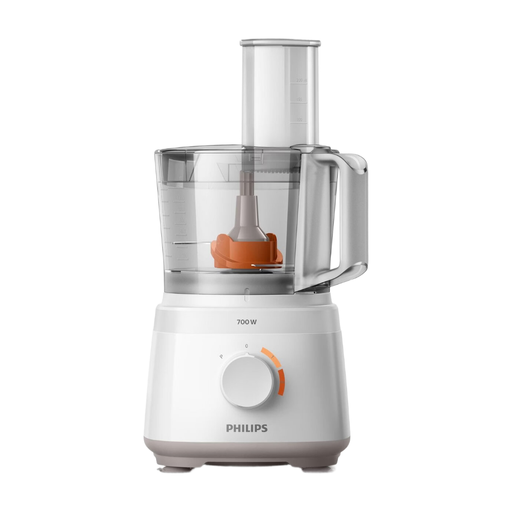
The product name lists 700 W, 19 functions, a 1.5-litre capacity and overheating protection.
 No image available
Bowl capacity gives you a specific point of comparison; for your recipe, also check the maximum dough capacity of this version.
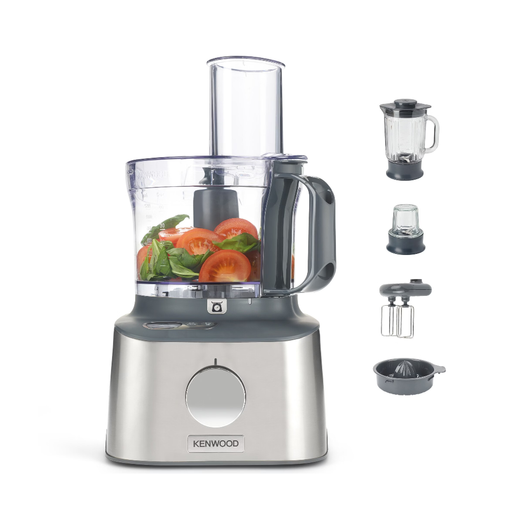
The product name lists 800 W, a 2.3-litre bowl and a compact, multifunctional design.
 No image available
The model name suggests a compact food processor; check which controls and accessories come with this version to make sure they suit your recipe.
 No image available
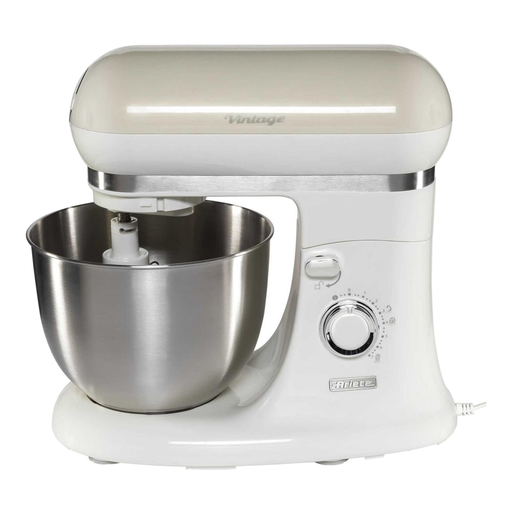
The stated planetary mixing action makes this a kitchen machine worth comparing with food processors; consider whether its method suits the short mixing bursts needed for scones.
The product name lists 1000 W and a 5-litre stainless steel mixing bowl.
No. When making scones with butter, work quickly with cold butter and add only enough liquid to bring the dough together. Also follow the usage limits for your exact appliance; Kenwood's instructions for type FDP22 refer to a specific example dough and are not a general rule for scones.
Use clean equipment, keep raw products separate from other food and clean used items thoroughly. Check which parts are dishwasher-safe for each model. The Netherlands Nutrition Centre points out that, when food allergies are involved, you should also pay attention to ingredients and possible contact with residue from previous preparations.
No. According to the Dutch Government, there is no fixed statutory guarantee period in the Netherlands; if a product is faulty, the seller must provide a solution. So compare the cover offered by an extended guarantee with the rights you already have.
The European Commission states that food contact materials, including parts of food processing equipment, must comply with Regulation (EC) No 1935/2004 when placed on the EU market. This general requirement does not, by itself, confirm that an individual model or offer complies.
The Netherlands Food and Consumer Product Safety Authority's information about allergen warnings on labels is aimed at businesses that produce, package or sell food, and does not establish a separate labelling requirement for food prepared at home. If allergies are a concern, do check the ingredients and the risk of cross-contact in a shared appliance.