
Cook with limited worktop space
Wants to slice potatoes, but also needs to find space for the appliance, a collecting bowl and separate parts after use. That’s why they compare dimensions and storage options before considering extra features.


Start with the slicing disc: choose a food processor that includes the disc you need for your preferred potato slices, and check that it comes with the exact model you’re considering. Then compare its dimensions in use and its processing capacity. Direct discharge can be handy, but you’ll need space for a collecting bowl.
Wants to slice potatoes, but also needs to find space for the appliance, a collecting bowl and separate parts after use. That’s why they compare dimensions and storage options before considering extra features.
Makes a variety of potato dishes and checks that the right slicing disc is included with the exact model, rather than relying solely on a claim that the appliance can slice.
Often processes several potatoes and weighs up the amount handled per batch against the space taken up by the appliance and bowl.
When choosing a food processor, consider its size, bowl capacity, attachments and ease of use. The Dutch Consumers’ Association highlights these as factors to consider when choosing a kitchen machine or food processor.
| What to consider | What should you check? | Who should pay particular attention? |
|---|---|---|
| Worktop and storage space | Measure the available width, depth and height. Allow for a collecting bowl, if needed, and space for separate parts. | If I have limited worktop space, I want to know in advance where the appliance and attachments will fit. Around 34% of consumers say space is their main consideration. |
| Slicing disc and slice thickness | Check whether a slicing disc is included, what thickness of slices it produces and whether the feed tube is large enough for your potatoes. | For potato dishes where slice thickness matters, I check the attachments included with that exact version. Around 33% of consumers put having the right slicing disc first. |
| Amount per batch | Compare the stated processing capacity with the amount you need to process, rather than looking only at the bowl’s total capacity. | If I want to process several potatoes one after another, I check how many fit in each batch. Around 20% of consumers prioritise the amount processed per batch. |
| Cleaning and parts | Check the cleaning instructions for each part, and include discs, a collecting bowl and any blender jug in your assessment. | After preparing a small amount, I don’t want to be left with lots of unnecessary separate parts. Around 13% of consumers prioritise easy cleaning and managing the parts. |
A claim that an appliance can chop or grate doesn’t confirm that it can slice potatoes.
Check which slicing disc is included and the full model number. Don’t assume that a disc for another model will fit.
The bowl’s total capacity may differ from the stated processing capacity. This affects how much you can process at a time.
Compare the stated processing capacity and consider how many portions you want to make in a row.
A collecting bowl for direct discharge and extra attachments can also take up space during use or storage.
Measure the space needed for the whole appliance when in use, and check which attachments come with the exact version.
The MultiPro Go range includes compact models, although the included attachments vary by model.
The MultiTalent 3 MCM3201B is worth comparing if you’re looking for a larger bowl and storage for attachments inside the bowl.
The Mini Plus is worth comparing if a narrow appliance base matters and you usually process small amounts.
The PurEase FP3233SI is another option to compare if a 2.1 l bowl suits you better than a very small work bowl.
These products are relevant if you’re looking for a food processor to slice potatoes in a compact kitchen. Check that the disc included with the exact version is suitable for potatoes and your preferred slice thickness. Also review the product information on the applicable CE marking and materials that come into contact with food.
 No image available
The product name mentions slicing and grating discs. Check that the included disc is suitable for potatoes and your preferred slice thickness.
The product name lists 750W and a capacity of 1.8L.
 No image available
The product information mentions slicing and a reversible disc. Check which disc is included and whether it makes the potato slices you want.
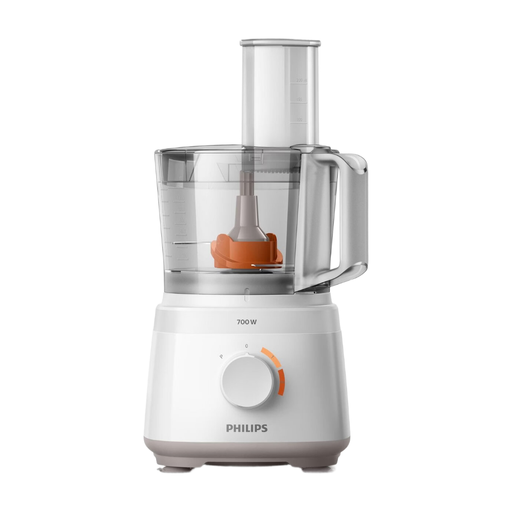
The product name lists 700 W, a capacity of 1.5 L and 19 functions.
 No image available
If you want to choose between different slice thicknesses, Kenwood lists 2 mm and 4 mm discs. This version also includes a personal blender, so allow for extra parts to store.
The bowl capacity is 1.3 l. Kenwood lists direct discharge into a collecting bowl.
 No image available
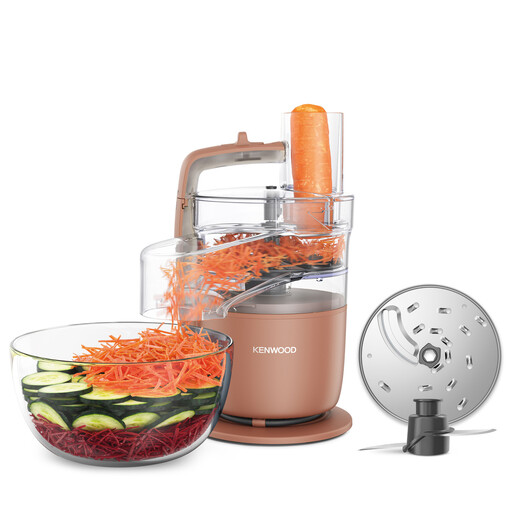
If you’re looking for direct discharge and a 4 mm slicing disc, Kenwood lists both for this model. Check that 4 mm is right for the potato slices you want to make.
Kenwood lists a 1.3 l bowl and discharge into a collecting bowl.
For slices, choose a model with a suitable slicing disc. A claim that an appliance can chop doesn’t confirm that it can make slices, so check what’s in the box for the exact model.
Fit the bowl, disc and lid according to your model’s instructions, and use the pusher provided. Check whether the manufacturer says each part is dishwasher-safe.
According to the Netherlands Food and Consumer Product Safety Authority (NVWA), CE marking is compulsory for electrical products where this requirement applies. Parts intended to come into contact with food must also comply with the relevant rules for food contact materials. Check the product information for the exact model: these general rules don’t, by themselves, confirm that a specific item on sale complies.
Report the fault to the seller. According to the Dutch Government, the seller must provide a solution if there’s a problem with a product. You don’t automatically need to pay for an extended warranty to exercise your statutory rights.
The Dutch Government says that, for distance purchases, the seller must tell you about the cooling-off period, which is usually 14 days. Check the terms for your specific purchase: “usually” isn’t an unconditional guarantee for every situation.