
Biscuit baker
You mainly want to make biscuits to take with you and are looking for an appliance that can handle the quantity in your recipe.


For small quantities of shortcrust or light biscuit dough, a food processor is suitable if the blade supplied and maximum dough capacity match your recipe. If by biscuit you mean a light sponge mixture, the Consumentenbond recommends a stand mixer with a whisk or beater; a food processor is better suited to chopping and slicing.
You mainly want to make biscuits to take with you and are looking for an appliance that can handle the quantity in your recipe.
You’re making several batches for a picnic and want to know in advance whether you can process all the dough at once.
You make smaller batches and are weighing up a compact bowl and easy storage against the amount of dough you can prepare.
Choose this when: you want to prepare small quantities of shortcrust or light dough and also use the appliance for chopping or slicing.
The trade-off: according to the Consumentenbond, a food processor is generally less suitable for whisking and longer kneading than a stand mixer.
Choose this when: you want to whisk a light sponge or cake mixture, or baking is your main use for the appliance.
The trade-off: a stand mixer is less suited to the chopping and slicing tasks you’d choose a food processor for.
| What to consider | What to look for | Who is this most important for? |
|---|---|---|
| Type of dough | Decide whether you want to mix shortcrust biscuit dough or whisk a light sponge mixture. Check which blade or whisk attachment is included. | If I’m choosing between biscuit dough and a light sponge mixture, I first want to know whether my recipe needs mixing or whisking. This choice of function comes first for around 36% of consumers. |
| Amount of dough | Weigh the total mixture in your recipe and compare it with the maximum dough capacity specified by the manufacturer for the exact model. Bowl capacity in litres is no substitute for a dough limit. | For a picnic with several batches, I want to know whether all the dough will fit at once, so I can plan my preparation accordingly. Batch size is the main buying priority for around 29% of consumers. |
| Storage and cleaning | Check the dimensions, which parts you’ll use for the recipe, and the cleaning instructions for each part. | If my kitchen has limited cupboard space, I want to be able to store the appliance without compromising on the capacity my recipe requires. Compact storage and easy cleaning come first for around 21% of consumers. |
| Other preparations | Check which slicing, grating or blending attachments are actually included with the version you’re considering, and whether you want to use the appliance for those tasks. | If I want to use one appliance for other food preparation too, I look at the attachments included and the extra washing up involved. Versatility is the main buying priority for around 14% of consumers. |
According to the Consumentenbond, food processors and stand mixers are designed for different main tasks. An appliance for mixing or chopping isn’t automatically the right choice for a light mixture that needs whisking.
First, decide what you’re making: shortcrust biscuit dough or a light sponge mixture. Then check which mixing or whisking attachment comes with the model you’ve chosen.
If you also want to make light mixtures, you may need a separate whisk or stand mixer.
Bowl capacity and maximum dough weight are different specifications. For example, Bosch lists both a 2.3-litre bowl and a maximum dough quantity of 0.8 kg for the MCM3501M; that dough limit applies to this specific model.
Compare the total weight of your recipe with the maximum dough weight for the exact version, and check the manual. If your batch is larger, you can divide the dough into several batches.
A manufacturer’s guarantee doesn’t automatically replace your statutory rights with the retailer. ACM ConsuWijzer distinguishes between manufacturer’s or retailer’s guarantees and your statutory rights.
Keep your proof of purchase and the product description. If you think a product may be faulty, contact the retailer.
The MultiTalent 3 range is worth considering if you want to compare dough capacities for specific models.
According to KitchenAid, the 5KFP0719EAC combines a dough blade with slicing and grating discs for a range of food preparation tasks.
The CS 3200 XL is worth a look if having several bowls and access to spare parts matters to you.
According to Kenwood, the MultiPro Go Blend FDP23.380GR is designed for chopping, slicing and blending in a compact format.
This selection includes food processors and stand mixers for preparing dough. For each version, check whether the attachments included and the permitted working quantity suit your biscuit recipe.
 Image unavailable
The product name describes it as both a food processor and a dough mixer. Check the manual to see what quantity of dough is permitted for your recipe.
Bowl: 4.5 l; power: 1300 W; six speeds plus pulse.
 Image unavailable
The product name also mentions blending and chopping functions. Check that this version and its permitted working quantity are suitable for your biscuit dough.
Power: 750 W; bowl: 1.8 l.
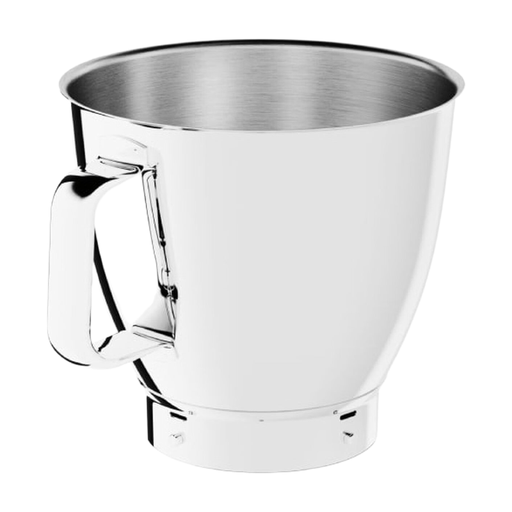 Image unavailable
This combination model is described as having a mixing bowl and attachments. Check whether the parts included are suitable for your biscuit dough.
Power: 700 W; stainless steel bowl: 4.3 l.
 Image unavailable
The product description mentions dough preparation for this model. Compare the quantity in your recipe with the instructions for this version.
Power: 800 W; bowl: 2.3 l.
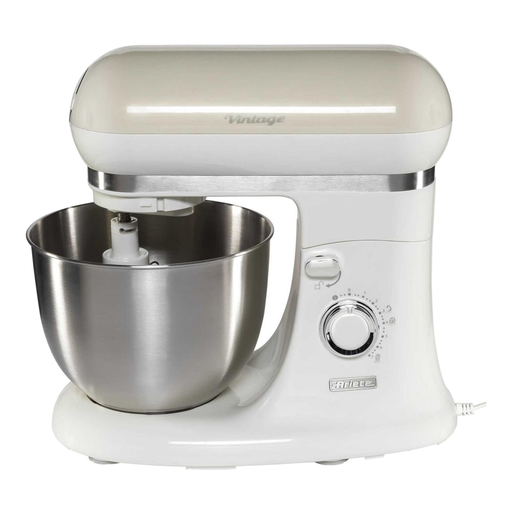 Image unavailable
The product description mentions a dough tool. Check the manual to see whether the working quantity and instructions suit your recipe.
Power: 1000 W; stainless steel mixing bowl: 5 l; planetary mixing action.
Not necessarily. According to the Consumentenbond, a stand mixer with a whisk or beater is better suited to light sponge and cake mixtures. A food processor is mainly designed for chopping, slicing and grating, and can also handle small quantities of light dough for a short time.
The Voedingscentrum advises against eating raw biscuit dough, as both raw eggs and flour can contain pathogens. Bake the biscuits thoroughly before taking them with you, and wash your hands after handling raw dough.
Let baked biscuits cool, then pack them in a clean, airtight container. The Voedingscentrum advises storing biscuits in a cool, dry place in a well-sealed container. Keep foods that need to be chilled cold while travelling; according to the Voedingscentrum, food that should normally be kept in the fridge is best thrown away if it has been left unrefrigerated for more than two hours.
No, there isn’t one fixed two-year statutory period for all products. ACM ConsuWijzer distinguishes between guarantees and statutory rights: if a product breaks during normal use sooner than you could reasonably expect, the retailer is responsible for providing a suitable solution free of charge.
The NVWA outlines Dutch and European requirements for materials that come into contact with food. The Dutch government states that electrical appliances placed on the market in the EU must carry a CE marking. A statement on a sales page alone doesn’t prove that a specific product meets all the applicable requirements.