
Workshop baker making several batches
You want to know in advance how much dough you can process per batch and whether making successive batches is practical.


Choose a food processor for pear tart pastry based on the amount of dough you need to make per batch and how much control the settings give you while mixing. A stated maximum dough capacity is more useful for planning portions than bowl capacity alone. Also check which blade or dough tool is supplied with the exact model. Manufacturer specifications do not provide independently tested results for your recipe.
You want to know in advance how much dough you can process per batch and whether making successive batches is practical.
You’re looking for a pulse function and want to check which blade or dough tool is right for the appliance and your recipe.
You need to fit the appliance, bowls and accessories alongside participants and other baking essentials.
Start with the amount of dough per batch and the controls, then consider cleaning and the space needed for the appliance and accessories.
| What to consider | What should you check? | Who should give this more weight? |
|---|---|---|
| Mixing control | Check whether the model has a pulse function and which blade or dough tool is included; follow the instructions for that model. | If you want to check and adjust the mixing as you go, pay attention to the controls and the recommended attachment. This is a priority for around 36% of consumers who value control over mixing. |
| Dough per batch | Compare the weight of your recipe with the maximum dough capacity stated for the exact model; don’t confuse it with bowl capacity. | If you’re making dough for several workshop participants, you’ll want to know how much the model is specified to process at once. Around 29% of consumers prioritise batch size. |
| Cleaning | Check the cleaning instructions for each part and which bowls or attachments are included. | If you’re reusing bowls and attachments during a workshop, you’ll want to know how to clean each part. This is a priority for around 21% of consumers who value easy cleaning. |
| Worktop and storage space | Measure the space available, and allow for separate bowls and accessories too. | On a busy workshop table, you’ll want to leave room for ingredients and other essentials. Around 14% of consumers prioritise available worktop and storage space. |
Bosch specifies a 2.3 l bowl and a maximum dough capacity of 0.8 kg for the MCM3501M and MCM3200W. This dough limit applies to these models; bowl capacity in litres alone doesn’t tell you how much dough you can process.
Bowl capacity and maximum dough weight are different specifications. Bosch states both a 2.3 l bowl capacity and a maximum dough capacity of 0.8 kg for the MCM3501M and MCM3200W.
Weigh the ingredients in your recipe and compare the total with the instructions for the exact model; don’t assume the limit is the same as that of another appliance.
If your recipe exceeds the stated limit, you may need to make the dough in several batches.
Manufacturers specify different blades and attachments. Magimix’s shortcrust pastry recipe calls for a kneading blade, while Magimix specifies a metal blade for the Mini Plus.
Check the list of accessories as well as the model-specific instructions for the recipe you’ll be using in your workshop.
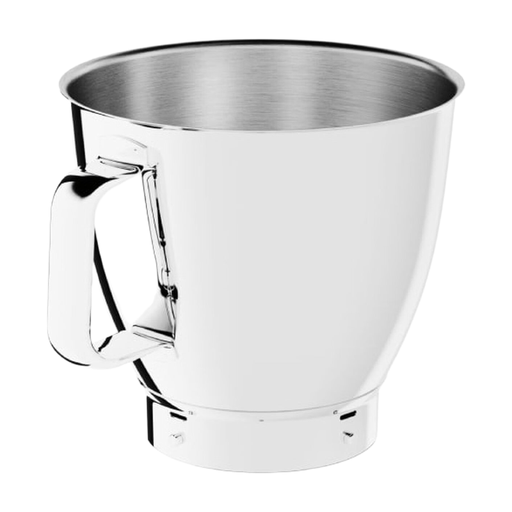
You’ll also need space for separate parts. For example, according to Magimix, the CS 3200 XL comes with three bowls.
Measure the space available and allow room for the parts you’ll use, clean or store.
Multiple bowls and accessories also take up space in storage.
The MultiTalent 3 MCM3501M and MCM3200W are worth considering if you want to compare the stated maximum dough capacity of these models.
The MultiPro Compact FDP31.360GY is worth considering if you’re looking for a more compact appliance with a pulse function and included dough tool. According to Kenwood, the MultiPro OneTouch FDM73.480SS also has a dough tool and built-in scales.
The CS 3200 XL is worth considering if you want to use a range of bowls and an included dough blade during your workshop.
This selection includes food processors and stand mixers you can compare by bowl capacity, controls and the mixing or dough accessories listed for baking.
 No image available
A good option if you want to plan the amount of dough per batch and check the mixing as you go.
Bowl: 2.3 l. Maximum dough capacity: 0.8 kg. Two speeds and pulse function. Power: 800 W.
 No image available
The product description lists dough hooks; check whether they’re suitable for the dough preparation you have planned for your workshop.
Stainless steel bowl: 4.5 l. Power: 1,300 W. Six speeds plus pulse. Dough hooks are listed in the product description.
 No image available
The product description lists a dough tool; check the accompanying instructions for your recipe.
Stainless steel bowl: 5 l. Power: 1,000 W. Planetary mixing action. The product description specifies a non-slip base.
 No image available
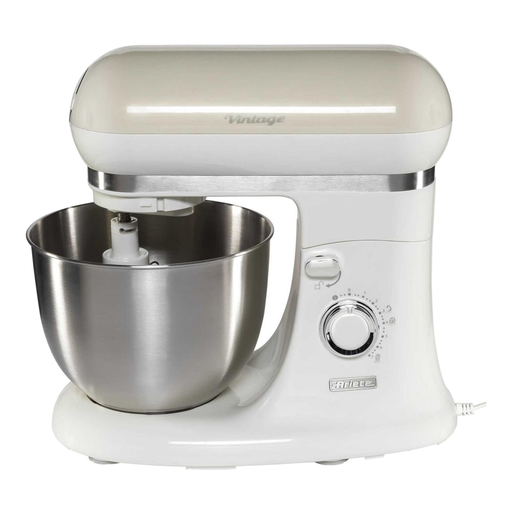
A good option if you want to compare a stand mixer with a stated bowl capacity and included attachments.
Stainless steel bowl: 4.3 l. Motor: 700 W. The product name lists included attachments.
No. As well as a bowl capacity of 2.3 l, Bosch specifies a maximum dough capacity of 0.8 kg for the MCM3501M and MCM3200W. Compare the weight of your recipe with the specifications and instructions for the exact model.
Follow the recipe and the manual for the model you’ve chosen. Magimix specifies a kneading blade in its own shortcrust pastry recipe and lists a metal blade for the Mini Plus; this isn’t a universal instruction for all food processors.
Check the cleaning instructions for each part. If you’re serving food to participants, also make sure you follow good hygiene practices and provide information about any allergens present; an extra bowl is no substitute for thorough cleaning.
If the workshop prepares, processes or sells food as a food business, the Netherlands Food and Consumer Product Safety Authority says that an HACCP food safety plan is required. An applicable hygiene code may be used instead of a self-written plan; the description ‘baking workshop’ alone doesn’t determine which rules apply to an organiser.
According to the Netherlands Food and Consumer Product Safety Authority, when selling unpackaged food, allergen information must be provided to consumers in a way other than on a label. Whether this requirement applies to a particular workshop depends on how the food is offered.