
Shortcrust pastry baker
You want to briefly process cold butter and flour into crumbs, then decide for yourself when the dough comes together. Good Food describes this method in its shortcrust pastry recipes.


For sweet shortcrust pastry, a food processor with a pulse function is a sensible choice. You can quickly process the butter and flour, checking the texture as you go, as the Good Food recipes describe. If you’re making several tart cases, check the permitted dough quantity for the exact model; bowl capacity is no substitute. If you mainly want to whisk cake mixtures or knead heavy dough for longer periods, consider a stand mixer with suitable attachments too. The Consumentenbond makes this distinction.
You want to briefly process cold butter and flour into crumbs, then decide for yourself when the dough comes together. Good Food describes this method in its shortcrust pastry recipes.
You’re making several tart cases, so you compare the permitted dough quantity per batch, rather than looking at bowl capacity alone.
You’re looking for an appliance that’s easy to store and are happy, if necessary, to prepare smaller batches one after another.
Suitable for: preparing a modest batch at a time and making the most of limited storage space. Kenwood lists a 1.3 l bowl and pulse control for the MultiPro Go FDP22.130RD.
Bear in mind: Kenwood’s stated dry processing capacity of 0.75 l is not a confirmed maximum quantity for pastry dough.
Suitable for: planning to make several tart cases. Bosch lists a 2.3 l bowl and a maximum dough processing capacity of 0.8 kg for the MCM3501M.
Bear in mind: the stated dough limit is not a measured result for a specific recipe. Check the appliance dimensions and available space too.
Suitable for: anyone who mainly wants to whisk cake mixtures or often kneads heavy dough, as well as making tart cases. The Consumentenbond says a stand mixer is generally better suited to mixing, whisking and kneading.
Bear in mind: a stand mixer doesn’t automatically replace slicing and grating discs.
| What to consider | What should you check? | Who is this important for? |
|---|---|---|
| Control over the dough | Check whether the model has a pulse function and which blade and dough-making instructions are included. | If I want to process butter and flour in short bursts, I want to be able to check the texture as I go. An estimated 36% of consumers with this buying question prioritise control over the dough. |
| Dough quantity per batch | Compare the quantity in your recipe with the permitted dough quantity for the exact model. | If I’m making several tart cases, I want to know how much dough the manufacturer says I can make per batch. An estimated 29% of consumers with this buying question prioritise batch size. |
| Space for use and storage | Measure the available space and compare appliance dimensions. Also allow for the space you’ll need while using it. | If my kitchen has limited space, an appliance I can store away matters more to me than making a large batch in one go. Around 21% of consumers with this buying question prioritise limited kitchen space. |
| Use for other tasks | Check which attachments come with the exact version and whether they’re suitable for the other things you want to make. | If I want to use the appliance for other kitchen tasks too, I compare the included attachments and how much space they take up. An estimated 14% of consumers with this buying question prioritise versatile everyday use. |
A bowl’s capacity doesn’t tell you how much dough the appliance can process. Bosch lists a 2.3 l bowl and a maximum dough capacity of 0.8 kg for the MCM3501M.
Work out the quantity in your recipe for each tart case, then check the dough limit for the exact model.
If a recipe exceeds the permitted batch size, you may need to make the dough in several batches.
The Consumentenbond focuses mainly on slicing, grating and chopping when assessing food processors. That doesn’t, in itself, tell you how well a model handles sweet pastry.
Assess the dough function and the manufacturer’s stated limits separately from any general test rating.
According to the Consumentenbond, a food processor can handle light dough for a short time, while a stand mixer is generally better suited to mixing, whisking and kneading.
Decide in advance whether you’ll mainly make tart cases, whisk light cake mixtures or knead heavy dough for longer periods.
If whisking or prolonged kneading is the main task, you may find you need a second appliance.
The MultiTalent 3 MCM3501M is worth comparing if the permitted dough quantity matters to you.
The MultiPro Go FDP22.130RD is a compact option to compare if you’re making smaller batches.
The CS 3200 XL is worth comparing if you’re looking for bowls and accessories for other kitchen tasks as well as baking.
The BN650EU is worth comparing if the usable fill level of the bowl matters for what you’re making.
This selection includes food processors and stand mixers to compare for brief dough preparation, smaller batches and other baking tasks.
 No image available
A stand mixer to compare if you want to mix and knead as well as make pastry.
The product name lists a 4.5 l stainless steel bowl, 1,300 W and six speeds plus pulse.
 No image available
A compact food processor to compare if you make smaller batches and have limited storage space.
 No image available
A food processor to compare if bowl space matters for your recipes. Bowl capacity is not a dough limit.
The product name lists 800 W and a 2.3 l bowl.
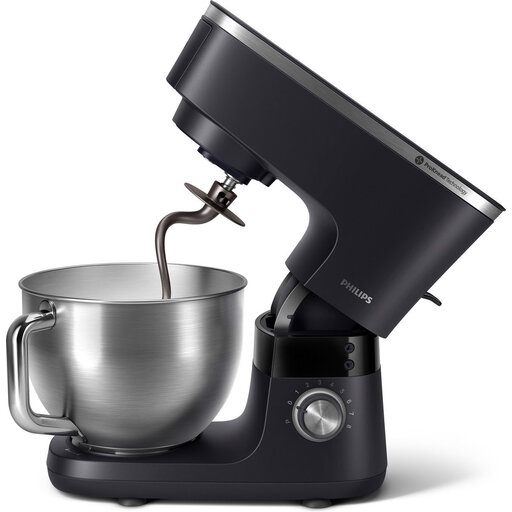 No image available
A stand mixer to compare if making dough is an important task alongside preparing tart cases.
The product name lists a 5.5 l bowl, eight speeds, 1,000 W and blender and mincer attachments.
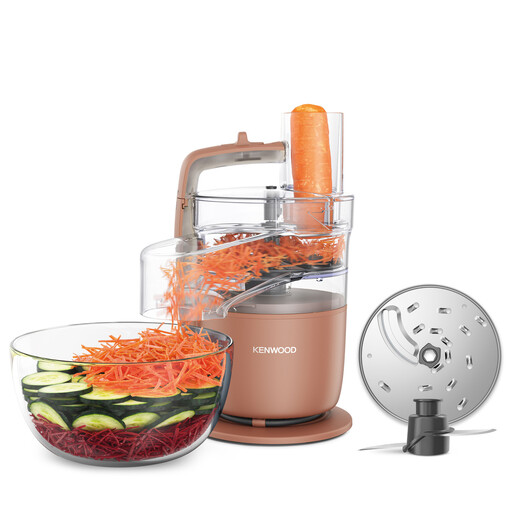 No image available
A compact food processor to compare if you make smaller batches.
No, not for the shortcrust method described by Good Food. Pulse the butter and flour until crumb-like, gradually add the liquid, then bring the dough together. Always follow your appliance’s operating limits too.
No. Bosch lists a bowl capacity of 2.3 l and a maximum dough processing capacity of 0.8 kg separately for the MCM3501M. Compare your recipe with the stated dough limit, not just the bowl volume.
A stand mixer is generally better suited if you mainly want to mix, whisk or knead. The Consumentenbond describes a food processor primarily as an appliance for slicing, grating and chopping. Consider which task matters most to you and check which attachments come with the model.
For electrical equipment covered by the applicable Commodities Act decree, the Netherlands Food and Consumer Product Safety Authority (NVWA) requires CE marking and compliance with safety requirements. Parts intended to come into contact with food are also subject to food-contact materials rules. A general product listing doesn’t establish that an individual item is compliant.
The Netherlands Nutrition Centre warns that eating raw pastry can cause stomach ache or make you ill. Don’t let guests taste uncooked dough.