
Pastry workshop leader
You divide the dough between participants and want to plan portion sizes and any cooling breaks for each round. To do this, compare the recipe weight with the limit and instructions for the exact model.


For savoury pastry dough, choose a food processor that lets you mix in short bursts, and make sure each workshop batch stays within the limit for the exact model. When preparing batches one after another, you’ll also need to follow the specified running time and cooling breaks; the bowl capacity in litres alone tells you nothing about the maximum dough weight. The NVWA also requires CE marking and compliance for parts that come into contact with food; check these details for the model on offer.
You divide the dough between participants and want to plan portion sizes and any cooling breaks for each round. To do this, compare the recipe weight with the limit and instructions for the exact model.
You want to mix in short bursts and check the texture between each one. A pulse function and the dough tool supplied are therefore useful features to check on each version.
You use the machine for successive batches and possibly for chopping too. Check which parts can be removed and how to clean them according to the instructions; extra accessories also need storage space.
Start with the amount of dough per workshop round and how you want to mix it in short bursts. Then consider which cleaning and extra features will work best in your shared workspace.
| Concern | What to look for | Who does this matter most to? |
|---|---|---|
| Short, controlled mixing | Check whether the version has a pulse function and a suitable dough tool. | If I want to mix the dough briefly and check the texture as I go, the controls and the right tool are important. Around 36% of consumers prioritise controlled mixing. |
| Dough portions and batches | Compare the recipe weight with the maximum dough weight for the exact model; also check the running time and cooling breaks. | For a workshop with several rounds, I want to know whether each portion is within the model’s limit and when the machine needs to cool down. Batch planning is the main concern for around 29% of consumers. |
| Cleaning between preparations | Check the cleaning instructions for each part and find out which rules apply if the workshop supplies food to consumers. | When the machine is shared, I want to be able to clean its parts between preparations according to the instructions. Cleaning is the top priority for around 21% of consumers. |
| Space and extra features | Measure the available worktop and storage space; compare the accessories with the preparations you actually plan to make. | If the workspace is small and the machine will also be used for other preparations, its size and useful features matter. Space and multi-purpose use are the main concern for around 14% of consumers combined. |
A bowl’s capacity in litres is not the same as its maximum dough weight. For example, Bosch lists both a 2.3-litre bowl and a maximum dough weight of 0.8 kg for the MCM3501M; that dough limit applies to this model.
Weigh the recipe for each round and compare it with a published dough limit for the version you’re considering.
Consumentenbond describes a food processor as suitable for light dough mixed briefly, and notes that a stand mixer is generally better for prolonged kneading. So the type of appliance you need will also depend on what you make most often.
Choose according to the main tasks in your workshop: brief mixing and perhaps chopping, or prolonged kneading and other baking tasks.
For consumer purchases, a manufacturer’s warranty is in addition to your statutory rights. The Dutch Government states that there is no fixed statutory warranty period. Information about consumer purchases does not automatically determine the terms that apply to a business purchase or professional use.
Before buying, establish who will buy the machine and how it will be used, then check which warranty terms apply to your situation.
The MultiTalent 3 MCM3501M is worth considering if you want to compare your recipe with a published maximum dough weight.
The MultiPro Go FDP22.130RD is a compact option; check the specifications for this exact version when planning dough portions.
The PureEase FP 3132 BK is worth considering if you want to chop, slice or grate as well as prepare dough.
The CS 3200 XL could be a good fit if you also want to use different bowls and accessories during your workshop.
This selection includes compact and versatile food processors. Check each model to make sure its listed features, accessories and usage conditions suit your pastry dough and workshop batches.
 No image available
If you’re planning to prepare other foods as well as pastry dough, check that the listed features and accessories are suitable for your workshop.
The product name lists 750 W, a capacity of 1.8 litres, a blender, meat grinder, slicing and grating discs, and removable parts.
 No image available
The product description mentions kneading; check the instructions and permitted quantity for your recipe and workshop batches.
The product description lists a 1.3-litre bowl and seven speed settings.
 No image available
The listed pulse function may be useful if you want to adjust the mixing as you go; follow the instructions for the exact model.
The product name lists 800 W and a 2.3-litre bowl. The product description mentions mixing, slicing, grating, two speeds and pulse.
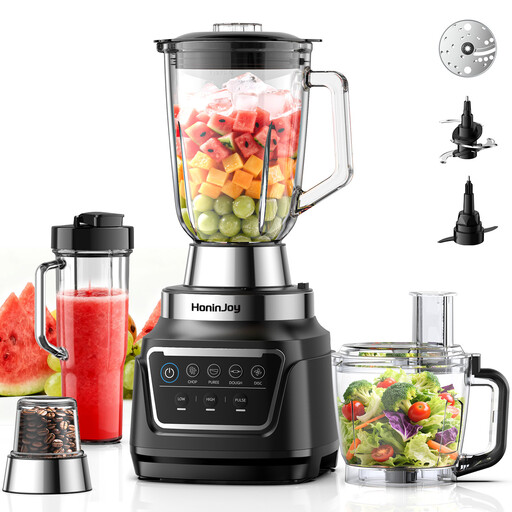 No image available
The product information lists a dough preset; check the manual and portion limits before using it for pastry dough.
The product description lists a 2-litre bowl and removable dishwasher-safe parts. According to the usage information, the appliance is intended for domestic use only; bear this in mind when using it for a workshop.
 No image available
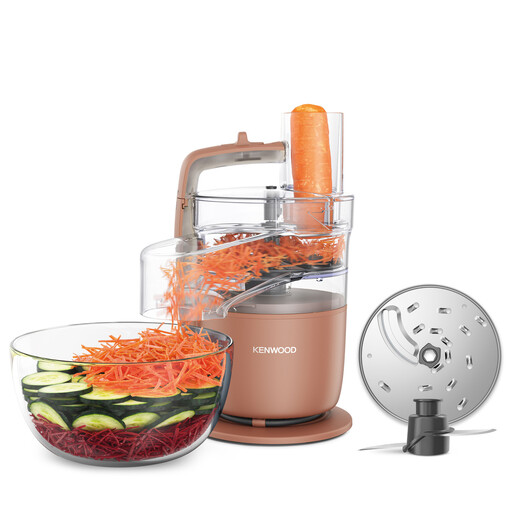
The compact design may be useful if worktop or storage space is limited; compare the bowl capacity with the quantity needed for each workshop round.
The product description lists a 1.3-litre bowl, pulse function, slicing and grating discs, and dishwasher-safe parts.
No. Mix it briefly and follow your recipe’s ingredients, quantities and resting time. Processing it for too long can melt the butter and make the dough sticky.
Weigh the dough for each recipe and compare the quantity with the limit for the exact model. Bosch lists a maximum dough weight of 0.8 kg for the MCM3501M. For the MultiPro XL Weigh+, Kenwood specifies a maximum dough weight of 1 kg, a maximum running time of 60 seconds and a 15-minute cooling break between batches; these figures do not apply to other models.
It varies by model and part. Magimix states that the accessories for the CS 3200 XL are dishwasher-safe; check the cleaning instructions for the specific bowl, blades and attachments you use.
According to the NVWA, CE marking is compulsory for electrical products placed on the market in the Netherlands. Parts intended to come into contact with food must meet the applicable requirements for food-contact materials. These general rules do not confirm that a specific product on offer complies with them.
According to the NVWA, businesses that supply food to consumers must provide information about any allergens present. Specific ways of providing this information apply to unpackaged products. Whether these business rules apply to your workshop depends on the circumstances; flour and butter may contain relevant allergens.