
Batch maker
You make several batches at once and want to know how much you can actually process each time, rather than looking only at the stated bowl capacity.


If you usually make small batches of olive tapenade, a mini chopper or a food processor with a suitably sized mini bowl can be practical. For larger batches, focus on the usable quantity you can process at a time. Compare this with the stated bowl capacity, and look for a chopping blade, pulse control and easy cleaning: a larger bowl isn’t automatically more convenient for a small batch.
You make several batches at once and want to know how much you can actually process each time, rather than looking only at the stated bowl capacity.
You make small quantities and want a bowl that lets you keep an eye on the tapenade as you chop.
You also use the appliance for slicing or grating, and weigh up those extra functions against the storage space and washing-up involved.
Suitable for: small batches, when a separate compact chopping bowl matters more than a large, multifunctional bowl.
Trade-off: you may need several chopping rounds to make a larger batch.
Suitable for: anyone who regularly wants to slice or grate ingredients as well as make tapenade.
Trade-off: extra attachments don’t add much for tapenade alone and may mean more storage and washing-up.
Suitable for: switching between larger food prep jobs and small batches of tapenade, provided the model you choose includes a suitable mini bowl with a blade.
Trade-off: multiple bowls and accessories need storage space and add to the washing-up.
Start by considering how much you want to make at a time, then choose a bowl and features that suit the rest of your kitchen tasks.
| What to consider | What should you check? | Who is this important for? |
|---|---|---|
| Usable capacity | Check the stated processing capacity for the exact model and allow room for the ingredients. Magimix lists a total capacity of 3 l and a processing capacity of 1,3 l for the CS 4200XL; neither figure indicates how much tapenade it makes. | If I make several batches at once, I want to know how much will actually fit each time. Around 40% of consumers say processing capacity is their main consideration. |
| Control over texture | Check whether the model includes a chopping blade and pulse or momentary control; remove the stones from the olives before you start. | If you prefer to chop the tapenade gradually and check its texture as you go, this control is particularly important. Around 30% of consumers prioritise control over texture. |
| Other kitchen tasks | Compare the accessories included with each model variant and check that the appliance can handle the slicing or grating tasks you have in mind. | If I also want to use the same appliance for other food prep, its extra functions factor into my choice. Around 20% of consumers give versatility top priority. |
| Cleaning and storage | Check the dimensions and see which parts are dishwasher-safe; don’t assume that all the parts are. | For consumers who mainly care about cleaning and storage, the work involved after each chopping round matters. Around 10% of consumers make this their main buying criterion. |
Total capacity and stated processing capacity can differ. For example, Magimix lists a total capacity of 3 l and a processing capacity of 1,3 l for the CS 4200XL; neither figure tells you how much tapenade it makes.
Match the stated processing capacity of the exact model to the batch size you want to make.
A larger bowl isn’t automatically the most practical choice for a small quantity of olives. The Magimix recipe mentioned uses a mini bowl with a small metal blade.
Compare a mini chopper with a food processor whose chosen model includes a suitably sized mini bowl and blade.
Kenwood models have different full model codes; a similar series name doesn’t prove that they come with the same contents.
Compare the full model code and the accessory list for the version you want to buy.
Worth considering if you want to compare small chopping batches with a food processor that has multiple bowls.
The MultiTalent 3 range is worth considering if you want to make tapenade as well as slice and grate.
The MultiPro Go range is worth considering if you’re looking for a compact food processor for chopping and other kitchen prep.
These product options are suited to chopping olives for tapenade, with choices for small batches and other kitchen prep.
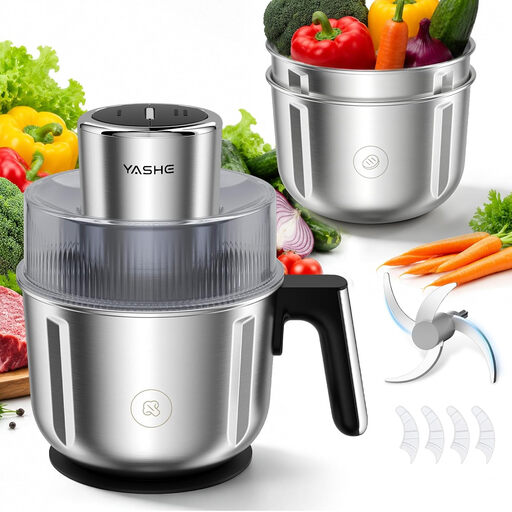 No image available
Could suit you if you want to prepare different ingredients in separate bowls.
The product name lists three bowls.
 No image available
Could suit you if you want to use it for other kitchen prep as well as chopping.
The product name lists 750W and 1.8L. The description says not to process boiling liquids and gives a limit of 60°C.
 No image available
Could suit you if you want to prepare small and larger chopping batches in different bowls.
The product name lists two glass bowls of 2 l and 0,6 l and a power rating of 300W. The description warns that the bowls and lids are not heat-resistant.
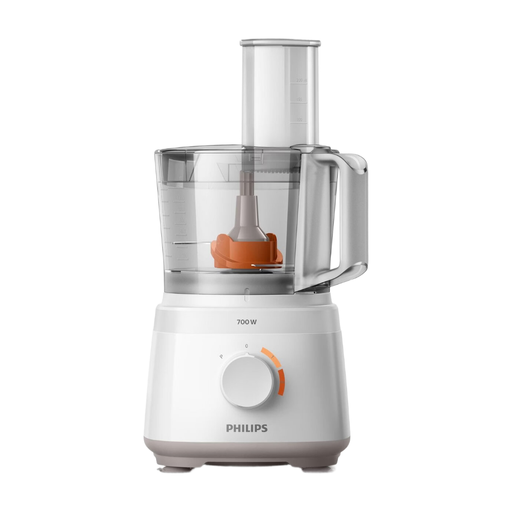 No image available
Could suit you if you want to make tapenade as well as tackle other kitchen prep.
The product name lists a 1,5 l bowl, 700 W and 19 functions.
 No image available
Could suit you if you want to see the ingredients as you chop.
The product name lists a 2 l bowl, 300 W, two speeds and 304 stainless steel blades. The description recommends cutting larger ingredients into pieces of around 2 cm beforehand and not running the motor for more than 30 seconds at a time.
Yes. The Magimix tapenade recipe mentioned uses pitted olives. It also uses a mini bowl with a small metal blade; be sure to follow the instructions for your own appliance too.
Treat homemade tapenade as prepared leftovers and store it carefully: the Netherlands Nutrition Centre advises keeping prepared leftovers covered in the fridge for no more than two days, or freezing them if you want to keep them for longer. Its separate storage guidance for opened olive tapenade says four days in the fridge and three months in the freezer, but this doesn’t automatically apply to every homemade recipe.
There is no fixed statutory warranty period in the Netherlands; you are entitled to a product that meets the expectations you can reasonably have of it. If a product is faulty, contact the seller. A manufacturer’s warranty may offer additional cover.
The Dutch government states that electrical appliances sold on the Dutch market must carry the CE marking. A mention on a shop page is not, in itself, an independent inspection of the individual appliance.