Who is a food processor for oat biscuits suitable for?

Baking a large batch

You want to divide the dough into batches without exceeding the limit for the exact appliance. Weigh your recipe and work out how many batches you’ll need. For example, Bosch lists a maximum dough capacity of 0.8 kg for the MCM3501M.

Keeping some texture in the oats

You may want to pulse the oats briefly while keeping some recognisable flakes in the dough. A recipe from Rutger bakt pulses the oats a few times, then mixes the dough separately.

Short on kitchen space

You’re looking for an appliance you’ll keep using after the sale, with a bowl, attachments and storage needs that suit your kitchen. Think about which extra functions you’ll genuinely use.

What should you look for when choosing an appliance?

Food processor

A good fit if: you want to pulse oats as well as mix dough, or use the appliance for chopping and grating later.

Bear in mind: the parts need cleaning, and the dough capacity varies by model.

Hand mixer with dough hooks, or mixing by hand

A good fit if: you’re making one or a few batches and only need to mix the biscuit dough. A recipe from Rutger bakt for 20–25 oat biscuits recommends using your hands or a hand mixer with dough hooks.

Bear in mind: you won’t get the chopping and slicing functions of a food processor, and you’ll need to repeat the mixing for multiple batches.

Stand mixer with an open mixing bowl

A good fit if: you bake regularly and mixing, whisking or kneading matters more to you than chopping and grating.

Bear in mind: the Consumentenbond says a stand mixer is generally better suited to baking. The bowl capacity alone won’t tell you how much of your biscuit dough it can hold.

What to consider What should you check? Who is this important for?
Batch size and dough capacity Weigh one recipe and compare the dough weight per mixing cycle with the limit in the manual for the exact model. Bowl capacity is not the same as dough capacity. If I’m baking lots of biscuits for the sale, I want to know how much dough I can process at a time. Around 36% of consumers focus mainly on batch size.
Dough function and oat texture Check which dough attachments come with the version you’re considering and whether the manual covers your type of dough. Also consider whether pulsing will give the oats the texture you want. If you want to keep some of the oats coarse while mixing the dough by machine, focus on the method and the right attachments. Around 29% of consumers prioritise this combination.
Cleaning and storage Check the dimensions, list of parts and cleaning instructions for each component, including which parts the manufacturer says are dishwasher-safe. If I have limited cupboard space or am making several batches in a row, I want to know how many parts I’ll need to clean and store. Around 21% of consumers give this the highest priority.
Use after the sale Make a list of kitchen tasks you’ll genuinely use it for afterwards, and check whether the model includes the chopping, slicing or grating attachments you need. Consumers who also want to use the appliance for chopping and grating later take its extra functions into account. Around 14% prioritise this continued use.

Common mistakes when buying an appliance for biscuit dough

  • Confusing bowl capacity with the maximum amount of dough

    Bowl capacity and maximum dough capacity are different measurements. For example, Bosch lists both a 2.3 l bowl and a maximum dough capacity of 0.8 kg for the MCM3501M. Kenwood’s stated 1.5 kg of dry ingredients is not a confirmed limit for biscuit dough.

    Weigh one recipe and check the dough capacity in the manual for the exact version before deciding how many mixing cycles you’ll need.

    If your batch is larger than the permitted amount, you’ll need to process the dough in extra rounds.

  • Assuming a food processor is automatically the best appliance for mixing biscuit dough

    A food processor can combine several functions, but if your recipe only needs mixing, a hand mixer with dough hooks or mixing by hand may be enough. The Consumentenbond says a stand mixer is generally better suited to mixing and kneading.

    Choose a food processor mainly if you’ll use its other functions too, and check that the manual allows for the type and amount of dough you’re making.

    An appliance with extra attachments needs more cleaning and storage space, even if you rarely use those functions.

  • Leaving allergen information and cleaning until the day of the sale

    When selling food, hygienic preparation and clear allergen information are important. The NVWA says customers must be informed about allergens in non-prepacked products.

    Make a note of the ingredients and allergens in the exact recipe, agree on how to present the information with the school, and clean the bowl and attachments carefully between batches.

Brands to consider

Bosch

The MultiTalent 3 MCM3501M is a useful point of comparison if you’re looking for a clearly stated maximum dough capacity.

  • Bosch Netherlands lists a 2.3 l bowl, a maximum dough capacity of 0.8 kg and a plastic dough tool.
  • These are manufacturer specifications, not the result of a test with oat biscuit dough. Check that the amount in your recipe is within the limit.

Kenwood

According to Kenwood, the MultiPro Express FDP65.820SI combines a 3 l bowl, a pulse setting, a dough tool and slicing and grating attachments.

  • Kenwood’s product information lists a dough tool, two speeds and a pulse setting.
  • The stated 1.5 kg refers to dry ingredients and is not a confirmed maximum capacity for biscuit dough. Don’t base your batch size on that figure alone.

Philips

Philips describes the Philips 7000 Series HR7778/00 as having a metal kneading hook and a dough preparation button.

  • Philips’ product information lists a dedicated dough function and a metal kneading hook.
  • Before making your recipe, check the manual for this version and the permitted amount of dough.

Magimix

Magimix describes the black CS 3200XL with citrus press as having three bowls and accessories for different preparations.

  • Magimix lists bowls of 2.6 l, 2.2 l and 1.2 l.
  • The stated processing capacity of 1 l is not a confirmed dough limit in kilograms. Check the manual for the recipe you’re making.

Products on Joybuy

This selection includes food processors and stand mixers with a mixing bowl for anyone who wants to mix dough by machine. Check which dough accessories are included with each version, and whether your recipe is within the stated operating limits.

Dough mixer and food processor with 4.5 L bowl, 1300 W, beige

Dough mixer and food processor with 4.5 L bowl, 1300 W, beige

Could suit you if you want to mix dough by machine and are looking for a stand mixer with dough hooks.

The product information lists a 4.5 L bowl, 1300 W, six speeds, pulse and kneading hooks.

Joybuy

Bosch MCM3200W MultiTalent 3 food processor

Bosch MCM3200W MultiTalent 3

Could suit you if you’re looking for a food processor that, according to the product information, also offers dough preparation and pulsing.

The product title lists 800 W and a capacity of 2.3 L; the product information lists two speeds and a pulse setting.

Joybuy
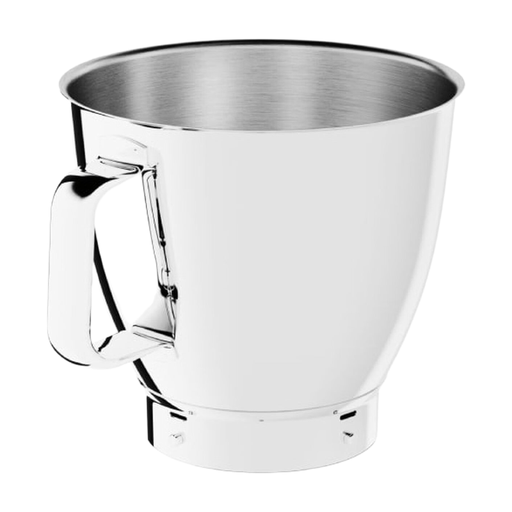
Kenwood KAB70.000SS stand mixer with stainless steel bowl

Kenwood KAB70.000SS stand mixer, 700 W, 4.3 L bowl

Could suit you if you want to mix dough in an open bowl using a stand mixer.

The product title lists a 700 W motor and a 4.3 L stainless steel bowl; the product description mentions a dough hook.

Joybuy
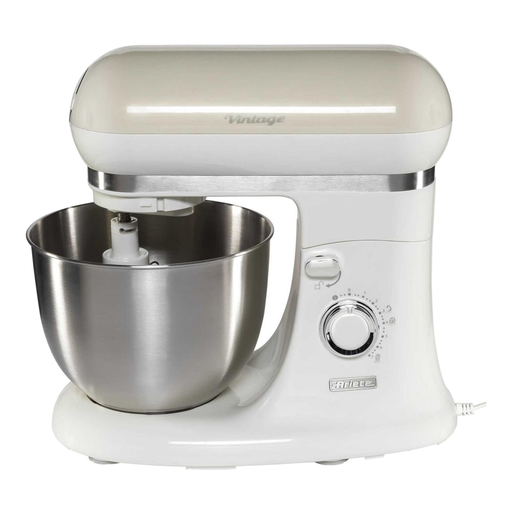
Ariete 1588/03 stand mixer with 5 L stainless steel bowl

Ariete 1588/03 stand mixer, 1000 W, 5 L bowl

Could suit you if you’re looking for a stand mixer with a mixing bowl for machine mixing.

The product title lists 1000 W, a 5 L stainless steel bowl and planetary mixing action.

Joybuy

Frequently asked questions

Should you put both the oats and all the biscuit dough in the food processor?

No, it depends on the recipe. A recipe from Rutger bakt for crunchy oat biscuits briefly pulses the oats, then mixes the remaining ingredients separately in a bowl. Follow your own recipe and check the appliance’s dough capacity.

How do you work out how much biscuit dough you can put in the machine at a time?

Weigh the dough from one recipe and compare it with the maximum dough capacity in the manual for the exact model. Bowl capacity in litres is no substitute for a dough limit. For example, Bosch lists a 2.3 l bowl and a maximum dough capacity of 0.8 kg separately for the MCM3501M.

Can children taste raw oat biscuit dough?

The Voedingscentrum advises against tasting raw biscuit dough, as raw eggs and flour can contain harmful bacteria; young children are particularly vulnerable. Bake the biscuits thoroughly before serving them.

How do you tell customers about allergens in non-prepacked biscuits?

Tell customers which allergens are in the exact recipe. The NVWA says that for cereals containing gluten and for nuts, you must specify the type. Written information, such as a card, or verbal information can be used under the applicable conditions. Check with the school too about how to provide the information.

What should you consider when selling home-baked biscuits at a school event?

The NVWA says that food at markets and events must be prepared, stored and sold hygienically, including by private sellers. The NVWA says a food safety plan is compulsory for anyone who prepares and sells food several times a year; don’t assume this automatically means the requirement applies to a single school sale. Ask the school about its own arrangements too.
