
Workshop leader making several batches
You want to know how much dough you can process per batch, and what operating or cooling times apply. Kenwood’s instructions for the MultiPro XL Weigh+ do not automatically apply to other models.


A food processor may be suitable if you want to bring oat biscuit dough together quickly and also use the appliance for other prep tasks. Check the dough limit and attachment for the exact model. If your recipe starts by creaming butter and sugar, a mixer or stand mixer with a flat beater may be a better choice: the KitchenAid oat biscuit recipe we consulted uses this method. If you’re making several batches in a row for a workshop, also allow time for the operating and cooling instructions, and for cleaning between batches.
You want to know how much dough you can process per batch, and what operating or cooling times apply. Kenwood’s instructions for the MultiPro XL Weigh+ do not automatically apply to other models.
You want to match the appliance to the mixing steps in your recipe. The KitchenAid recipe we consulted uses a mixer with a flat beater to cream butter and sugar; the Consumers’ Association distinguishes this type of mixing from a food processor’s main chopping and slicing tasks.
You want to be able to clean and store the parts after use. The Consumers’ Association points out that cleaning a food processor for small jobs can take longer than doing the work by hand.
A good fit if: you want to bring dough together quickly and also use the appliance for chopping, slicing or grating.
Bear in mind: the Consumers’ Association says a food processor is generally less suited to mixing and baking tasks than a stand mixer.
A good fit if: your recipe starts by creaming butter and sugar, as in the KitchenAid oat biscuit recipe we consulted.
Bear in mind: this option won’t necessarily replace the chopping, slicing and grating tasks you need a food processor for.
Your choice mainly depends on the mixing steps in your recipe, the weighed batch size, the pace of your workshop and how many other functions you’ll actually use.
| What to consider | What to look for | Who should pay particular attention? |
|---|---|---|
| Mixing method | Read the recipe steps and check that the exact appliance has a suitable mixing or dough attachment. | If your recipe calls for creaming butter and sugar, you’ll want to know whether your chosen appliance can handle this step. Around 36% of consumers prioritise the recipe’s mixing method. |
| Batch size and pace | Weigh the ingredients for each batch and compare the total with the model’s dough limit and operating instructions. | If you’re making several batches in a row, you’ll want to know whether the appliance suits your quantities and schedule. Around 29% of consumers prioritise batch size and workshop pace. |
| Cleaning and storage | Check which parts are dishwasher-safe and how many separate attachments you’ll need to store. | If several participants are using the same appliance, you’ll want to be able to clean and put away the parts easily between batches. Around 21% of consumers prioritise cleaning and storage space. |
| Other functions | First choose the attachment you need for dough, then compare only the functions you’ll actually use. | If you also want to chop, slice or grate ingredients as well as make biscuit dough, extra functions may be worth considering. Around 14% of consumers focus mainly on these additional prep tasks. |
A bowl’s capacity in litres doesn’t tell you how much dough you can process in one batch. For example, Bosch lists a 2.3 l bowl and a maximum dough load of 0.8 kg for the MCM3501M.
Weigh one batch of your recipe and compare it with the dough limit for the exact model.
The KitchenAid classic oat biscuit recipe we consulted uses a mixer with a flat beater to cream butter and sugar. That doesn’t prove that a food processor can carry out the same mixing steps.
Check the steps in your workshop recipe first, then choose the appliance and attachments.
Operating times and any cooling periods vary by model. Kenwood’s limits for the MultiPro XL Weigh+ are not general instructions for other food processors.
Before planning the pace of your workshop, read the operating and cooling instructions for the exact model you’ve chosen.
Separate accessories also take time to clean and store. The Consumers’ Association notes that cleaning up after small food processor jobs can take longer than doing the work by hand.
Check the cleaning instructions for the parts you’ll use during the workshop.
Bosch lists the MultiTalent 3 MCM3501M as a food processor with a dough limit of 0.8 kg, giving you a useful benchmark for weighing batches.
According to Kenwood, the MultiPro OneTouch FDM73.850SS combines a dough tool with chopping, slicing and grating functions. The MultiPro Go Blend FDP23.380GR is a different model with a smaller bowl.
According to KitchenAid, the compact 5KFP0719EBM food processor has a dough blade. However, a separate KitchenAid recipe for classic oat biscuits uses a mixer with a flat beater.
Magimix lists three bowls and a dough blade for the CS 3200XL. This may be useful if you’re planning other workshop prep tasks as well as making dough.
This selection includes stand mixers and food processors for preparing dough. Check that the model you choose and its included attachments suit the mixing steps and batch size in your oat biscuit recipe.
 No image available
Worth considering if you want to prepare dough during your workshop. Check that the appliance and included attachments suit the steps in your recipe.
Bowl: 4.5 l. Power: 1300 W. Speeds: 6 + P.
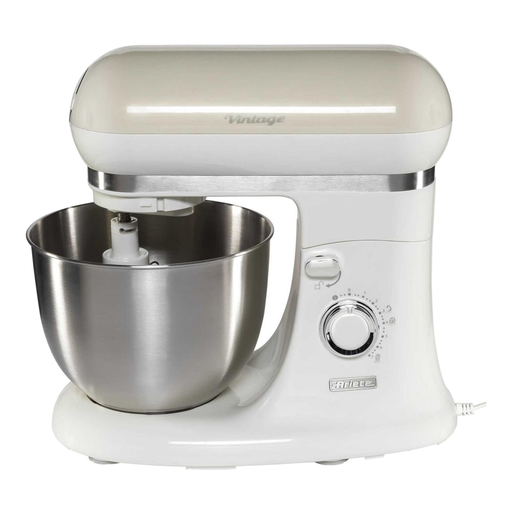 No image available
A stand mixer to compare if your recipe involves mixing. Check in advance that the model and attachments suit the steps in your workshop.
Bowl: 5 l. Power: 1000 W.
 No image available
A food processor to consider if you want to do other prep tasks as well as work dough briefly. For recipes that involve a lot of whisking and mixing, you could also compare stand mixers.
Power: 800 W. Bowl: 2.3 l.
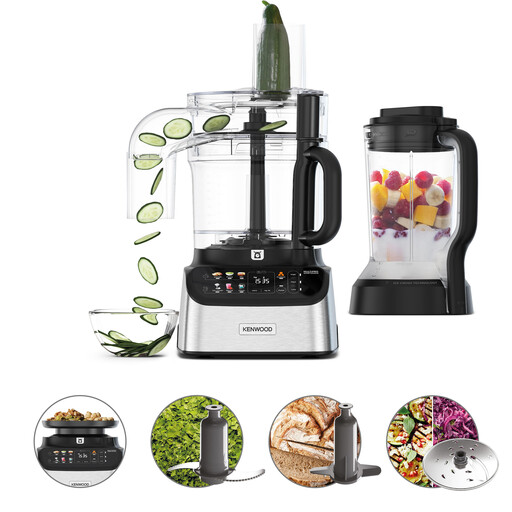 No image available
A food processor and blender to compare if you want to combine dough preparation with other kitchen prep tasks. Check which attachments are included with this model and whether they suit your recipe.
Type: food processor and blender. Colour: silver.
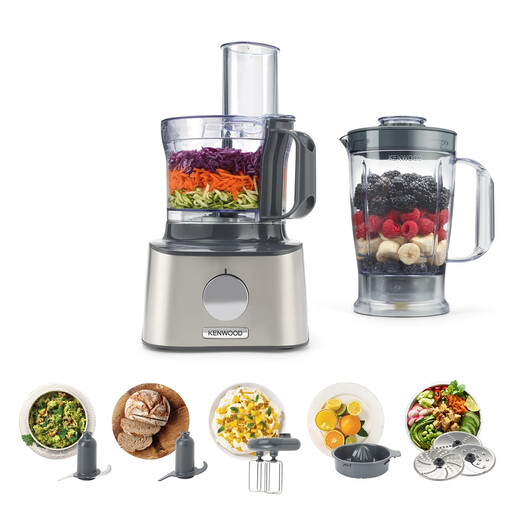 No image available
A food processor to compare for quick dough preparation and other prep tasks. Check the product information to see which attachments are included with this model, and check the instructions for your recipe.
Type: food processor. Colour: silver.
No. Bowl capacity and maximum dough load are different specifications. Weigh the ingredients for one batch of your recipe and compare the total with the dough limit for the exact model. For example, Bosch lists both a 2.3 l bowl capacity and a maximum dough load of 0.8 kg for the MCM3501M.
Not necessarily. The KitchenAid classic oat biscuit recipe we consulted uses a mixer with a flat beater for this step. Compare the recipe steps with the appliance and attachments of the model you’re considering.
Follow the operating and cooling instructions for the exact model. For the MultiPro XL Weigh+, Kenwood recommends running it for no more than 60 seconds and allowing it to cool for 15 minutes between dough batches. This guidance does not automatically apply to other models.
This varies by part and model. Check the manual before cleaning any parts; the Consumers’ Association warns that plastic accessories can warp if washed at too high a temperature.
According to the NVWA, food safety rules apply when you sell food or drink to customers. The NVWA also refers to a food safety plan or hygiene code based on HACCP. When selling food, you must provide customers with information about any allergens present, according to the NVWA. The requirements that apply to your workshop depend on how it is run, so check the recipe you’ll actually use and whether you’ll be selling to customers.