
Cooking for a large group
For a community meal, you’ll want to plan how much hummus you need without overfilling the bowl. For example, the Netherlands Nutrition Centre’s hummus recipe makes 10 servings.


Choose a food processor based on how much hummus you want to make and the stated processing capacity of the exact model. A larger bowl may mean fewer batches, but its capacity doesn’t automatically tell you how much hummus you can make at once. For a one-off community meal, working in batches may be more practical.
For a community meal, you’ll want to plan how much hummus you need without overfilling the bowl. For example, the Netherlands Nutrition Centre’s hummus recipe makes 10 servings.
You’ll want to check the purée blade and whether you can adjust the texture as you go. The Netherlands Nutrition Centre’s recipe suggests adding water to adjust the consistency.
You’re making hummus for this meal, but don’t want to store or wash up lots of unnecessary parts afterwards. The Consumers’ Association recommends checking which accessories are dishwasher-safe for each model.
The Netherlands Nutrition Centre’s hummus recipe makes 10 servings and uses 240 g of drained chickpeas. Use your recipe’s yield as a starting point, then check the processing instructions for the appliance you’re considering.
A good fit if: you often prepare larger quantities and want to make fewer batches. Kenwood lists a 3 l bowl and a liquid processing capacity of 1.5 l for the FDM71.450SS.
Trade-off: the liquid capacity doesn’t confirm how much hummus you can make at once. A larger machine and extra attachments also need more storage space and take longer to clean.
A good fit if: the community meal is a one-off and you’ll mainly use the appliance for smaller kitchen tasks afterwards. Bosch lists a 2.3 l bowl for the MCM3200W.
Trade-off: the bowl capacity doesn’t tell you how much hummus you can make in a batch. Making several batches takes time and means more washing up.
A good fit if: you regularly make both smaller and larger quantities after the meal. Magimix lists 2.6, 2.2 and 1.2 l bowls, plus a processing capacity of 1 l, for the CS 3200XL with citrus press.
Trade-off: base your plans on the stated processing capacity, not just the largest bowl size. Multiple bowls also take up storage space.
A good fit if: you’re only making hummus for this meal and want to check first whether your existing stick blender can handle the quantity. The Netherlands Nutrition Centre mentions both a food processor and a stick blender for making hummus.
Trade-off: check the instructions and be prepared to work in batches. This alone doesn’t tell you whether the texture will be different.
| What to consider | What should you check? | Who is this important for? |
|---|---|---|
| Quantity per batch | Compare your recipe’s yield with the exact model’s processing capacity and filling instructions. Don’t assume you can process a certain amount of hummus based on bowl capacity alone. | For a community meal, I want to know in advance whether I can purée everything at once or will need to make several batches. Around 42% of consumers say the quantity they need to process per batch is their top priority. |
| Puréeing and texture | Check that a suitable blade is included and that you can adjust the controls. If needed, add liquid gradually, following the recipe. | When making hummus, I want to be able to adjust the texture while puréeing rather than relying on wattage or extra accessories. Around 33% of consumers put control over puréeing at the top of their list. |
| Cleaning and storage | Compare the appliance’s dimensions, the parts you’ll actually use and their cleaning instructions. | After the meal, I want to be able to clean the bowl and the parts I’ve used, then fit the appliance in my cupboard. Around 17% of consumers say cleaning and storage are their top priorities. |
| Use after the meal | Decide which other tasks you genuinely expect to use it for and check which parts are included. Find out who to contact if something goes wrong. | I want to avoid leaving attachments unused and know what to do if there’s a problem with the appliance. Around 8% of consumers say future use and after-sales support are their top priorities. |
Bowl capacity and stated processing capacity aren’t the same. For example, Magimix lists a total capacity of 2.6 l and a processing capacity of 1 l for the CS 3200XL with citrus press.
Plan around the exact model’s operating and filling instructions, not just the figure printed for the bowl.
Power and the number of accessories don’t, on their own, tell you what texture your hummus will have.
Check that a purée blade is included and that you can adjust the controls. Consider extra attachments in terms of the other tasks you want to use them for.
The Netherlands Nutrition Centre advises not leaving perishable food out of the fridge for more than 2 hours.
Serve smaller amounts and return the rest to the fridge promptly.
A manufacturer’s guarantee is separate from your statutory rights. According to the Dutch government, the retailer is your point of contact if a product is faulty and a solution is needed.
Read the manufacturer’s terms and keep your proof of purchase so you know who to contact if there’s a problem.
The MultiTalent 3 MCM3200W is a useful comparison if you’re considering a food processor with a bowl and universal blade.
The MultiPro Express Weigh+ FDM71.450SS is a useful comparison if you want a larger bowl and a built-in scale.
The CS 3200XL with citrus press is a useful comparison if you want different bowl sizes and a separately stated processing capacity.
The products below are food processors and choppers for chopping and processing ingredients when making hummus. Bowl capacity alone doesn’t determine how much hummus you can make per batch.
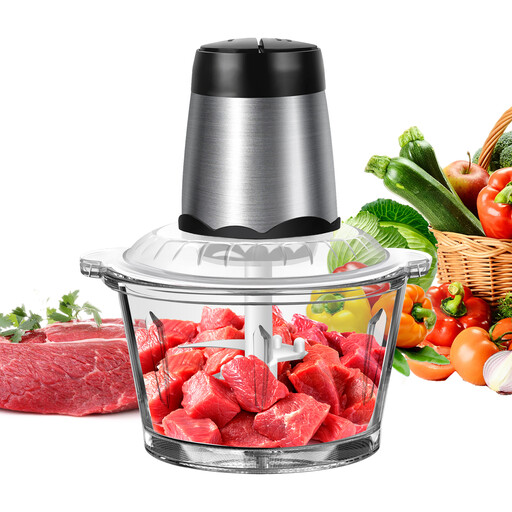 Image unavailable
A chopper may suit you if you want to process hummus ingredients in batches. Follow the instructions for the quantity per batch.
The product name specifies a 2 l glass bowl and stainless steel blades.
 Image unavailable
This food processor may suit you if you want to chop and blend as well as prepare hummus ingredients. Plan your use around the stated operating cycle.
The product name specifies 750 W and a 1.8 l bowl. Do not use the appliance for more than 60 seconds per cycle; under heavy load, allow the motor to cool for 2 minutes between uses.
 Image unavailable
The two bowl sizes may suit you if you also want to process smaller quantities after the meal. Follow the instructions on which bowl to use and how much to fill it.
The product name specifies 2 l and 0.6 l bowls and a power rating of 300 W. The bowls and lid aren’t heat-resistant; avoid temperature changes of more than 50 °C.
 Image unavailable
A chopper with three bowl sizes may suit you if you want to process different quantities after the meal. Check the instructions for the amount you can process at a time.
The product name specifies 2.5 l, 2.2 l and 1.8 l bowls. The maximum operating cycle is 30 seconds at a time.
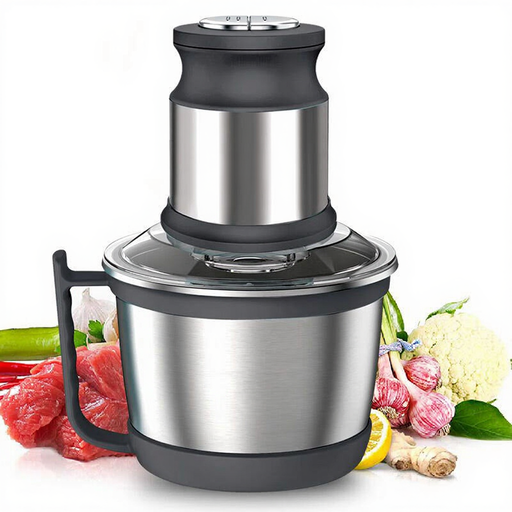 Image unavailable
A food processor with a 3 l bowl may suit you if you want to process ingredients for a larger recipe. The nominal bowl capacity doesn’t tell you how much hummus you can make per batch.
The product name specifies a 3 l bowl and chopping and grinding functions.
Start with a recipe and the number of servings you need. For example, the Netherlands Nutrition Centre has a recipe for 10 servings using 240 g of drained chickpeas. Then compare the quantity of ingredients with your appliance’s instructions. Bowl capacity alone won’t tell you how many servings you can make per batch.
Yes. The Netherlands Nutrition Centre’s hummus recipe mentions both methods. Check your stick blender’s instructions for the permitted quantity and operating time.
Follow the instructions for your specific model when removing and cleaning the bowl and blade. The Consumers’ Association warns that accessories aren’t always dishwasher-safe, so check each part individually.
The Netherlands Nutrition Centre recommends keeping homemade hummus in the fridge for 1–3 days and setting the fridge to 4 °C. Don’t leave perishable food out of the fridge for more than 2 hours, and return leftovers to the fridge promptly after serving.
Check the recipe and the labels on the ingredients you use; the hummus recipe mentioned above contains tahini. Ask your guests about their dietary needs in advance. If you adapt the recipe, also take care with the utensils and surfaces you use to avoid cross-contact.