
Bakers making firm biscuit dough
You want to briefly mix butter, flour and hazelnuts into a small batch of dough, without needing to whisk a light mixture.


For firm hazelnut biscuit dough that you mix briefly, a food processor with a suitable blade or dough attachment could be a good fit, especially if you also want to chop nuts. Don’t just look at the bowl’s total capacity: check the permitted processing quantity and whether the attachment is suitable for your recipe. For light sponge mixture, a stand mixer with a whisk is usually more suitable; for very small batches made occasionally, mixing by hand may mean less washing up.
You want to briefly mix butter, flour and hazelnuts into a small batch of dough, without needing to whisk a light mixture.
You want to know whether the bowl and blade can handle your recipe; the bowl’s total capacity alone won’t tell you that.
You may also want to use the same appliance to chop hazelnuts, so you’re comparing the blade and the accessories included.
Choose this when: you’re briefly mixing firm dough and also want to chop hazelnuts.
The trade-off: the bowl’s total capacity isn’t the same as its processing capacity; Magimix lists a total capacity of 1,7 l and a processing capacity of 600 ml for the Mini Plus.
Choose this when: you also regularly want to chop, slice or grate, or you’re processing a larger batch.
The trade-off: a large bowl doesn’t guarantee that it will handle a small quantity well; extra attachments also mean more washing up and storage space.
Choose this when: by sponge dough, you mean a light mixture that needs to be whisked.
The trade-off: Consumentenbond describes a stand mixer as more suitable for mixing and whisking; a food processor is a more obvious choice for chopping hazelnuts.
Choose this when: you only make a small batch occasionally and don’t need an appliance for other chopping or slicing tasks.
The trade-off: you do the mixing yourself, but don’t have an appliance bowl and blades to clean; Consumentenbond points out that cleaning up after small food processor jobs can take time.
| What to consider | What to look for when buying | Who is this important for? |
|---|---|---|
| Type of dough and attachment | Work out whether you’re making firm biscuit dough or a light mixture, and check the manual to see which blade or attachment is designed for it. Consumentenbond distinguishes between briefly processing dough and whisking; for its Mini Plus shortcrust pastry recipe, Magimix specifies the metal blade. | If I want to mix firm dough briefly, I want an attachment that’s suitable for my recipe. Around 36% of consumers focus mainly on the type of dough and mixing function. |
| Quantity of dough | Compare your recipe quantity with the model-specific processing capacity and dough limit. Magimix lists a total capacity of 1,7 l and a processing capacity of 600 ml for the Mini Plus; Bosch lists a maximum dough capacity of 0,8 kg for the MCM3401M. | For one small batch, I want to know whether the appliance can process that quantity, not just how large the bowl is. Around 29% of consumers are mainly concerned about batch size. |
| Hazelnuts and other tasks | Check whether the exact model comes with a suitable chopping blade and which dough tool is included. Consider chopping nuts and mixing dough as separate tasks. | If I also want to chop hazelnuts, it matters whether the appliance can handle that as well as my dough task. Around 21% of consumers prioritise chopping nuts and other food preparation tasks. |
| Cleaning and storage | Check the cleaning instructions for each part and measure the space available for the appliance and its attachments. Consumentenbond notes that cleaning up after small food processor jobs can take time. | For occasional use, I weigh up the extra washing up and storage space against the convenience of using an appliance. Around 14% of consumers give the most weight to cleaning and storage. |
Total capacity and the quantity of dough you can process are not the same thing. A large bowl also doesn’t tell you whether the appliance will handle a very small batch well.
Compare your recipe quantity with the instructions and dough specifications for the exact model. Don’t assume that a stated maximum quantity proves what the minimum batch size is.
Consumentenbond describes a food processor as suitable for brief, light dough work, while a stand mixer is generally more suitable for whisking.
Before choosing, work out whether the recipe calls for firm biscuit dough or a light sponge mixture.
If your mixture needs to be whisked, you may still need a suitable whisking appliance.
For a small job, cleaning up can take longer than doing the work by hand, according to Consumentenbond.
Count the parts you’ll actually use and check how they need to be cleaned. For occasional small batches, mixing by hand is another option.
The bowl, lid and attachments all take time to clean after use and need somewhere to be stored.
A compact option for small food preparation jobs; Magimix describes the Mini Plus’s metal blade as suitable for shortcrust pastry.
The MultiTalent 3 MCM3401M is an option if you want to combine mixing dough with chopping, slicing and grating.
According to Kenwood, the MultiPro Compact FDP31.170GY combines a chopping blade, dough tool and other food preparation functions.
According to Braun, the PurEase FP3132BK combines mixing dough with chopping and other everyday food preparation tasks.
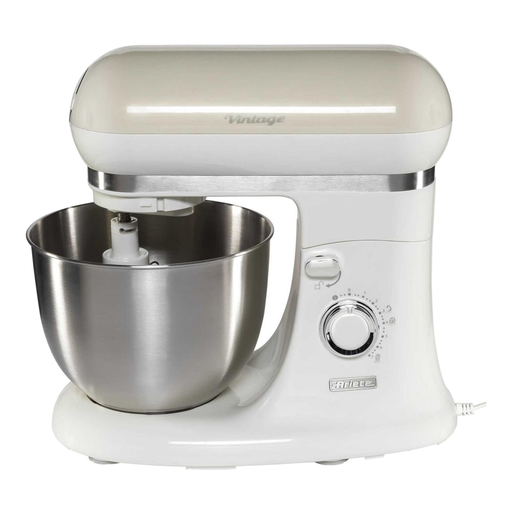
These product picks focus on mixing or kneading dough with stand mixers that have whisking and mixing attachments. Check that the model is suitable for your recipe and small batch. The NVWA states that CE marking is mandatory for electrical food processors placed on the market in the Netherlands; check the marking and product information for the model you order.
 No image available
Suitable if you want to knead firm dough as well as whisk or mix; check that the bowl and attachments are suitable for your small batch.
The product details list a 4,5 l stainless steel bowl, six speeds and a pulse function, with dough hooks, a whisk and a beater.
 No image available
An option if you want to combine mixing dough with whisking and stirring; check that the dough tool and bowl suit the quantity in your recipe.
The product details list a 5 l stainless steel bowl, a whisk, a dough tool and a mixing attachment.
According to Consumentenbond, a food processor can mix and sometimes whisk, but a stand mixer with a whisk is generally more suitable for light sponge and cake mixtures. So first work out whether your recipe calls for firm biscuit dough or a light mixture.
Follow the manual for the exact model: for its Mini Plus shortcrust pastry recipe, Magimix specifies the metal blade. Before switching it on, check that the bowl and lid are securely in place; some appliances won’t start if the lid isn’t properly secured.
This varies by part and model. Check the cleaning instructions; Consumentenbond warns that plastic parts can warp at excessively high temperatures.
In the Netherlands, statutory warranty means you’re entitled to a product that works properly, and the seller must arrange a solution if there’s a problem. Any manufacturer’s warranty is in addition to this; check the terms for the specific appliance. The Rijksoverheid explains the seller’s responsibility.
CE marking is mandatory for electrical food processors placed on the market in the Netherlands. The applicable electrical safety requirements also depend on the product specifications; the NVWA describes, among other things, the Low Voltage Directive for electrical equipment with a rated AC voltage between 50 V and 1000 V. Check the marking and product information for the model you buy; CE marking doesn’t compare mixing performance.