What should you look for when buying?
First compare the working capacity with the amount you’ll process per batch. Then check whether you can control the crumb texture with short pulses, and finally consider the storage space available and how easy the machine is to clean.
| What to consider |
What should you look for? |
Who is this important for? |
| Amount per batch |
Compare the amount of ingredients with the stated working or dough capacity of the exact model; also measure the space available. |
If I’m making several bowls, I want to know whether the ingredients will fit in one batch, rather than relying only on the bowl’s capacity in litres. Around 36% of consumers mainly care about the amount they can process per batch. |
| Control over the crumbs |
Check whether the model has a pulse function and a suitable blade; check the mixture as you go. |
If I want coarse crumbs, I want to be able to mix briefly and stop as soon as the texture is right. Around 29% of consumers mainly want control over the crumb texture. |
| Cleaning and ingredients |
Read the cleaning instructions for each part and keep track of ingredient information when serving others. |
If I’m baking for guests, I want to clean the parts thoroughly between batches and be able to check which ingredients are in the food. Around 21% of consumers prioritise cleaning and keeping food preparation separate. |
| Space and other uses |
Measure the space on your worktop or in your cupboard, and only compare accessories you genuinely plan to use later. |
If I have limited storage space or want to use the machine for other things after the event, I want to know which parts I actually need. Around 14% of consumers mainly consider space or use for other types of preparation. |
Joybuy products for pulsing
This selection includes food processors and compact choppers with a pulse function for short bursts of mixing; check which accessories and capacity details suit your needs for each model.
 No image available
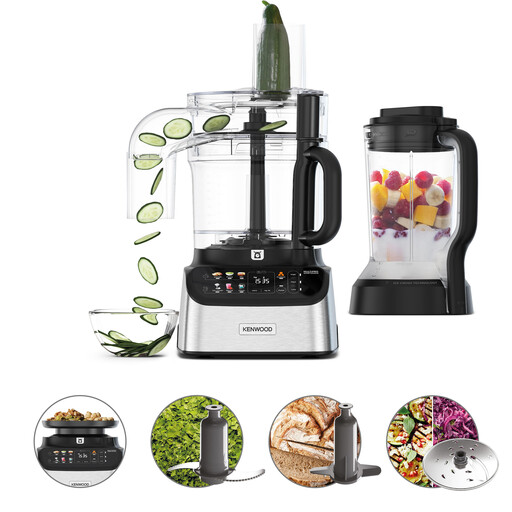
Kenwood MultiPro OneTouch FDM73 food processor and blender, silver
Could suit you if you want a pulse function and plan to use the machine for other kitchen tasks too.
3 l bowl; the description lists a micro-serrated blade, a pulse function, and blending and kneading functions.
Joybuy
 No image available
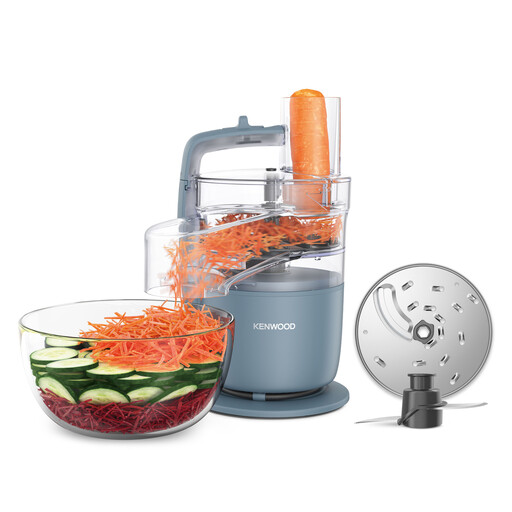
Kenwood MultiPro Go FDP22 food processor, grey
Could suit you if you want to mix in short bursts and slice or grate after making the topping.
1.3 l bowl; the description lists a pulse function, a chopping blade and a reversible slicing and grating disc.
Joybuy
 No image available
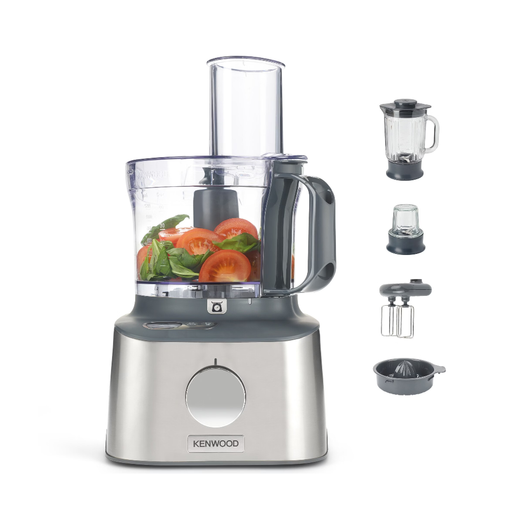
Kenwood MultiPro Compact+ FDM313 food processor, silver
Could suit you if you want to use short pulses and use the food processor for other types of preparation too.
2.1 l bowl; the description lists two speeds, a pulse function and built-in scales.
Joybuy
 No image available
IAGREEA MS-25JM08 chopper, 350 W
Could suit you if you want to mix using short pulses and check the texture as you go.
The description lists three bowls of 2.5 l, 2.2 l and 1.8 l, with two pulse speeds. According to the user information, pulsing is limited to a maximum of 30 seconds per cycle.
Joybuy
 No image available
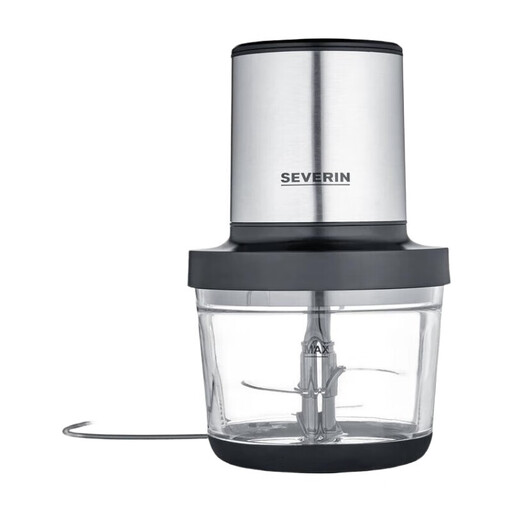
Severin KM 3867 chopper, 400 W
Could suit you if you want to check the consistency during short bursts of mixing.
1000 ml glass bowl; the description lists stainless steel blades and a pulse function. The instructions recommend short pulses and letting the motor cool between batches.
Joybuy
Frequently asked questions
Can I make a topping in a food processor without turning it into a cohesive dough?
Yes. Use short pulses and stop to check the texture. Good Food describes pulsing until the mixture is sandy and warns against processing it for too long; Kenwood Netherlands explains how the pulse function allows for short bursts of mixing.
Is the bowl capacity the maximum amount of crumble topping I can make?
No. Bowl capacity and processing capacity are different things. Compare the stated capacity of the exact model with your recipe: for example, Magimix lists a total capacity of 2.6 l and a processing capacity of 1 l for the CS 3200 XL, while Bosch gives a 2.3 l bowl and a maximum dough quantity of 0.8 kg for the MCM3501M.
What should I bear in mind when cleaning?
Follow the manufacturer’s cleaning instructions for each part before putting it in the dishwasher. Use clean utensils between batches; the Netherlands Nutrition Centre explains that clean utensils and keeping raw and prepared food separate help prevent cross-contamination.
What should I do if my food processor develops a fault after purchase?
Contact the retailer if there’s a fault. According to Consumentenbond, statutory warranty in the Netherlands has no fixed time limit; what you can expect from a product depends on the product and the circumstances. An additional manufacturer’s warranty does not replace your statutory rights.
Do I need to provide allergen information or register my food activity for the coffee morning?
This depends, among other things, on what you’re offering and whether food is being sold. The Netherlands Food and Consumer Product Safety Authority states that, in applicable circumstances, information about allergens present must be available for non-prepacked foods. For sales several times a year, the NVWA specifies registration and a food safety plan; for a one-off sale, it says registration is not required. The rules that apply to your event depend on the actual circumstances and how it is organised.


