
Baker with limited worktop space
You want to make cookie dough and put the appliance away afterwards. So, check both the machine’s dimensions and where you’ll store the separate parts.


For small batches of cookie dough, a compact food processor may be suitable, provided the manual for that exact model specifies the right attachment and method for your recipe. For larger batches, also compare the stated dough capacity and consider a stand mixer: according to the Consumers' Association, these are generally better suited to baking, mixing and kneading. Measure more than just the appliance itself, and allow for the space needed for the bowl, lid and attachments.
You want to make cookie dough and put the appliance away afterwards. So, check both the machine’s dimensions and where you’ll store the separate parts.
You want to process your preferred recipe quantity in one go, so you’d rather compare the stated dough capacity than just the bowl volume in litres.
You want to do more than make cookie dough, such as slicing or grating, and check which attachments are included and how they can be stored.
A good fit if: space is limited and easy storage is a priority, and the instructions for the exact model suit your small-batch recipe.
Keep in mind: Kenwood gives an example for processing dough in the MultiPro Go type FDP22: 250 g flour and 150 g water, processed for 30 seconds. This example is not a general capacity limit for cookie dough.
A good fit if: you bake regularly and want to know in advance which dough blade or attachment comes with the version you’re considering. KitchenAid lists a dough blade for the 5KFP0719EAC; Braun lists a dough attachment for the FP3132BK.
Keep in mind: check the recipe quantity and the manual for each model. The total bowl capacity doesn’t tell you how much cookie dough it can handle.
A good fit if: you make larger batches or mixing and kneading matter more to you than chopping and grating. Bosch states that the MCM3200W can process up to 0.8 kg of dough; compare this figure with your recipe.
Keep in mind: the Consumers' Association describes a food processor as versatile for tasks such as slicing and chopping, while a stand mixer is generally better suited to baking, mixing and kneading. A larger appliance also needs space on the worktop and in the cupboard.
| What to consider | What should you check? | Who is this important for? |
|---|---|---|
| Worktop space and storage | Compare the height, width and depth with the space available, and think about where you’ll store the attachments. | If I have limited worktop or cupboard space, I want to know in advance whether the machine and its parts will fit. Around 33% of consumers prioritise space and storage. |
| Dough blade and method | Check the manual for the full model number to confirm the right attachment, ingredients and maximum processing time. | If I want to make cookie dough, I look for confirmation that the attachment and method are suitable for my exact version. Around 27% of consumers prioritise the dough function. |
| Batch size | Compare the weight of your recipe with an explicitly stated dough capacity for that model; don’t use bowl volume as a substitute. | If I make larger quantities, I want to know whether my recipe is within the usage instructions. Around 27% of consumers focus first on their preferred batch size. |
| Other functions and cleaning | Check which attachments come with the version you’re considering and how the manufacturer says to clean and store them. | If I want to use the appliance for other kitchen tasks too, I weigh up the extra parts against the work involved in cleaning and storing them. Around 13% of consumers give versatility and maintenance the highest priority. |
Models positioned in a similar way can still differ in size and in the parts included. A narrow machine won’t automatically fit the space you have available.
Measure the available space and compare it with the dimensions of the exact version. Remember to allow room for the attachments too.
Separate attachments can take up extra cupboard space.
Volume in litres and the maximum weight of dough an appliance can process are two different things. For example, Bosch lists the MCM3200W’s 2.3 l bowl capacity separately from its maximum dough capacity of 0.8 kg.
Compare the weight of your recipe with the model-specific dough limit and usage instructions.
If your recipe falls outside the instructions, you may need to make it in several batches.
A feature description doesn’t automatically confirm which attachment or processing time is right for your cookie dough. For the FDP22 type, Kenwood warns against processing for more than 30 seconds in its example, as the appliance could overheat.
Follow the manual for your own model for the attachment, ingredient quantities and processing time.
You may need to pause if you’re following the model’s instructions.
The MultiPro Go range is worth considering if a compact machine and easy storage are important to you.
The 5KFP0719EAC is a compact food processor with a separate dough blade.
The MultiTalent 3 MCM3200W is worth comparing if the stated maximum dough weight matters to you.
The PurEase FP3132BK combines a dough attachment with slicing and grating functions.
The Mini Plus is worth comparing if a slim appliance and the availability of spare parts matter to you.
This selection includes compact food processors and larger appliances marketed for dough preparation or baking. For cookie dough, always check the instructions and capacity for the exact model.
 No image available
A dough mixer and food processor to compare if you’re looking for a larger appliance designed for dough; check that the instructions suit your cookie recipe.
The product name lists a 4.5 l stainless steel bowl, 1300 W and 6+P.
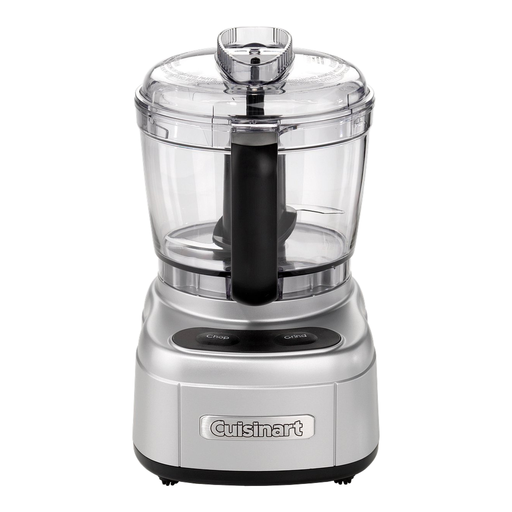 No image available
A mini food processor to compare if space is limited; check the manual before using it to process cookie dough.
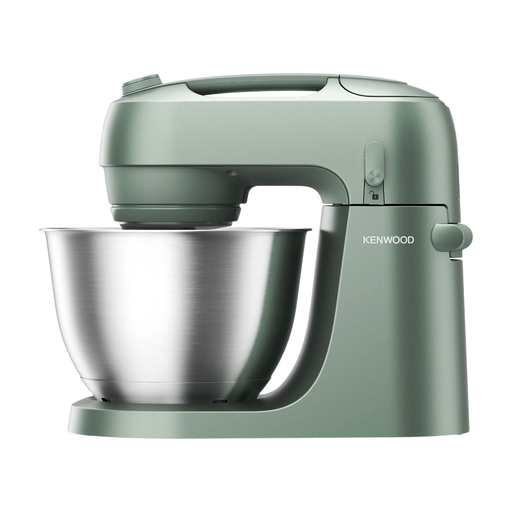 No image available
A compact mini food processor to compare if worktop space is limited; the stated bowl capacity isn’t a dough limit.
The product name lists 350 W, a removable blade and a 0.5 l bowl.
 No image available
A food processor to compare if you want to use it for other kitchen tasks as well as preparing dough; check the manual for this version to make sure it suits your recipe.
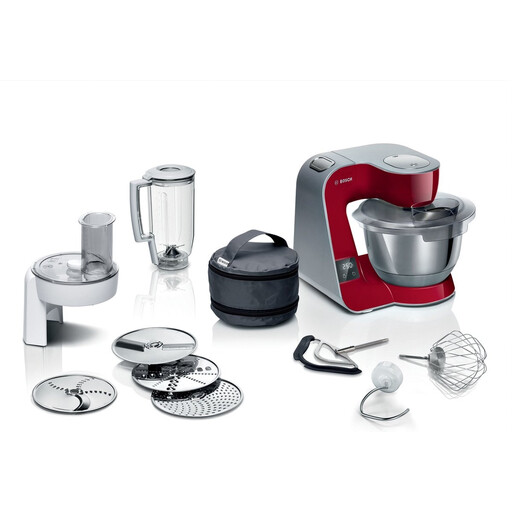 No image available
A larger appliance designed for baking to compare if your recipe needs more than a small food processor can offer; check the dough capacity and instructions for this model.
The product name lists 1000 W and a 3.9 l capacity.
Not in general. According to the Consumers' Association, a food processor can mix and briefly knead light dough, while a stand mixer is generally better suited to baking, mixing and kneading. Choose based on your recipe and the instructions for the exact model. If you also chop or grate often, you may want to factor in those extra functions.
No, bowl capacity and maximum dough capacity are two different things. Bosch lists the MCM3200W’s 2.3 l bowl separately from its maximum dough capacity of 0.8 kg. For other models, look up the specific dough limit and usage instructions.
Follow the instructions for the full model number. For the MultiPro Go type FDP22, Kenwood gives an example using 250 g flour and 150 g water, processed for 30 seconds, and warns against processing for longer because the appliance could overheat. This example is not a general rule for other machines or cookie recipes.
The applicable requirements depend on the specific electrical product and the rules that apply to it. The NVWA states that the Low Voltage Directive covers a range of 50 V to 1000 V AC or 75 V to 1500 V DC; where the applicable rules require CE marking, it is mandatory. Check which requirements apply and review the documentation for the exact version: a claim in an advert alone doesn’t demonstrate compliance.
For a consumer purchase in the Netherlands, ACM ConsuWijzer says the seller is responsible under the statutory guarantee if the product doesn’t do what you could reasonably expect. Depending on the circumstances, you may be entitled to a free repair, replacement or refund; a manufacturer’s guarantee doesn’t replace this statutory right.