
Host preparing food for a crowd
You’re preparing olives and other ingredients for a group, possibly in several batches. Magimix Netherlands describes different bowl sizes for the CS 3200 XL; Bosch Netherlands lists a bowl capacity for the MCM3100W.


For coarsely chopped olives, a food processor with a chopping blade and pulse setting is a practical choice: you can stop and check the texture as you go. Check which blade and bowl come with the exact model; the stated bowl capacity doesn’t tell you how well it handles a small portion of olives. A compact model may suit a kitchen with limited cupboard space, while several bowls can be useful for preparing different quantities.
You’re preparing olives and other ingredients for a group, possibly in several batches. Magimix Netherlands describes different bowl sizes for the CS 3200 XL; Bosch Netherlands lists a bowl capacity for the MCM3100W.
You want to keep recognisable pieces and check how finely the olives are chopped as you go. KitchenAid Netherlands and Kenwood list a pulse function for the models described here.
You want to use your food processor beyond the gathering, but need a model that’s easy to put away. Kenwood describes the MultiPro Go as having a compact bowl; KitchenAid lists storage space for accessories inside the bowl of the 5KFP0719EBM.
Start with the texture you want and the smallest portion you plan to chop. Then compare the bowls supplied, the controls and how many parts you’ll need to clean and store.
| What to consider | What should you check? | Who should consider this? |
|---|---|---|
| Portion size and bowl choice | Check which bowls come with the exact model and whether the manufacturer gives guidance for small and large quantities. | If you’re preparing food for a group but sometimes make only a small portion of topping, you’ll want to know which bowl is suitable. Around 34% of consumers say portion size is their main consideration. |
| Control over texture | Look for a chopping blade and pulse setting; stop as you go to check the size of the pieces. | If you want recognisable pieces rather than a smooth spread, it’s important to have control while chopping. Around 27% of consumers say chopping texture is their top priority. |
| Cleaning and storage | Check the cleaning instructions for each part and think about where you’ll store the machine and accessories. | If you have limited cupboard space or want to tidy up quickly after preparing several dishes, the number of parts and storage options matter. Around 20% of consumers focus mainly on this. |
| Use beyond the gathering | Decide which other chopping, slicing or grating tasks you actually need it for, then compare these with the accessories supplied. | If you want to keep using the appliance afterwards, it’s worth choosing features that suit your everyday cooking. Around 19% of consumers focus mainly on versatility and the cost of using it after the event. |
A stated bowl capacity doesn’t prove that a small quantity of olives will reach the blade properly. You may also need to work in more than one batch for a large gathering.
Compare the bowls supplied and check whether the manufacturer gives guidance on suitable quantities for the exact model.
MultiTalent 3 models are worth comparing if you want to slice and grate as well as chop.
The CS 3200 XL is worth comparing if you’d like to use separate bowls for different preparations.
The compact 5KFP0719EBM is worth comparing if you’re looking for a food processor that can also slice and grate.
The MultiPro Go FDP22.140GY is worth comparing if you have limited storage space and usually chop modest quantities.
This selection includes food processors and food choppers for preparing different quantities of olives, including models with separate bowls and options for other food preparation tasks.
 No image available
The two bowls listed give you options for different portion sizes; check the product information to see what quantity of olives is suitable.
The product name lists two glass bowls, 2 l and 0.6 l, and a power rating of 300 W.
 No image available
The three bowls may be useful if you want to prepare different portion sizes; check the instructions to see which bowl is suitable for olives.
The product information associates the 2.2 l bowl with meat and the 1.8 l bowl with baby food, purées and prepared ingredients. Check what uses are specified for the bowl you choose.
 No image available
This food chopper is worth comparing if you want to process olives in short pulses and check the texture as you go.
The product name lists a 2 l bowl, 300 W and two speeds. The instructions say not to run the motor for more than 30 seconds at a time; larger ingredients should first be cut into pieces of around 2 cm.
 No image available
A food processor worth comparing if you want to chop, slice or grate other ingredients as well as olives.
The product name lists a power rating of 800 W and a bowl capacity of 2.3 l.
 No image available
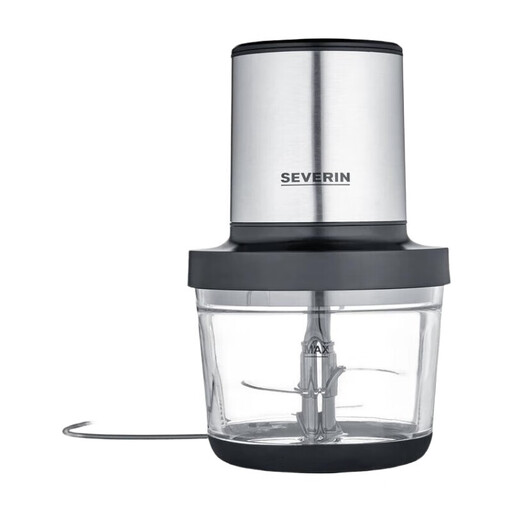
This compact food chopper is worth comparing if you’re looking for a chopper for small preparations.
The product name lists 400 W and a glass bowl. The instructions recommend short pulses and letting the motor cool between batches.
For chopping, slicing and grating, the Consumers’ Association recommends a food processor. According to the Consumers’ Association, a stand mixer with a mixing arm is mainly designed for baking tasks such as mixing and kneading.
If you want to keep some pieces whole, choose a model with a chopping blade and pulse setting, and stop to check the texture as you go. Bosch, KitchenAid and Kenwood list a pulse function for the models described here; this isn’t an independent test of how well they chop olives.
Not necessarily: the stated bowl capacity doesn’t tell you how well the blade will catch a small portion of olives. Compare the bowls supplied and follow any manufacturer guidance on suitable quantities.
The NVWA states that electrical products offered for sale in the Netherlands must carry the CE mark. This general requirement doesn’t confirm that an individual product for sale has been checked; look at the product-specific information or ask the seller for clarification.
The Netherlands Nutrition Centre advises keeping opened olive tapenade in the fridge for four days and using a clean spoon. This guidance doesn’t automatically apply to homemade tapenade with a different recipe.