
Vandaag of morgen in huis

Kwaliteit gegarandeerd

Welkomstaanbiedingen ontgrendelen: GRATIS bezorging | Tot 80% korting | Gratis 30 dagen JoyPlus-proefperiode
Download de app
A food processor and chopper can take over a lot of the prep work: chopping vegetables, mincing herbs, grinding nuts, puréeing sauces or mincing meat. However, it’s not wise to simply look at the wattage or the number of functions on the box. A machine that looks great on paper may not suit your kitchen, portion sizes or cleaning routine.
In this buying guide from the Joybuy Product Recommendation Officer, we compare verifiable specifications and highlight the most common purchasing pitfalls.
A food processor 800 watt sounds powerful, but wattage doesn’t tell you everything about real-world performance. The bowl capacity, blade construction, overheating protection and recommended usage time all play a part. A compact electric chopper with 300 or 400 watts can be fine for onions, herbs and soft vegetables, while a larger food processor offers more capacity and accessories.
Also pay attention to the difference between maximum power and continuous power. Always follow the instruction manual and process hard ingredients in short pulses if recommended.
A food processor with a blender, citrus press, grating and slicing discs can be handy, but every accessory requires extra storage space and cleaning. Ask yourself what you’ll use the machine for on a weekly basis:
For small quantities, a mini food processor is often more practical than a large machine. For family meals, a bowl of 1 to 2 litres may make more sense.
A glass bowl is less prone to discolouration and odours than some plastic bowls, but it is heavier. A plastic bowl can be lighter and easier to store. Also check which parts are dishwasher-safe. The motor base must not be submerged in water, and sharp blades need careful handling.
The stated capacity isn’t always the same as the amount you can safely process. A bowl of 500 to 700 ml suits dips, herbs, small portions of pesto or baby food. For multiple people, 1 to 2 litres is more practical.
A food processor with a glass bowl can be appealing if odour and stain resistance are important to you. Do check whether the bowl can withstand sudden temperature changes and whether the manufacturer mentions any limitations.
A chopping blade is suitable for coarse or fine chopping. A grinding blade or separate grinding cup works better for coffee, spices or hard ingredients. Slicing and grating discs are useful for vegetables, cheese and nuts. If you want to process meat, check whether the product information mentions a mincer or grinding function. A standard chopper isn’t automatically suitable for every type or quantity of meat.
Don’t just measure the space on your worktop – also check the height under your kitchen cabinets. A compact food processor is handy in a flat or small kitchen, especially if accessories can be stored inside the bowl.
Also consider:
Functions and performance below are based on the available product descriptions. Where a brand mentions a feature, we present it as a claim from the product information and not as an independently verified result.
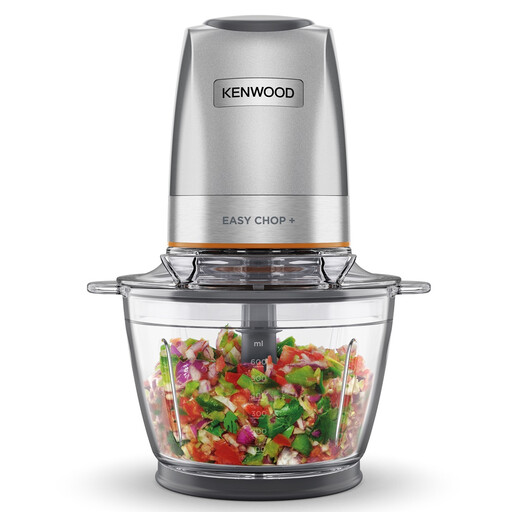
Why this fits: A suitable choice for small households that mainly prepare herbs, vegetables, sauces or dips and have limited storage space.
The product information states a 600 ml bowl, two speeds and a non-slip ring. So you’re not automatically paying for unused slicing or grating accessories.
Glass bowl, 500 watts, two speeds and, according to the product description, a function for crushing ice.
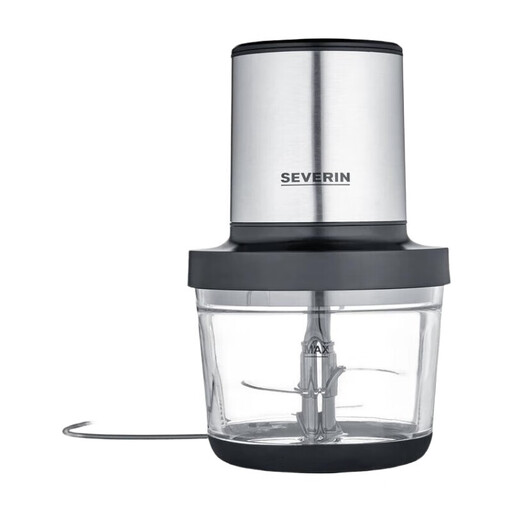
Why this fits: For home cooks who want a 1-litre glass bowl combined with a relatively compact appliance.
The bowl capacity is clearly specified and the product information explicitly mentions 400 watts and a pulse function. That makes comparing easier than relying on general marketing language.
1000 ml glass bowl, stainless steel blades and, according to the product description, functions for chopping, mixing and crushing ice.
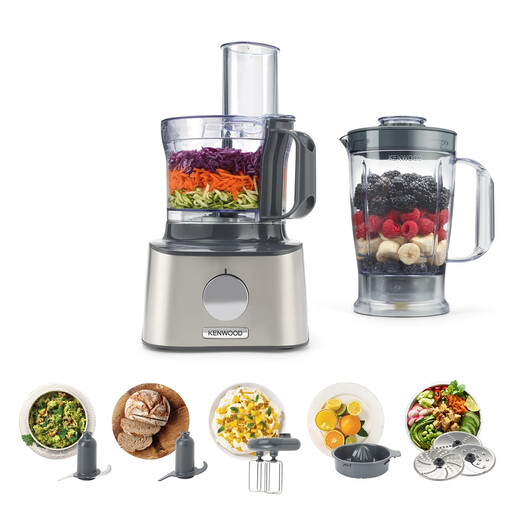
Why this fits: For households that want to slice, grate, mix, knead, whisk and juice as well as chop.
The functions are linked to specific accessories. Check beforehand whether you’ll actually use the extra parts and where you’ll store them.
800 watts, a 2.1-litre bowl, a 1.2-litre blender capacity and dishwasher-safe accessories according to the product description.
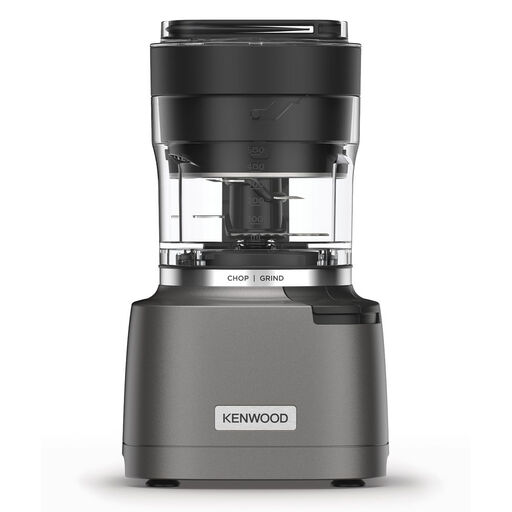
Why this fits: For users who want a vegetable chopper and a separate grinding option in a stackable appliance.
The chopping and grinding parts are described separately. That way you don’t have to assume one standard blade works for all ingredients.
800 watts, a 500 ml chopping bowl, two speeds and a separate stainless steel grinding cup according to the product information.
Browse a current selection of appliances and kitchen helpers for chopping, slicing, mixing and grinding. Compare bowl capacity, power, material and accessories before you decide.
A kitchen helper for chopping and slicing contains sharp blades and runs at high speed. Always use the supplied pusher and fit the lid fully before starting. Unplug the appliance before removing or cleaning any parts.
For a longer lifespan:
It can be, if you regularly make smoothies, sauces or iced drinks alongside chopping and slicing. A model like the Kenwood MultiPro Go Blend combines, according to the product information, a 1.3-litre bowl with a 600 ml personal blender. If you rarely use the blender, a simple compact food processor will take up less space.
Not always. For herbs, onions and soft vegetables, a lower power may be sufficient. For larger portions, hard nuts or regular chopping of tough ingredients, a model with 800 watts can offer more headroom. Look beyond wattage at the bowl capacity, blade, pulse function and recommended usage time.
That depends on use and care. According to the product descriptions of various models, glass absorbs odours and stains less quickly, but it is heavier and can break if dropped. Plastic is usually lighter. Always check the care instructions and avoid sudden temperature changes if the manufacturer warns against them.
