When making crackers for a group, choose a model based on the maximum dough weight it can handle per batch, not just the bowl capacity: Bosch Netherlands lists a maximum of 0.8 kg of dough for the MCM3501M, which has a 2.3 l bowl. For short mixing tasks, a food processor with a suitable dough blade and pulse setting may do the job. Magimix’s cheese cracker recipe uses a kneading blade, mixes for around 30 seconds and then pulses, but that doesn’t prove every model can handle the same process. If you mainly knead heavy dough for long periods, a stand mixer is generally more suitable than a food processor, according to the Consumers’ Association.
Who is this choice relevant to?
Baker making several batches
You’re making crackers for a group and want to know how much dough will fit in each batch. Compare the maximum dough weight with your recipe: bowl capacity alone doesn’t tell you how much dough the machine can process. Bosch Netherlands and Magimix Netherlands list bowl capacity and processing capacity separately.
Baker making dough with a short mixing time
You want to mix the ingredients into dough quickly, so check which blade is included and whether there’s a pulse setting. Magimix Netherlands’ cheese cracker recipe specifies a kneading blade and pulsing.
Baker with limited kitchen space
You’d rather make smaller batches if that means a more compact appliance is easier to store. Compare the dimensions and how the accessories are stored. KitchenAid Netherlands and Kenwood Netherlands describe compact models with different bowl capacities.
What should you look for in a food processor for cheese cracker dough?
First decide how much dough you want to make per batch, then consider the attachment you need, how easy it is to clean and how much storage space you have.
| What to consider |
What to look for |
Who is this important for? |
| Dough per batch |
Compare the dough weight in your recipe with the maximum amount for the exact model; don’t confuse bowl capacity with dough capacity. |
For a coffee morning with several batches, I want to know how much dough will fit in each batch so I can plan the preparation. Around 36% of consumers prioritise the amount per batch. |
| Quick mixing |
Check which dough blade is included, whether there’s a pulse setting and what the manual says about dough. |
If I want to mix the dough quickly, I need to know whether the right blade and controls are suitable for my recipe. Around 29% of consumers prioritise the mixing method. |
| Cleaning |
Check the cleaning instructions for each part and which parts need to be cleaned after every batch. |
When making several batches, I want to be able to clean the bowl and the parts I’ve used in between, without missing any steps. Around 21% of consumers prioritise cleaning. |
| Storage |
Measure the available cupboard or worktop space and compare the model’s dimensions and accessory storage. |
If my kitchen has limited storage space, I weigh up a compact appliance against making smaller batches. Around 14% of consumers prioritise storage. |
Common mistakes when choosing
-
Assuming bowl capacity tells you the maximum amount of dough
For the Magimix CS 4200 XL, Magimix Netherlands lists a total capacity of 3 l and a processing capacity of 1.3 l. Neither figure is the same as the maximum amount of cheese cracker dough it can handle.
Weigh the dough in your recipe and compare it with the stated dough limit for the exact model.
-
Assuming a direct-feed outlet means the machine can handle a certain amount of dough
The Express Serve outlet on the Kenwood MultiPro Go FDP23.140GY is designed for grating and slicing; it doesn’t tell you how much dough the appliance can process.
Assess dough preparation separately from the grating or slicing function, and check the manual for the dough limit.
-
Choosing a food processor for prolonged, heavy kneading
The Consumers’ Association says a food processor is suitable for briefly kneading light dough, while a stand mixer is generally more suitable for kneading.
Choose an appliance based on the task you do most often: quick mixing or prolonged kneading of heavy dough.
Brands and models compared
Bosch
The MultiTalent 3 MCM3501M is worth considering if you want to compare the stated dough capacity per batch with your recipe.
- Bosch Netherlands lists a 2.3 l bowl and a maximum dough capacity of 0.8 kg, as well as pulse control and a plastic dough tool.
- The dimensions are 375 × 220 × 260 mm. The stated dough capacity is a product specification, not a measured yield of crackers.
Magimix
The CS 4200 XL is a useful point of comparison if you’re looking for a food processor with a dough blade and plan to mix in short bursts.
- Magimix Netherlands lists an included dough blade and three bowls. Its cheese cracker recipe recommends a brief mix followed by pulsing.
- The total capacity of 3 l and processing capacity of 1.3 l don’t confirm the maximum dough weight for this recipe. The recipe instructions aren’t a test of other models.
KitchenAid
The 5KFP0719EAC is worth considering if you’re looking at a compact food processor with a dough blade and pulse control.
- KitchenAid Netherlands lists a 1.7 l bowl, two speeds and a pulse setting.
- Check the manual for the permitted dough quantity and whether the appliance is suitable for your recipe.
Kenwood
The MultiPro Go FDP23.140GY is worth considering if you want to grate or slice as well as mix, and want to take bowl capacity into account.
- Kenwood Netherlands lists a 1.3 l bowl, a chopping blade, slicing and grating discs, and a pulse setting.
- The direct-feed outlet is designed for grating and slicing, not as an indicator of dough capacity. Check the instructions for dough and attachments for the exact model.
Joybuy picks for mixing dough
These Joybuy products are suited to mixing dough with kneading tools. Check the manual for the exact model to see how much dough it can process per batch.
 Image unavailable
Food processor and dough mixer, 4.5 l bowl, beige
The product description lists kneading hooks and pulse control for mixing tasks, making it a potential option if you want to mix dough briefly.
The product name specifies a 4.5 l stainless steel bowl and 1300 W of power; the description lists six speeds and a pulse function.
Joybuy
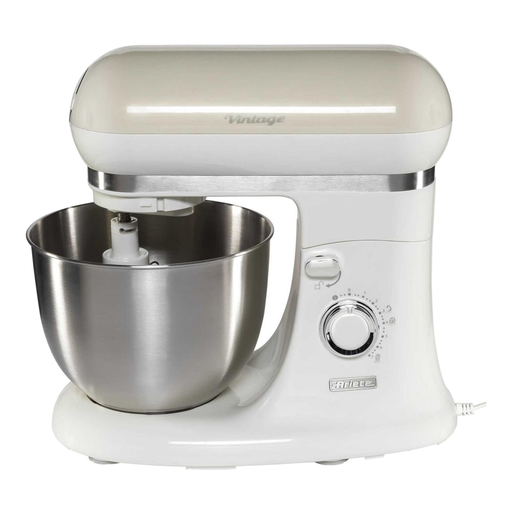 Image unavailable
Ariete 1588/03 stand mixer
The product description lists dough and mixing tools; check the manual for the permitted quantity of dough for your recipe.
The product name specifies 1000 W of power and planetary mixing action.
Joybuy
Frequently asked questions
Is a food processor suitable for cheese cracker dough?
A food processor may be suitable for briefly mixing light dough. Magimix Netherlands’ cheese cracker recipe uses a kneading blade, mixes for around 30 seconds and then pulses. For another model, check the attachment and dough limit in its manual. For prolonged kneading of heavy dough, the Consumers’ Association says a stand mixer is generally more suitable.
Can I use the bowl capacity to work out how much dough will fit?
No. Bowl capacity alone doesn’t tell you how much dough you can process per batch. Bosch Netherlands lists both a 2.3 l bowl and a maximum dough capacity of 0.8 kg for the MCM3501M. For your appliance, compare the weight of the dough in your recipe with the stated dough limit.
How do I clean the machine between batches?
Follow the cleaning instructions for each part of the exact model. Bosch Netherlands describes the MCM3501M accessories as generally dishwasher-safe; that doesn’t mean every part of every model can go in the dishwasher.
Which allergens should I check for a coffee morning?
Check the recipe ingredients and be aware of possible cross-contamination. Magimix Netherlands’ cheese cracker recipe includes, among other things, flour, Parmesan cheese and sesame seeds. The Netherlands Food and Consumer Product Safety Authority (NVWA) lists cereals containing gluten, milk and sesame seeds among the allergens that food businesses must inform consumers about. Whether that duty applies to your gathering depends on how the food is being offered.
Do food safety rules apply to a neighbourhood coffee morning?
According to the NVWA, food safety rules also apply to private individuals selling food at markets and events. For an informal gathering with no clearly defined sales arrangement, you shouldn’t automatically assume those rules apply as a general requirement. Check how the event is organised before applying rules for sellers.


