
Neighbourhood baker making large batches
You want to work out in advance how many batches you’ll need and find a dough capacity that suits your recipe.


First, weigh your recipe and compare the dough weight with the stated dough capacity of the exact food processor. The bowl capacity alone won’t tell you how much dough it can handle. A food processor may be a good fit if you also want to grate cheese or chop ingredients, while the Consumentenbond says a stand mixer is generally better suited to prolonged kneading. Check which attachments come with the specific model, and make the dough in batches if your recipe exceeds the stated limit.
You want to work out in advance how many batches you’ll need and find a dough capacity that suits your recipe.
You want to use the appliance for grating and other prep tasks as well as mixing, so check which attachments come with the specific model.
You can make smaller batches if that means the appliance fits better into your available storage space and cleaning routine.
Weigh the dough for your recipe, then decide whether you want to mix it all in one go or can make it in batches. Alongside capacity, consider the attachments, cleaning and where you’ll store the appliance.
| What to consider | What should you check? | Who is this important for? |
|---|---|---|
| Dough capacity per batch | Weigh your recipe and compare its weight with the stated dough limit for the exact model. Don’t treat the bowl capacity as the amount of dough it can handle. | For a neighbourhood gathering, I want to know how many batches my recipe will take; around 42% of consumers prioritise batch size above all else. |
| Mixing and grating cheese | Check that the right attachments are included and see what type and quantity of dough the manual allows. | If I want to mix dough and grate cheese, I want to know whether the supplied parts can do both; around 33% of consumers prioritise this combination. |
| Cleaning and storage | Check the cleaning instructions for each part and measure the space where you plan to keep the appliance. | If I’m short on cupboard space or making several batches, I consider storage and washing up; around 17% of consumers prioritise these practicalities. |
| Features and maintenance | Check which accessories are included and review the warranty and spare-parts terms for the exact model. | I don’t want to pay for features I won’t use, and I want to know how to maintain the appliance later; around 8% of consumers prioritise this consideration. |
A bowl’s capacity and the amount of dough it can handle are different specifications. A larger bowl doesn’t automatically mean you can mix more dough in each batch.
Weigh your recipe and check the dough limit for the exact model. Plan to make several batches if your recipe exceeds that limit.
The Consumentenbond says that heavier bread dough wasn’t tested in its stand mixer and food processor test, and that it can be more challenging for food processors. This doesn’t, by itself, tell you how your cheese biscuit dough will turn out.
Choose based on the type and quantity of dough you want to make, and follow the manual. If prolonged kneading is your main task, compare stand mixers too.
According to the Dutch government, there is no fixed statutory warranty period in the Netherlands. A manufacturer’s warranty or an extended warranty you buy is in addition to your statutory rights against the seller.
Before taking out additional cover, read what extra protection it offers and what your rights are if the product doesn’t meet the terms of your purchase.
The MultiTalent 3 MCM3501M is a model-specific point of comparison if you want to factor a stated dough quantity into your batch planning.
According to Kenwood, the MultiPro Express FDP65.450WH combines a 3 l bowl with a knife blade, grating discs and a dough tool.
The CS 3200 XL and CS 5200 XL Premium differ in bowl capacity and the attachments supplied, including a dough blade.
This selection includes food processors and kitchen appliances with a food processor function. When buying, check the CE marking on the exact model; the NVWA requires it for food processors sold on the Dutch market.
 No image available
The product name describes it as both a dough mixer and a food processor, making it an option if you want to combine dough mixing with other prep tasks.
Bowl: 4.5 L; power: 1300 W; speed settings: 6+P. The bowl capacity isn’t a stated dough limit.
 No image available
The product name mentions grating discs as well as a food processor, which could suit you if you want to grate cheese and prepare ingredients.
Power: 750W; bowl capacity: 1.8L; grating discs are mentioned in the product name. Check the permitted dough quantity for this model.
 No image available
If you want to knead dough and grate cheese, check that the right attachments are included with this exact model.
Model: FDP23.380GR GO Blend Food Processor. Check the product information and manual for the permitted dough type and quantity.
 No image available
The product name describes it as both a food processor and a stand mixer; consider this model if you’re looking for both functions.
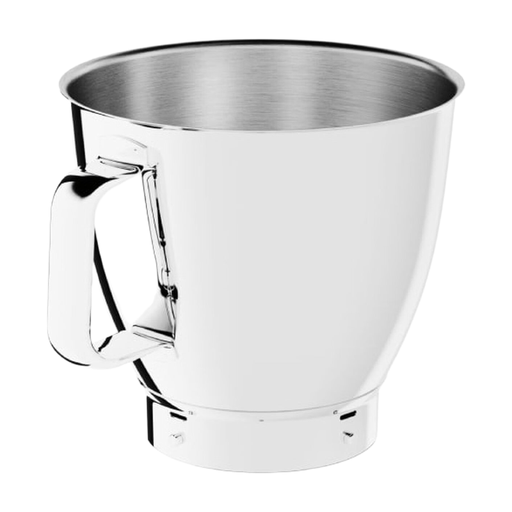
Power: 700W; stainless steel bowl: 4.3L; attachments are mentioned in the product name. Bowl capacity doesn’t determine how much dough is allowed per batch.
 No image available
If you’re looking for a food processor for a range of prep tasks, check which attachments are included with this exact model.
Power: 800W; bowl capacity: 2.3L. The bowl capacity isn’t a stated dough limit.
No. Use the stated dough limit for the exact model and the weight of your recipe’s dough. For example, Bosch Netherlands lists a dough capacity of 0.8 kg and a bowl capacity of 2.3 l for the MCM3501M. This isn’t a test using your specific recipe.
Follow the manual for the quantity, attachment and cleaning instructions for the exact model. Check whether each part is dishwasher-safe. The Voedingscentrum recommends washing your hands thoroughly before and after making raw dough, and advises against tasting it raw.
Not necessarily. The Dutch government says there is no fixed statutory warranty period in the Netherlands; a manufacturer’s warranty or an extended warranty you buy is in addition to your statutory rights. If a product doesn’t meet the terms of your purchase, contact the seller. Beforehand, compare what extra cover would actually provide.
According to the NVWA, food processors sold on the Dutch market must have CE marking. This is a general product requirement and doesn’t, by itself, confirm that a particular model has been checked individually.
If you supply food to consumers as a business, the NVWA says you must provide information about any allergens it contains. The NVWA also outlines food safety rules for selling food at markets and events; which rules apply to your gathering depends in part on whether you’re selling the food. Ask guests about allergies and check the ingredients in your recipe.