
Vandaag of morgen in huis

Kwaliteit gegarandeerd

Welkomstaanbiedingen ontgrendelen: GRATIS bezorging | Tot 80% korting | Gratis 30 dagen JoyPlus-proefperiode
Download de app
A food processor can take care of many kitchen tasks, from chopping onions and grating vegetables to kneading dough, mixing sauces and making smoothies. However, an extensive range of accessories is not automatically useful in your kitchen. A large appliance may end up sitting unused in the cupboard, while a compact chopper may not be enough for a family.
That is why the Joybuy Product Recommendation Officer encourages you to focus on verifiable specifications. This helps you avoid paying for features you are unlikely to use.
A motor rated at 1,300 watts sounds more powerful than one rated at 700 watts, but wattage does not tell you everything about how an appliance performs in practice. The blade design, bowl capacity, speed settings and maximum operating time also determine what the appliance can handle. A food processor for dough, for example, needs a suitable dough hook and a stable base. For small portions, high power is not always necessary.
A 3-litre bowl cannot always be filled with 3 litres of ingredients. Liquids and rotating blades need sufficient room to operate safely. Check whether the manufacturer specifies a maximum capacity for dry ingredients, liquids or flour. This helps prevent spills and uneven mixing.
A multifunctional food processor with numerous discs and blades offers more possibilities, but every part needs to be washed and stored after use. Check whether the removable parts are dishwasher-safe and whether the accessories fit inside the bowl. A simple model that you use regularly may be more practical than a fully equipped appliance that goes back into the cupboard after just one use.
For everyday chopping, mixing and grating, a motor of around 650 to 1,000 watts is often within a useful range, depending on the quantity and type of ingredients. If you regularly process bread dough, hard vegetables or nuts, look for a higher stated power rating and a sturdy base.
Speed settings give you greater control. A pulse function is useful for coarse chopping, while several fixed speeds help with mixing, puréeing or whisking. Also check the safety lock: the motor should only start when the bowl and lid are correctly fitted.
A compact food processor with a 1- to 1.5-litre bowl is better suited to a smaller kitchen or to one or two people. For families, a 2- to 3.4-litre bowl is more practical. As well as capacity, consider the dimensions. An appliance measuring more than 40 centimetres in height may not fit beneath a kitchen cupboard.
A food processor with a glass bowl is sturdy and gives you a clear view of the ingredients, but glass often makes the appliance heavier. A plastic bowl is generally lighter and easier to move. Always check that the material is suitable for food contact according to the product description.
Decide in advance which functions you really need:
Pay attention to the wording used in the product information. A brand’s claim about speed or results is not an independent guarantee. The functions mentioned here are based on stated specifications, not on a medical or performance claim.
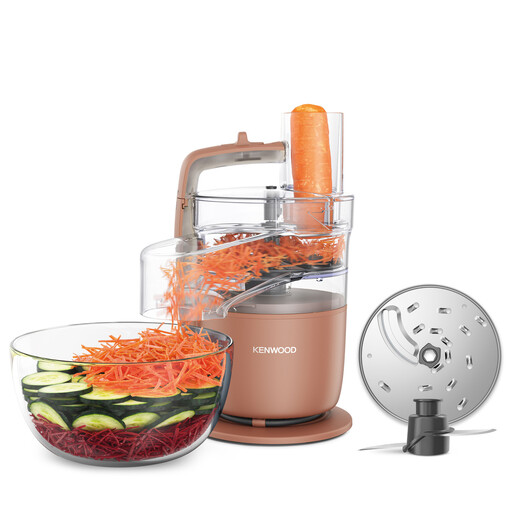
Why it suits this profile: This compact model has a 1.3-litre bowl and a 650-watt motor. It is well suited to smaller households and simple everyday preparation.
The functions are straightforward: chopping, grating and slicing with manual controls and a pulse function. You do not pay for a large number of programmes you may never use.
1.3-litre bowl, 650 watts, two slicing/grating discs and dishwasher-safe parts according to the product information.
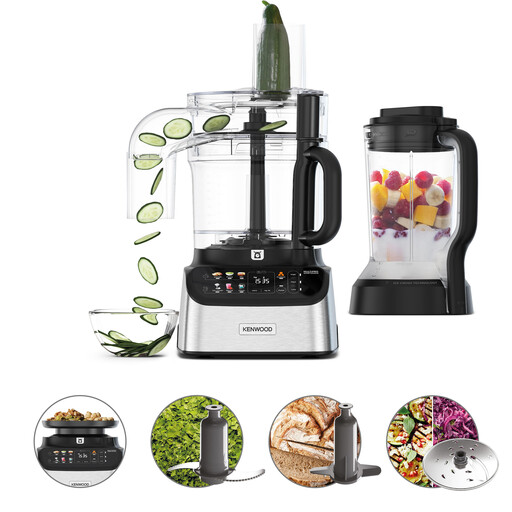
Why it suits this profile: This 2-in-1 model combines a food processor and blender with automatic programmes, weighing functions and a generous bowl. It is ideal for home cooks who want to prepare a variety of dishes from one base unit.
The relevant capacities are listed separately: a 1.5-litre blender jug and a 3-litre bowl. This makes comparisons more practical than relying solely on the term ‘multifunctional’.
1,000 watts, six pre-set programmes, integrated scales, dough hook and ice-crushing capability according to the product description.
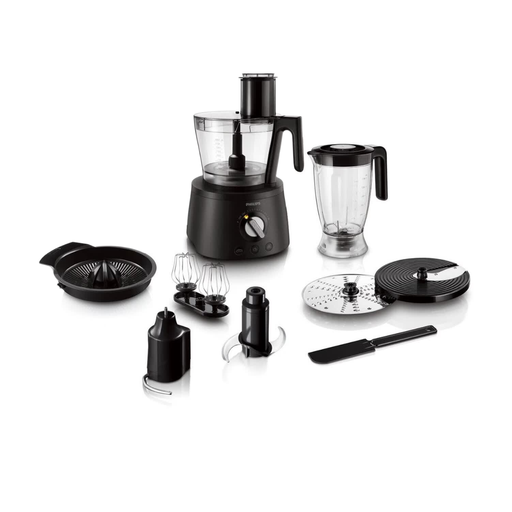
Why it suits this profile: The generous bowl and range of accessories are practical for families who regularly chop, knead, whisk, grate and make juice.
The maximum quantities are clearly specified: 2.4 litres for dry or liquid ingredients and a maximum of 1,000 grams of flour. This makes it easier to match the appliance to the quantities you need.
1,300 watts, 3.4-litre bowl, 12 speeds plus pulse and dishwasher-safe accessories according to the product specifications.
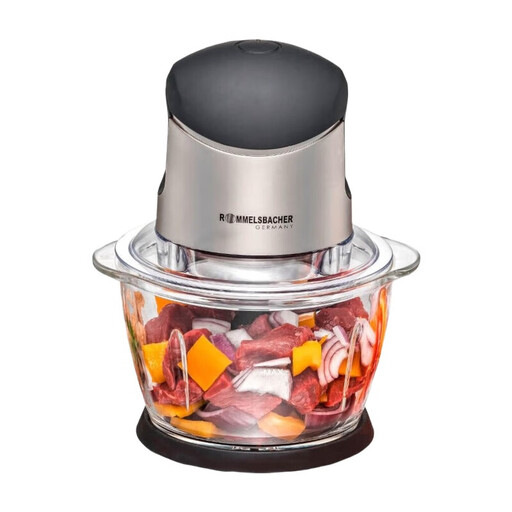
Why it suits this profile: This compact electric chopper has a 1-litre glass bowl and is designed for chopping, mixing and puréeing smaller quantities.
The capacity and operating time are clearly limited to 1-litre portions and short cycles. This helps prevent you from using a small chopper for tasks that require a large food processor.
1-litre glass bowl, four-blade stainless-steel knife, dishwasher-safe removable parts and a safety system.
We have put together a complete, up-to-date list of products that fully meet these strict selection criteria and the applicable European safety regulations.
Place the machine on a flat, stable surface and check that the bowl and lid are securely locked in place. Never touch blades or slicing discs while the appliance is plugged in. Unplug it before changing accessories or cleaning it.
Observe the maximum operating time stated in the manual. Some choppers are designed for short pulses and need to cool down between cycles. Do not process boiling liquids unless the manual explicitly permits this. Also check the CE marking, the safety information in English and the statutory guarantee stated for the product.
Not always. A food processor is generally designed for chopping, slicing, grating, mixing and sometimes blending. A kitchen machine often has a mixing bowl with a dough hook and whisk as its main components. Some models combine both functions. So check the included accessories rather than relying solely on the product name.
Its lifespan depends on use, maintenance, workload and storage. Do not run the motor for longer than stated in the manual, and use the correct accessory for the task in question. Replace damaged bowls, lids or blades before using the appliance again.
Energy consumption depends on the motor power and operating time. In theory, a 1,000-watt appliance running continuously for ten minutes uses approximately 0.167 kilowatt-hours. In practice, food processors are often used for short periods, for example in pulses. As a result, the total cost mainly depends on how often and for how long you switch the appliance on.
