
Vandaag of morgen in huis

Kwaliteit gegarandeerd

Welkomstaanbiedingen ontgrendelen: GRATIS bezorging | Tot 80% korting | Gratis 30 dagen JoyPlus-proefperiode
Download de app
A food processor can save time every day when chopping, slicing, grating, blending and kneading. Yet many people choose an appliance based on one high wattage figure or a long list of functions. That does not always result in a machine that suits their kitchen and cooking routine.
The key question is therefore not: which food processor has the most functions? Instead: which tasks do you carry out regularly, how much space do you have and what capacity do you actually need?
Higher power sounds appealing, but it does not tell you everything about everyday use. A 700 W food processor may be suitable for vegetables, sauces and dough, while a small 300 or 350 W electric chopper is mainly intended for short chopping sessions. The blade design, bowl capacity and recommended operating time also matter.
As well as checking the power, look at:
A food processor with accessories may offer functions for grating, slicing, kneading and whisking. However, accessories take up space and need to be stored and cleaned after use. A food processor with a blender is only useful if you regularly make smoothies, sauces or soups.
So check exactly what is included. A blender jug, dough hook and reversible disc are specific components you can verify. General claims such as ‘for everything in the kitchen’ reveal less about the appliance’s actual capabilities.
A 3.4-litre bowl does not necessarily offer 3.4 litres of usable capacity. Manufacturers sometimes state the total bowl capacity alongside a lower maximum quantity for liquids, dry ingredients or flour.
For a small household, a compact 0.9 to 1.5-litre food processor may be more convenient. For families or people who make bread dough, a larger mixing bowl is more practical. A bowl that is too small forces you to work in several batches, while an oversized machine takes up unnecessary space.
For everyday chopping, slicing and puréeing, 700 to 900 W is a useful starting point for many models. For heavy dough or larger quantities, a food processor for dough with a more powerful motor and sturdy mixing bowl may be a better fit.
Also pay attention to the operating instructions. Some choppers are designed for pulses of no more than 30 seconds per cycle. Other appliances recommend one minute of use followed by a cooling period. This information is more important than an isolated wattage figure.
Measure the available space on your worktop and in your cupboard beforehand. Do not just consider the height; check the width and depth too. A machine with a large feed tube can reduce the need to pre-cut ingredients, while a compact model is easier to store.
Practical guidelines:
For a food processor for chopping and slicing, you need at least a reliable blade and a slicing or grating disc. Check whether the blades can be removed and whether the parts are dishwasher-safe. With glass bowls, pay attention to warnings about temperature changes; not every component is suitable for hot liquids or the microwave.
Sharp blades should always be removed before cleaning the bowl. The motor unit, plug and cable must not be immersed in water. For baby food, choose parts that can be taken apart quickly and cleaned thoroughly.
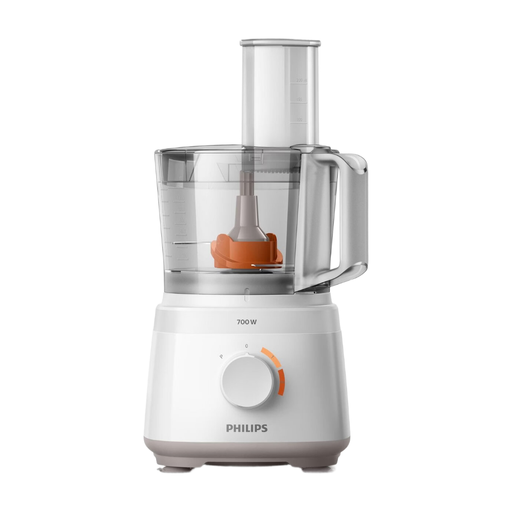
Why it suits this profile: This compact food processor has a 1.5-litre bowl, 700 W of power and 19 listed functions for everyday use.
The specifications state both the capacity and the functions, making it easier to match the machine to smaller everyday portions.
19 functions, reversible disc, kneading accessory, non-slip feet and dishwasher-safe removable parts, according to the product information.
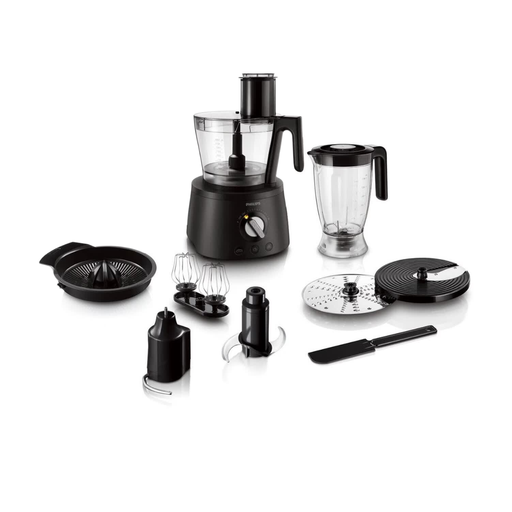
Why it suits this profile: This model is designed for households that prepare a wide variety of dishes, from dough and whisking to slicing and juicing.
The capacity is specified as 3.4 litres, with separate limits for liquids and flour. This avoids confusion about the actual loading capacity.
1300 W, 12 speeds plus pulse setting, a dough hook, adjustable slicing disc and dishwasher-safe accessories, according to the product description.
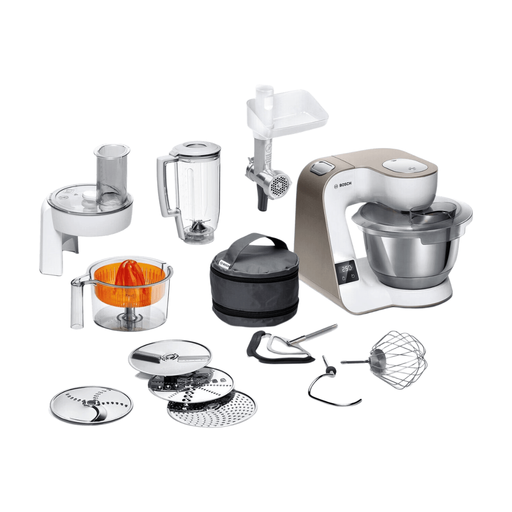
Why it suits this profile: The combination of food processor, blender, dough assistant, meat mincer and citrus press suits users who want to replace several appliances.
The product details list specific accessories and a maximum capacity of 2.7 kg, rather than making only general claims about versatility.
1000 W, seven speeds, pulse setting, planetary movement, 1.25-litre blender jug and integrated scales, according to the listed specifications.
We have put together a complete, up-to-date list of products that fully meet these strict selection criteria and the applicable European safety requirements.
A model with a capacity of around 0.9 to 1.5 litres is often sufficient for sauces, vegetables, dips and small portions of baby food. A compact food processor takes up less space and is quicker to clean. However, check that the accessories suit the recipes you regularly make.
Its lifespan depends on use, workload, cleaning and storage. Use the appliance according to the instructions, do not exceed the maximum capacity and observe cooling breaks during demanding tasks. Also check the statutory guarantee and any additional manufacturer's warranty before buying a food processor.
Energy consumption depends on the power rating and how long the appliance is used. A 1000 W motor uses less energy when running for one minute than it does during prolonged use. An appliance with a pulse function can be efficient for short chopping sessions, while a larger machine is mainly beneficial if you regularly prepare larger quantities.
