
Vandaag of morgen in huis

Kwaliteit gegarandeerd

Welkomstaanbiedingen ontgrendelen: GRATIS bezorging | Tot 80% korting | Gratis 30 dagen JoyPlus-proefperiode
Download de app
A good food processor promises to revolutionise your kitchen: faster chopping, effortless mixing, and perfect dough. But the reality is often different. Many models end up as dust collectors in the back of a kitchen cabinet. This is often due to a few common pitfalls that are easy for buyers to fall into.
Before you invest in a new kitchen assistant, it's wise to know what to look for. We've listed the most common missteps so you can make a purchase you'll enjoy for years to come.
Pitfall 1: The Wattage Myth Manufacturers love to boast about high wattage (1000W, 1300W), as if this is the sole measure of power. However, a high wattage doesn't automatically mean a better machine. The quality of the motor and the power transmission are far more important. An efficiently designed kitchen machine with 800 watts can handle heavy dough better than a poorly built 1200-watt model that overheats after a few minutes.
Pitfall 2: The "20-in-1" Illusion A box full of shiny accessories might seem like a great deal, but in practice, you'll often only use a few. Many of these extra attachments are made of thin plastic, are difficult to clean, or are intended for tasks you rarely perform. The result is an overflowing drawer and an appliance that's too much hassle for daily use.
To avoid buyer's remorse, it's better to focus on a few core specifications that truly matter for your cooking style.
The terms are often used interchangeably, but there are clear differences:
Many modern appliances are a multi-functional kitchen machine that combines these functions, often as a kitchen machine with a blender attachment. Consider which task you'll perform most often and choose a model that excels at it.
Focus on the quality of the basic accessories rather than the quantity. Check the following points:
To help you get started, we've selected a few popular models that suit different user profiles.
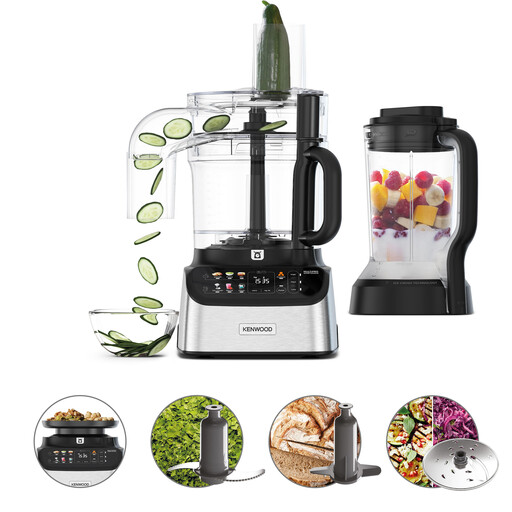
Why This Fits Their Persona: This model is ideal for those seeking convenience and versatility. The combination of a food processor and blender in one, along with the built-in scale, saves space and steps. Perfect for quickly preparing complete meals, from salads to smoothies.
Instead of an overload of useless extras, this model focuses on features that genuinely save time, like the automatic programs and the integrated scale. The 1000W motor is powerful enough for most tasks, including light kneading.
Built-in digital scale: weigh ingredients directly in the bowl.
OneTouch presets: simplifies tasks like chopping, puréeing, and crushing ice.
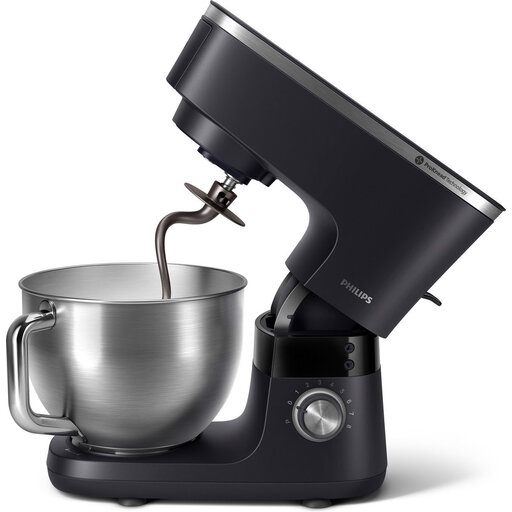
Why This Fits Their Persona: For those who regularly bake bread, pizza, or cakes, a powerful kitchen machine is indispensable. This Philips model is designed for heavy-duty kneading, with a large 5.5-litre bowl and a motor specifically tuned for processing dough.
This isn't a food processor that can also do a bit of kneading; it's a fully-fledged dough kneader. The ProKnead technology, as Philips calls it, is specifically designed to mimic the motion of hands for an optimal kneading result.
Large 5.5-litre bowl: suitable for large quantities of dough.
Powerful 1000W motor: designed for consistent and heavy-duty kneading. Includes blender and meat grinder accessories.
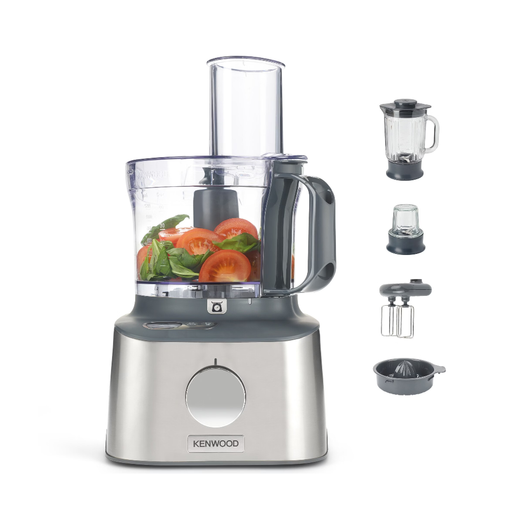
Why This Fits Their Persona: Do you have a smaller kitchen or prefer not to have a large appliance on your countertop? This compact model offers the most important functions without taking up much space. It's a practical assistant for daily meals, from chopping onions to making a quick smoothie.
This model avoids the "all-in-one" pitfall by focusing on the most-used functions in a compact design. The built-in scale is a smart addition that makes a separate device redundant, which is a great benefit for limited space.
Compact size: takes up little space on the countertop.
Includes glass blender and multi-mill: versatile for both liquid and dry ingredients.
We have compiled a complete, up-to-date list of products that meet these strict selection criteria and local safety regulations.
Don't get fixated on the wattage. For basic tasks like chopping and grating, a 600-700 watt motor is often sufficient. For regularly kneading heavy dough, a model with at least 800 watts and a robust, stable construction is recommended. The overall build quality is more important than the number on the box.
Some food processors can handle light dough, but for serious bakers, a dedicated kitchen machine (stand mixer) with a dough hook is the better choice. These are specifically designed for the powerful, continuous motion needed to properly develop dough. Check if the manufacturer explicitly lists kneading dough as one of the main functions.
A blender is primarily intended for liquefying ingredients, such as for smoothies, soups, and sauces. A food processor is more versatile and designed for labour-intensive tasks like chopping, slicing, grating, and puréeing more solid foods. Many models are now available as a kitchen machine with a blender attachment, giving you the best of both worlds.
