
Vandaag of morgen in huis

Kwaliteit gegarandeerd

Welkomstaanbiedingen ontgrendelen: GRATIS bezorging | Tot 80% korting | Gratis 30 dagen JoyPlus-proefperiode
Download de app
A good food processor can save a great deal of time and effort in the kitchen. From chopping vegetables to kneading dough, the right appliance is an invaluable assistant. But the market is flooded with models making all sorts of promises. Many people buy an appliance that ends up gathering dust in a cupboard after just a few months. That's a waste of money and space. Let's look at how to avoid a bad purchase by recognizing the most common pitfalls.
Before you pull out your wallet, it's smart to know what to look for. Manufacturers often use marketing terms that sound better than they are. These are the three most common mistakes.
A multi-functional food processor with twenty attachments sounds impressive, but in practice, you'll often only use a few. You pay for all those extra accessories, and they take up precious storage space. Ask yourself: do I really need a citrus press, sausage stuffer, and a pasta maker, or am I just looking for an efficient chopper and blender?
Don't be fooled by claims like "max power." The continuous power (wattage) is what counts. A motor under 600 watts can struggle with heavy dough or grinding hard nuts. The result is a noisy appliance that overheats and doesn't get the job done. A powerful motor works more efficiently and lasts longer.
The convenience of a food processor vanishes into thin air if cleaning it is a major chore. Appliances with lots of nooks, crannies, and parts that aren't dishwasher-safe quickly become a source of frustration. A good design is easy to disassemble, and the main components are dishwasher-safe.
To make a smart choice, focus on the specifications that truly matter for your cooking style.
The power (wattage) determines what you can do with the machine.
The bowl capacity is just as important. Do you usually cook for yourself or a partner? Then a 1.5 to 2-liter bowl is sufficient. For a family or if you like to meal prep, a bowl of 3 liters or more is more practical. This is also a key consideration for those who want to make their own baby food; a bowl that's too large won't work well for small portions.
The bowl is usually made of plastic or glass. Plastic is lightweight and doesn't break easily, but it can stain or retain odors. Always choose BPA-free plastic. Glass bowls are heavier and more fragile, but they are more hygienic, scratch-resistant, and ideal for both hot and cold ingredients.
Think carefully about which accessories you will actually use. The basics often include:
Always check if the parts that get dirty, such as the bowl, lid, and blades, are dishwasher-safe.
Based on these practical criteria, we have selected a few models that suit different types of users.
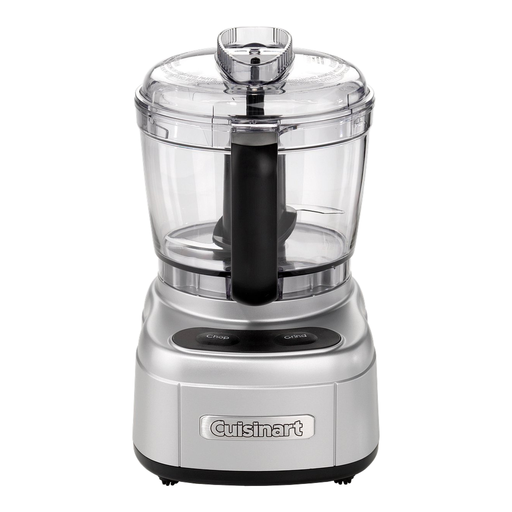
Why This Fits Their Persona: Ideal for smaller kitchens or for those seeking a simple, effective device for daily chopping and grinding tasks. Perfect for making pesto, hummus, or finely chopping herbs and nuts without having to pull out a large appliance.
This model avoids the pitfall of unnecessary features. It focuses on two core tasks and does them well. Its compact size makes storage a non-issue, and the dishwasher-safe parts make cleanup simple.
The Blade Lock feature holds the blades in place when pouring, which prevents spills. The ultra-compact design fits in any kitchen drawer.
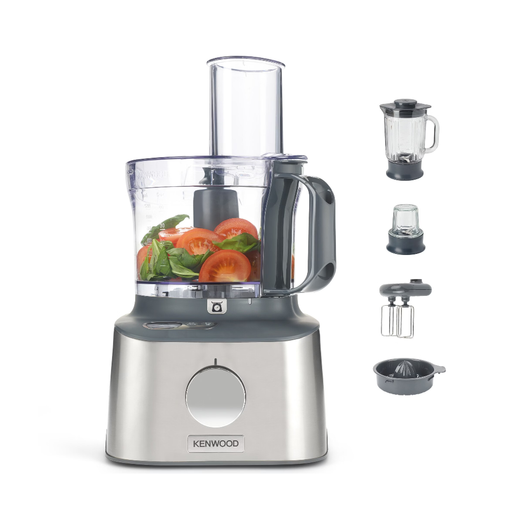
Why This Fits Their Persona: For the cook who wants versatility without cluttering the entire kitchen. This appliance combines chopping, slicing, blending, and even weighing in one compact system. Ideal for daily meals, from salads to soups and smoothies.
This model offers useful functions instead of superfluous extras. The 800W motor is powerful enough for most tasks, and the dishwasher-safe parts solve the cleaning problem.
The integrated scale is a unique, practical feature that saves time and reduces washing up. The glass blender jug is durable and suitable for hot and cold liquids.

Why This Fits Their Persona: This is a full-fledged kitchen machine for those who bake regularly and process large quantities. The powerful motor and large bowl are designed for heavy-duty work, like kneading bread dough or mixing batter for a large cake.
The 900W motor is specifically designed for heavy dough, avoiding the pitfall of an underpowered motor. The functions are aimed at the serious cook (meat grinder, dicing cutter) and are therefore not superfluous for this target audience.
The large 3.9-liter stainless steel mixing bowl can handle up to 2.7 kg of dough. The planetary mixing action ensures all ingredients are mixed thoroughly and evenly.
We have compiled a complete, up-to-date list of products that meet these strict selection criteria and safety standards.
It depends on your usage. For simple chopping and slicing, 200-500 watts is often enough. If you also want to blend or mix light doughs, look for a model with 600-900 watts. For regularly kneading heavy bread or pizza dough in a stand mixer, a motor of 1000 watts or more is recommended for the best performance and durability.
A blender is designed for liquids. With its tall, narrow jar and fixed blades, it's ideal for smoothies, soups, and sauces. A food processor is a workhorse for solid ingredients. Its wide, short bowl and interchangeable blades and discs make it suitable for chopping, slicing, grating, puréeing, and kneading. Many models combine both functions with a separate blender jug.
Always check the manufacturer's manual. In general, bowls made of glass (like borosilicate glass) are more resistant to heat than those made of plastic. Pouring hot liquids into a plastic bowl can cause it to crack or warp, unless the manufacturer explicitly states that it is safe. To be safe, always let hot soups or sauces cool down a bit before processing them.
